Grand Central Station by Colin Campbell Cooper
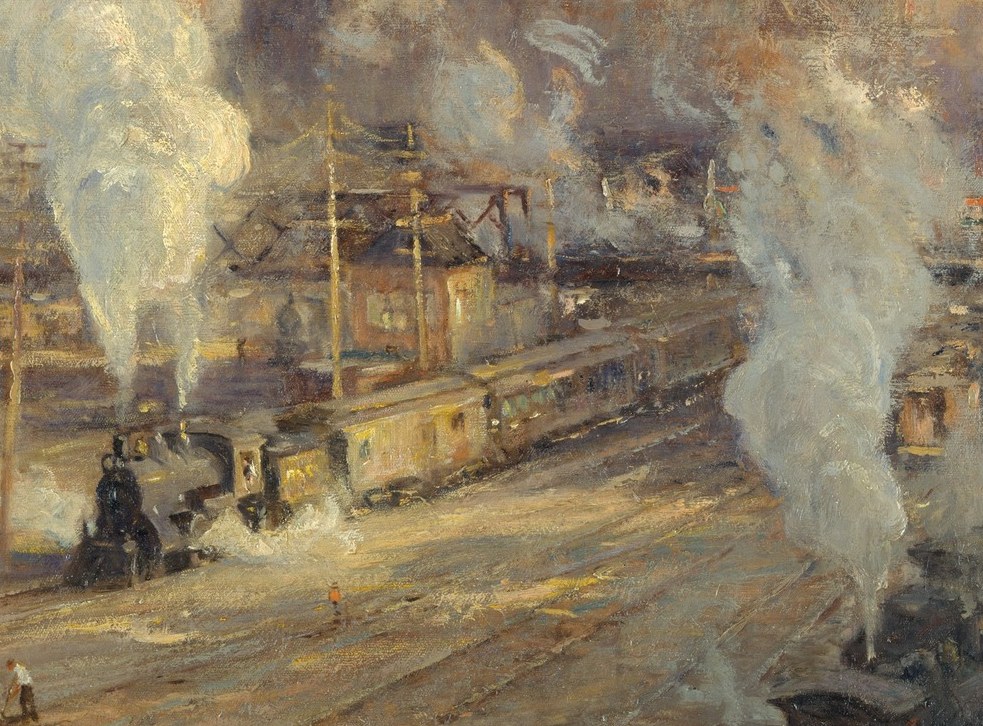
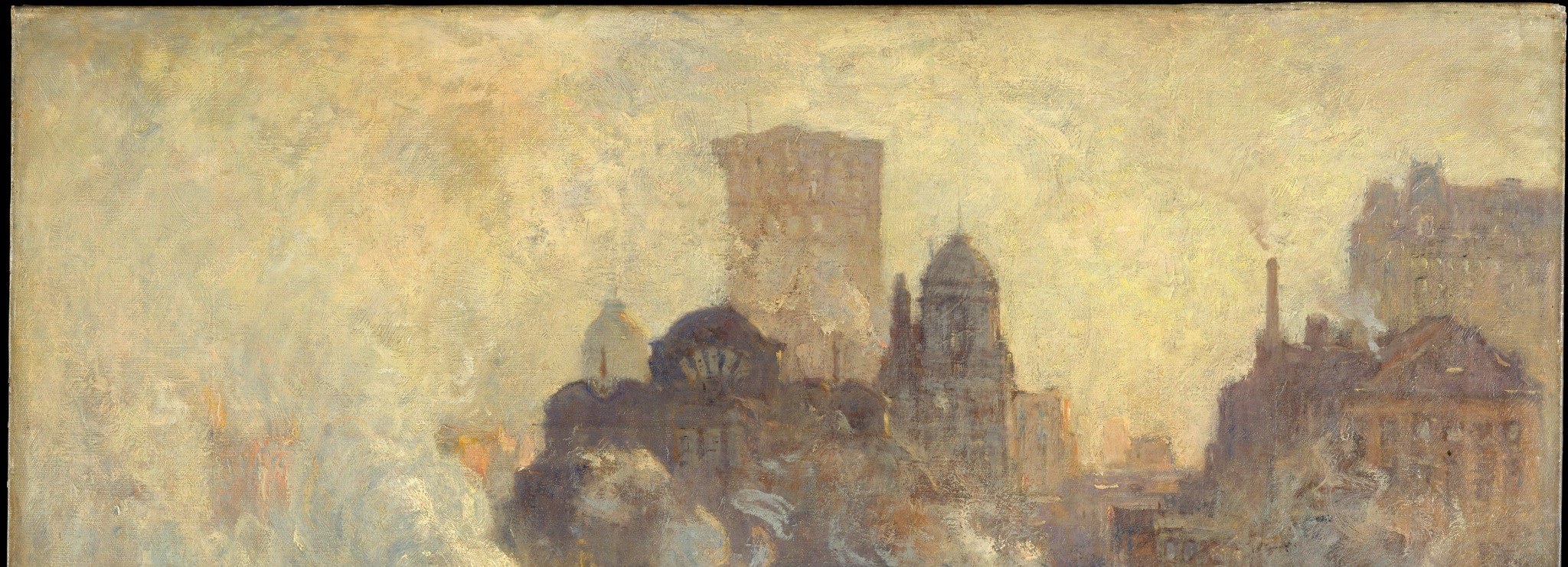
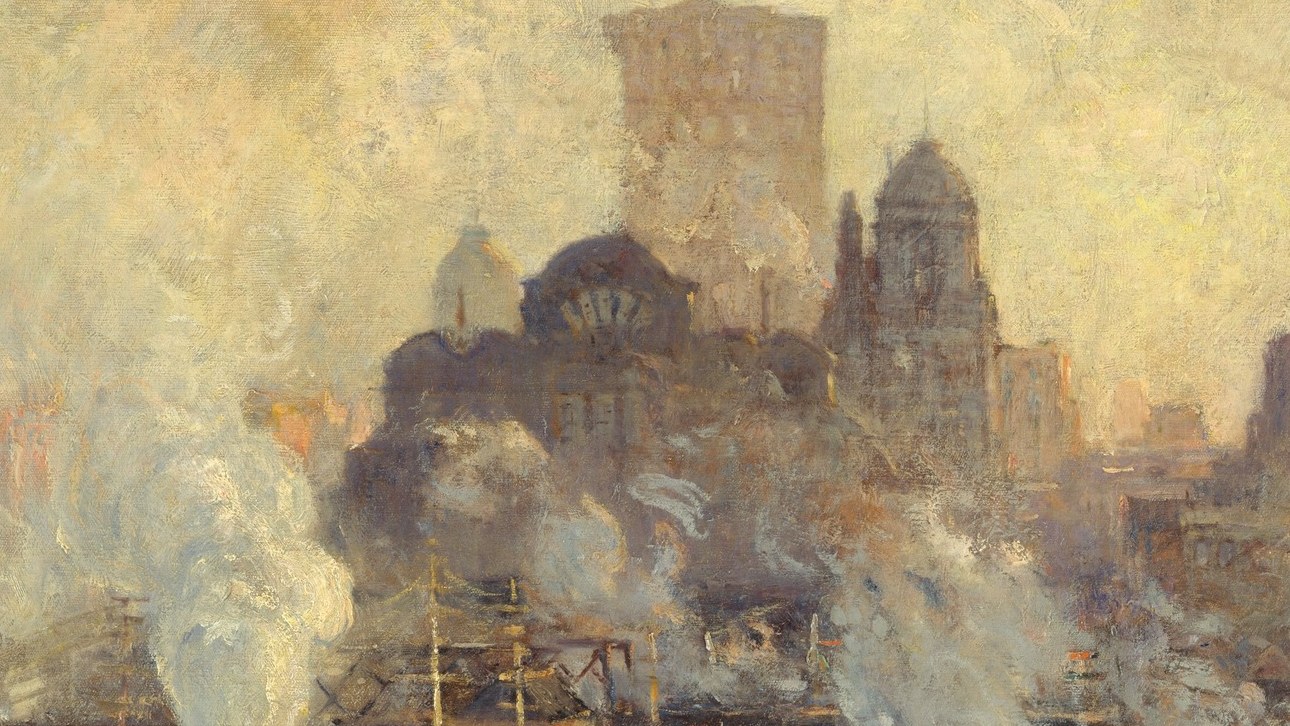
Colin Campbell Cooper's 'Grand Central Station' (1909) at The Metropolitan Museum of Art is a masterclass in atmospheric illusion. The American Impressionist was known for painting skyscrapers, but here his real subject is the industrial haze that swallowed them: a thick, golden fog of steam and coal smoke that turns a Beaux-Arts landmark into a mirage.
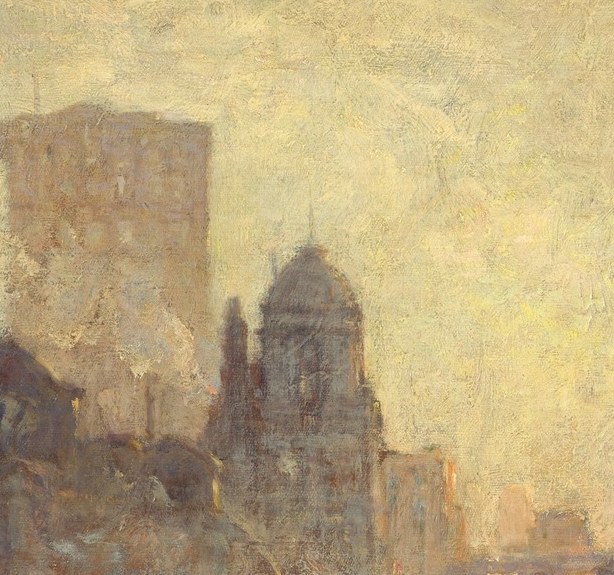
Look at the station itself. Cooper builds the Grand Central facade with recognizable architectural mass, then lets it dissolve. The dome and roofline are suffused in a warm amber glow, an effect achieved by layering translucent veils of oil paint so the stone seems to breathe with the air around it.
Cooper painted this in 1909, when Grand Central Terminal was a symbol of a city hurtling into the modern age. Horse-drawn carriages still shared the street with steam locomotives, and the station's vast rail yard was the beating heart of that transition. The figures on the platform are tiny silhouettes against the steam, their scale dwarfed by the infrastructure of progress.
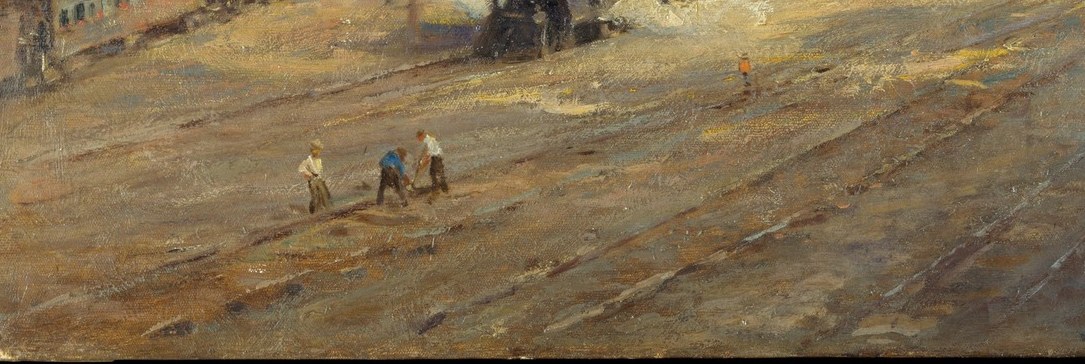
Next time you look at an Impressionist painting, check the ground beneath the spectacle. The raw, loose strokes of gravel and track ballast in the foreground are the scaffolding that holds up all that luminous air. It's a reminder that the greatest visual trick in a painting is often hiding right at your feet.
Details
Transcript
At first, it is just a golden fog. A locomotive exhaling an entire city into the air. Colin Campbell Cooper painted Grand Central in 1909. He was after something new: not the stone, but the light. Look how the Beaux-Arts facade dissolves into warm amber. Now look down below all that vapor. Here, the Impressionist brush leaves the station behind entirely. The whole painting is a trick of atmosphere held up by a few raw strokes of ochre.