Virgin and Child by Master of the Mansi Magdalen
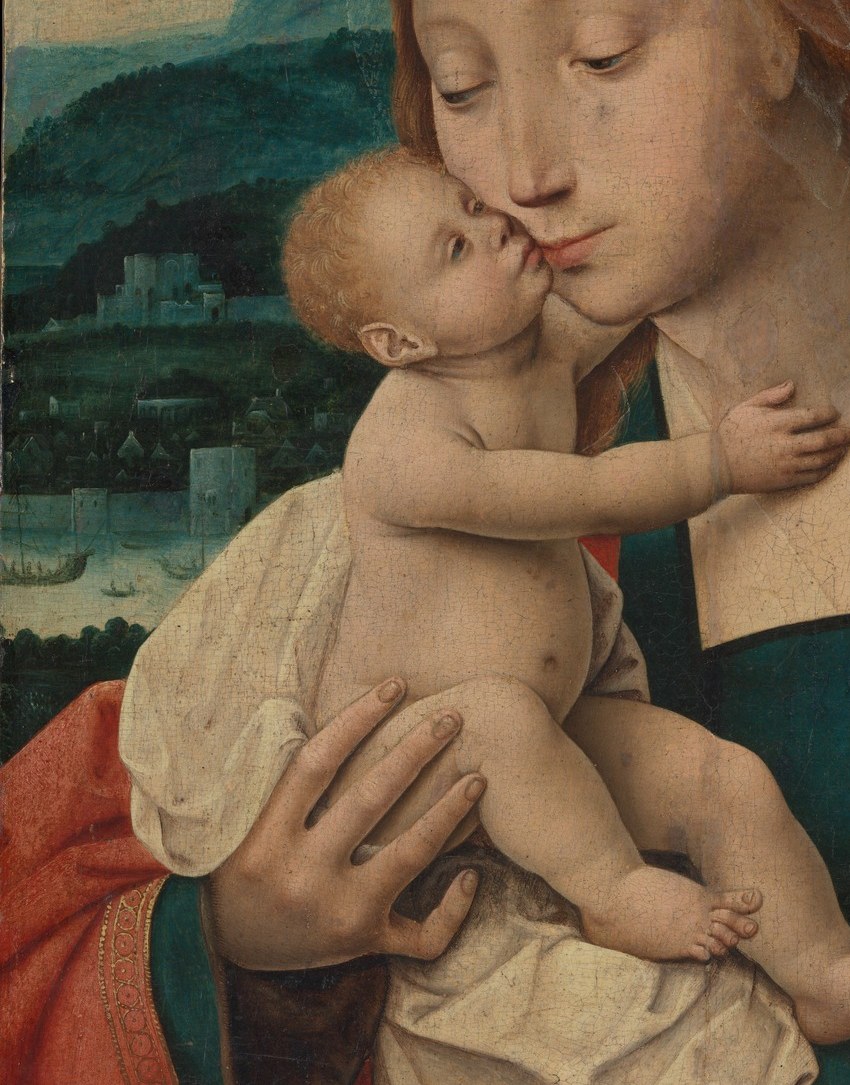
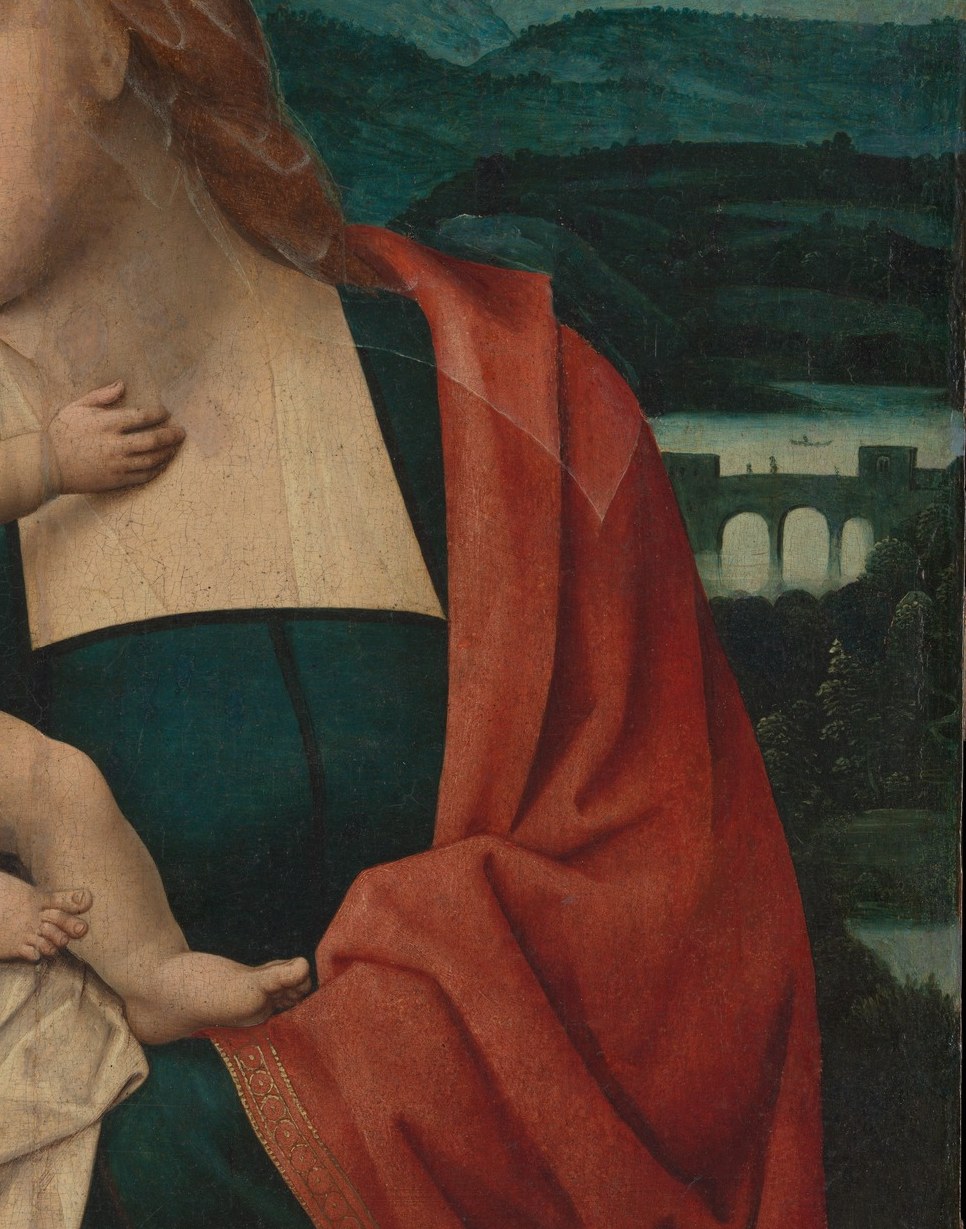
This is Virgin and Child, painted around 1520 by an artist known as the Master of the Mansi Magdalen and held at The Metropolitan Museum of Art. Its richest code is in the fabric: the Virgin's robe, mantle, and bodice form a deliberate theological sequence in red, blue-green, and dark green.
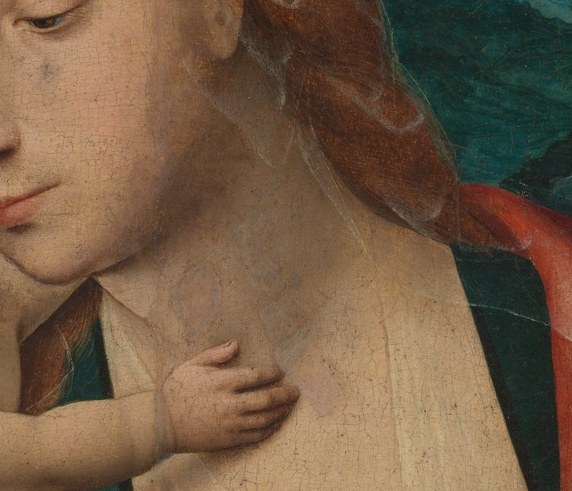
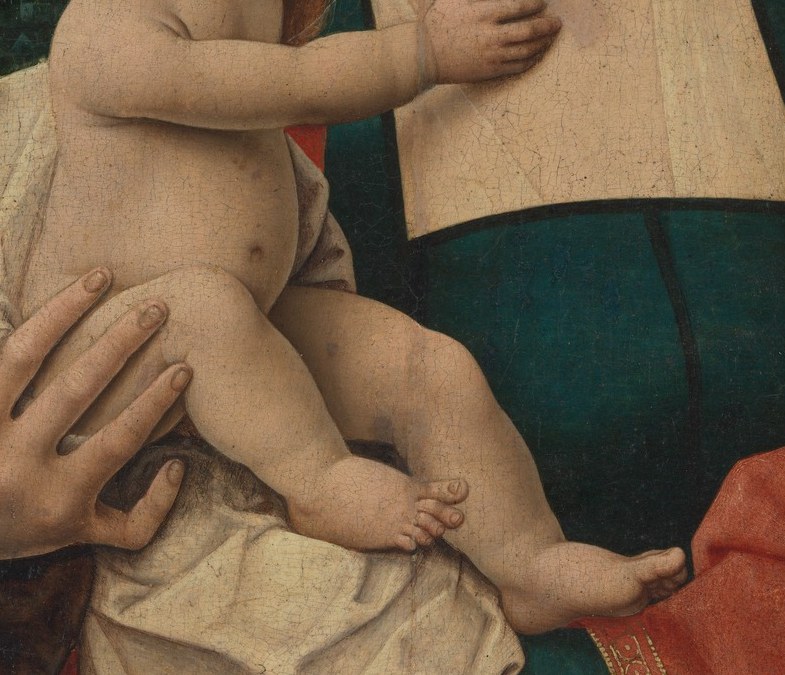
Look closely at the three pigments. The vivid vermillion robe signals the Passion, red was Mary's color of sacrifice in Netherlandish tradition. The blue-green mantle encodes her heavenly queenship. And the dark green at her neckline anchors the triad: the color of earthly life, spring, and the mortal flesh she gave her son.
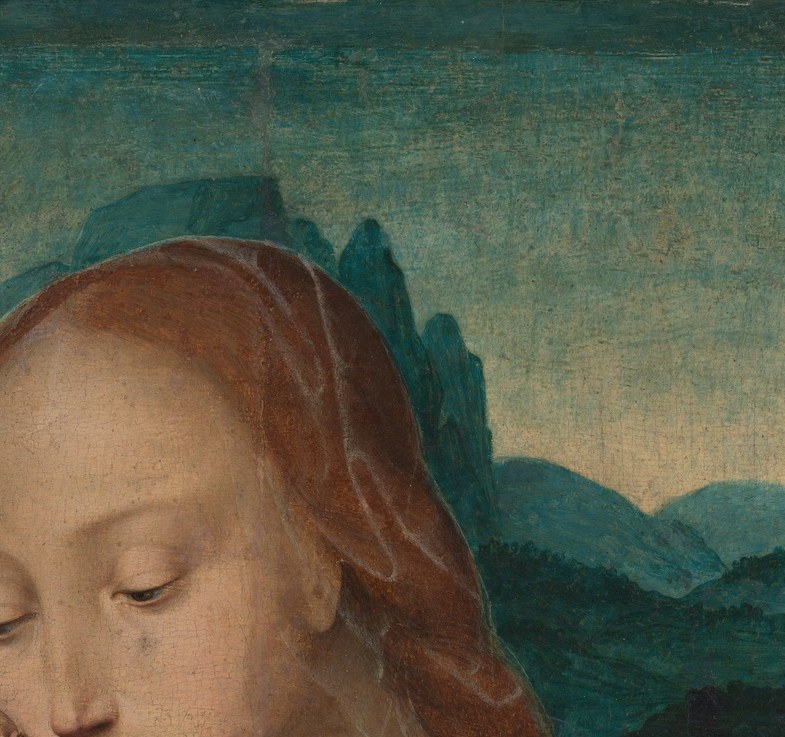
The Master likely worked in Antwerp or Mechelen around 1520, painting for a devout audience who could read these colors as fluently as words. The kiss, Mary's lips nearing the child's cheek, her eyes fully closed, is unusually intimate for an altarpiece image. It brings the coded message home: the woman who holds the child is both a mother and the vehicle of a cosmic plan.
Next time you see a Renaissance Madonna in red, blue, and green, you will know the painter was not simply dressing her beautifully. He was writing a sentence.
Details
Transcript
Her red robe is not just red. It is vermillion: the Marian color of sacrifice and the Passion to come. And her mantle is blue-green, the hue of heavenly queenship. At her neckline, dark green: the color of earthly life and spring. A 1520 audience would read these three colors like a text. Together they declare: the Queen of Heaven gave earthly life to a son who will redeem the world through sacrifice. Her closed eyes and the kiss make the theology intimate.