Mademoiselle Malot by Degas, Edgar
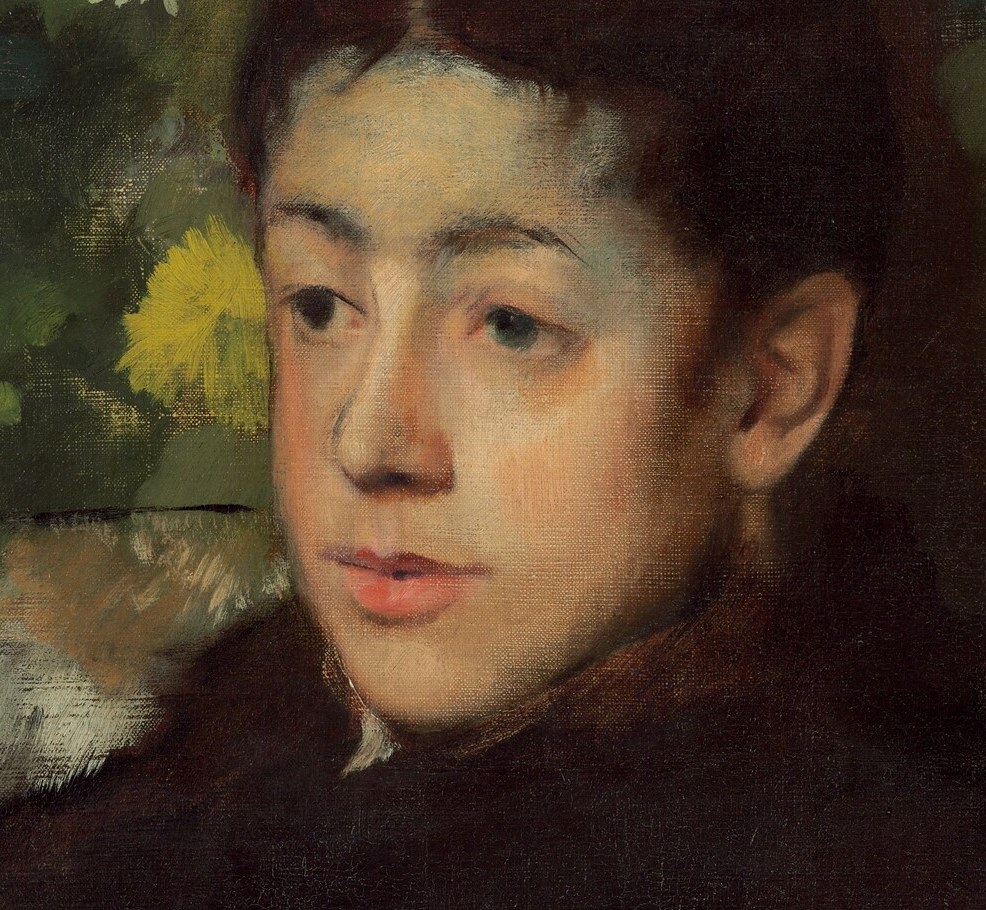
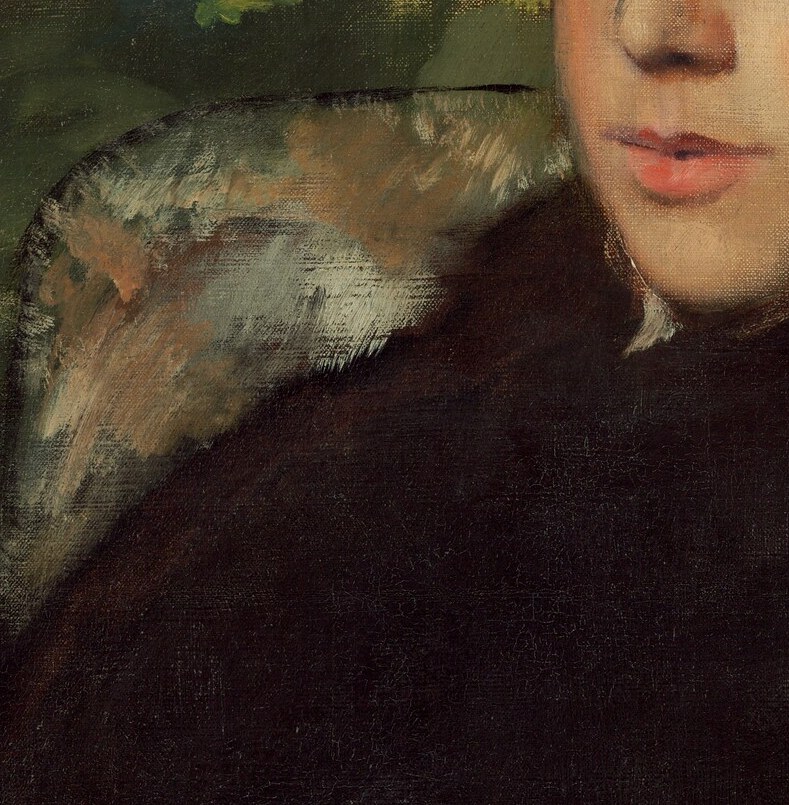
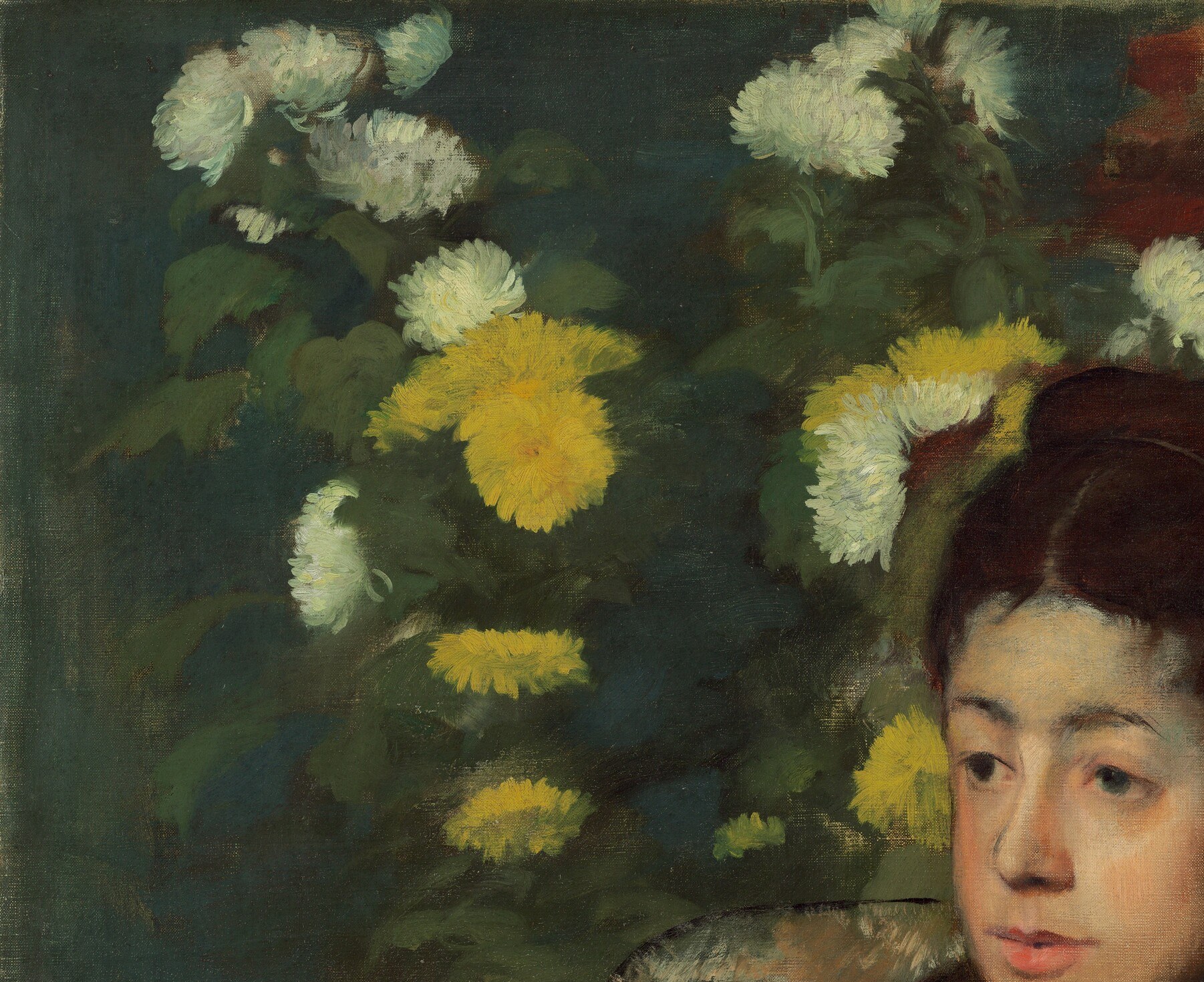
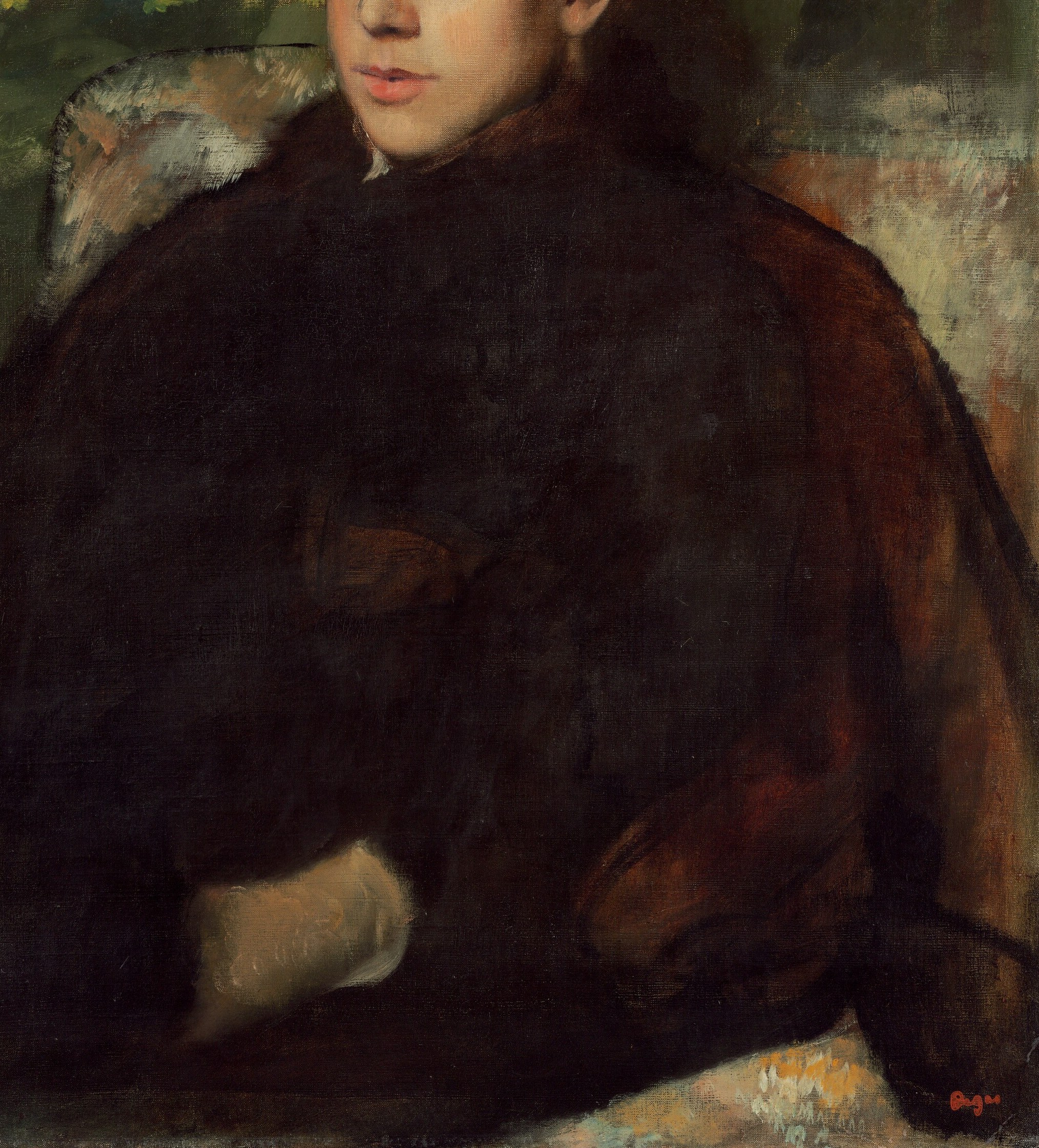
This is *Mademoiselle Malot*, a portrait by Edgar Degas from around 1877, now in the collection of the Art Institute of Chicago. Degas famously rejected the Impressionist label, preferring to call himself a realist, and that tension is on full display here: a rigorously composed interior that manages to feel completely unguarded.
Look past the woman's heavy dark dress and her neatly folded hands. Degas traps her in a shallow, shadowy space, but the real twist is on the far left edge of the canvas. Another figure is cut off mid-body, shoved outside the frame. Degas did this deliberately. Influenced by photography and Japanese prints, he used radical cropping to make a staged portrait feel like a raw, accidental moment you just walked in on.
Painted during a period when Degas was expanding beyond the ballet scenes that made him famous, this portrait shows his deep interest in psychological isolation. The sitter isn't given a lush, flattering backdrop; she's placed next to a cropped stranger in a dark room, making her introspection feel less like peaceful quiet and more like social withdrawal. We don't know who the obscured person is, and that ambiguity is the point.
Is she daydreaming, or is she deliberately ignoring the person beside her? Degas leaves the question hanging.
Details

Transcript
She sits alone, dressed in heavy black. A sober portrait from Degas, the 'realist' Impressionist. Her hands rest quietly. Her expression is unreadable. But she isn't actually alone in this room. Another person is cut off at the edge of the canvas. Degas often cropped figures to capture life's awkwardness. It turns a formal portrait into a fleeting, uneasy glimpse.