La Salle's Party Feasted in the Illinois Village. January 2, 1680 by Catlin, George
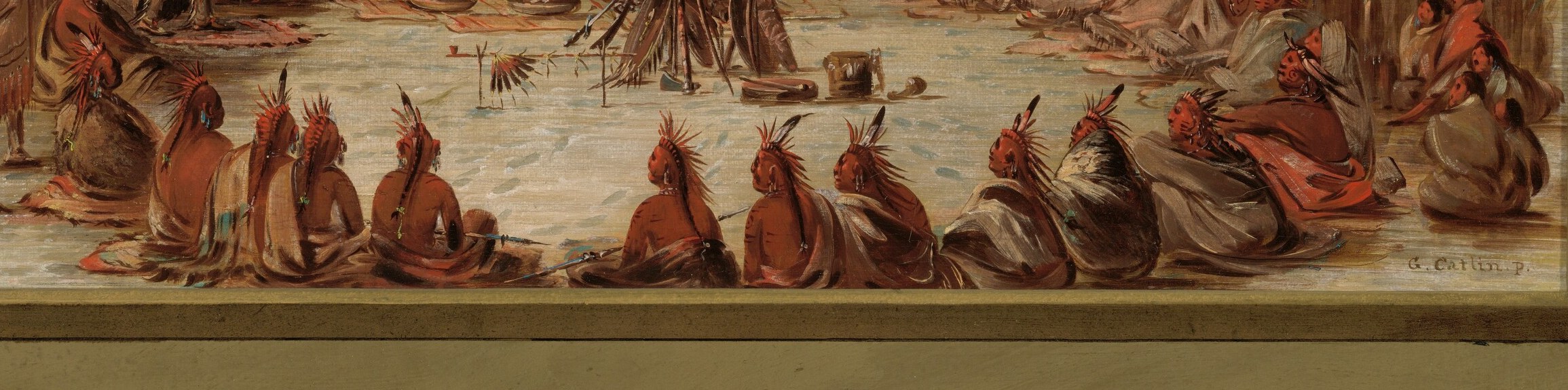
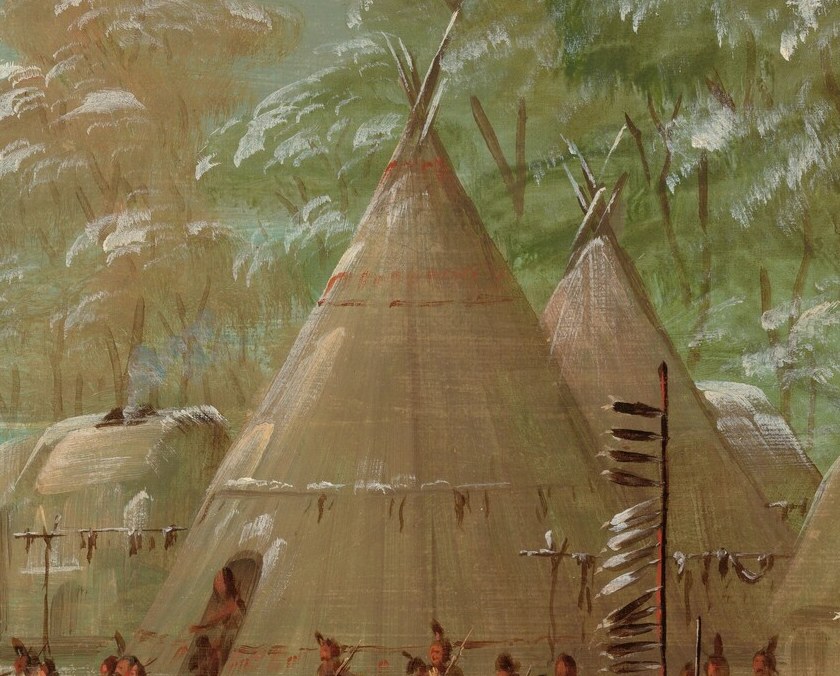
This is George Catlin's 'La Salle's Party Feasted in the Illinois Village. January 2, 1680.' Painted in 1848, it hangs in the Smithsonian American Art Museum. The scene reconstructs a moment of diplomacy: the French explorer René-Robert Cavelier, Sieur de La Salle, sharing a winter meal with the Illinois people. Catlin was not there; he painted the encounter nearly 170 years after it happened, using his own years among Native nations in the 1830s to give it life.
Look first at the fire pit, the visual anchor of the whole gathering. The man in the red robe pulls your eye, a figure of authority against the snow. Now scan the very top edge of the painting. You will find a tiny white marker in the border, a small catalog number. It is easy to scroll past, but it tells a story of its own: this work has been inventoried, exhibited, and handled by curators who tracked it through collections for over a century.
Catlin painted this on a humble piece of card, later mounted on paperboard. He was a lawyer who became a painter and traveled the American West five times to document Indigenous life. His early work included engravings of the Erie Canal; by the 1840s, he turned to history paintings like this one, trying to catch moments that had slipped into the past before photography could reach them. The work is not ranked among the most famous, but the small white marker proves it was never forgotten.
Next time you stand before a painting in a museum, check its edges. The frame often hides the small scars and stamps that tell you where the work has been and who kept it safe.
Details
Transcript
Winter, 1680. A French explorer is welcomed with fire and food. The artist built this scene from memory, 170 years later. He painted it on a simple card. The card was later mounted on paperboard for preservation. Now look at the very top edge. A tiny white number sits in the border. This is a curator's mark from a past exhibition.