The Thousand Buddha Hall and the Pagoda of the "Cloudy Cliff" Monastery, from Twelve Views of Tiger Hill, Suzhou by Shen Zhou
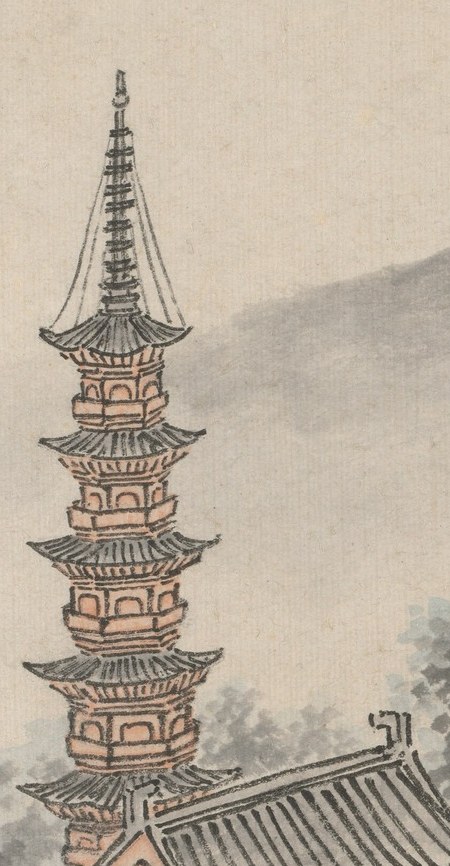
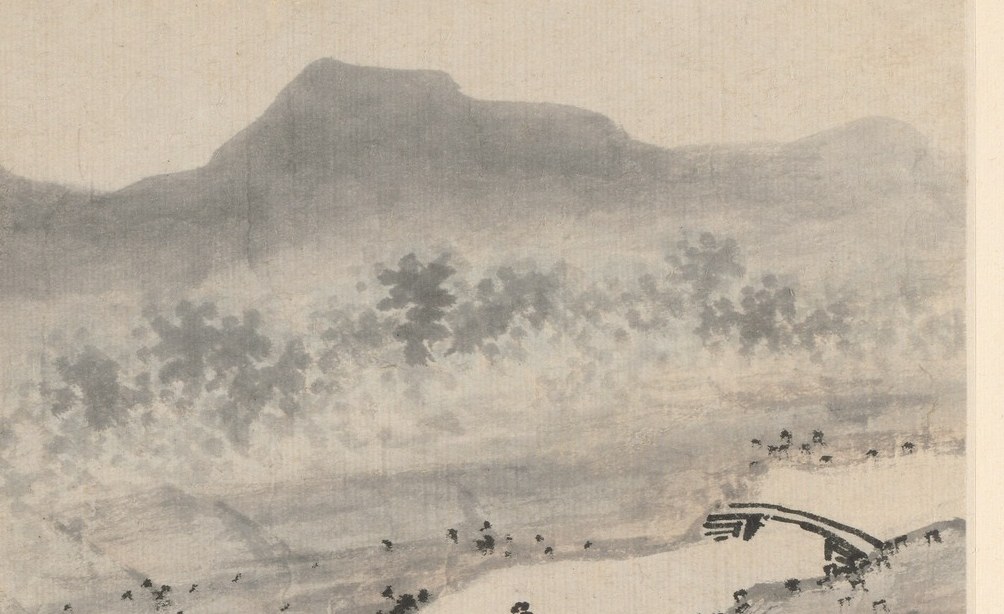
Shen Zhou's "The Thousand Buddha Hall and the Pagoda of the 'Cloudy Cliff' Monastery" (circa 1500) at The Cleveland Museum of Art, showcases his incredible control of ink and perspective.
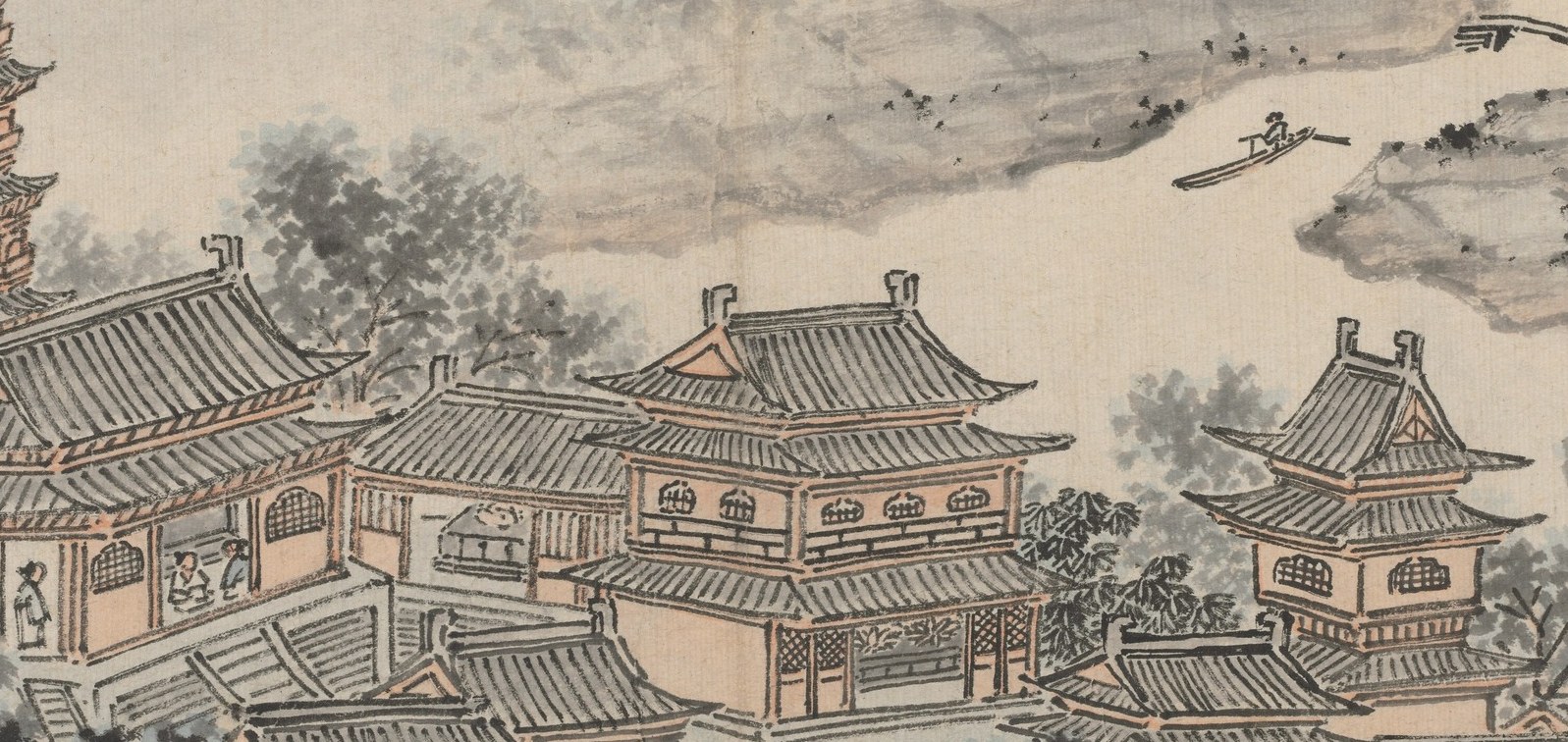
Notice how the artist creates a sense of immense depth. From an aerial viewpoint, the intricate monastery rooftops appear almost like an architectural plan, with each tile and curve meticulously rendered. Yet, the entire scene feels dynamic, not flat.
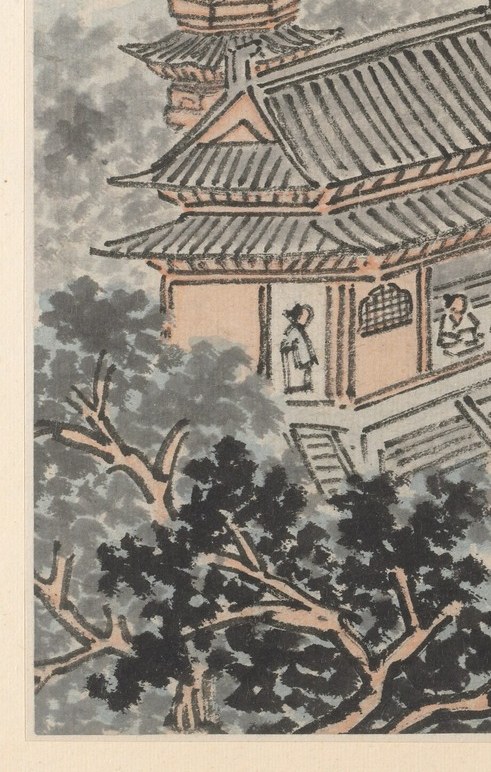
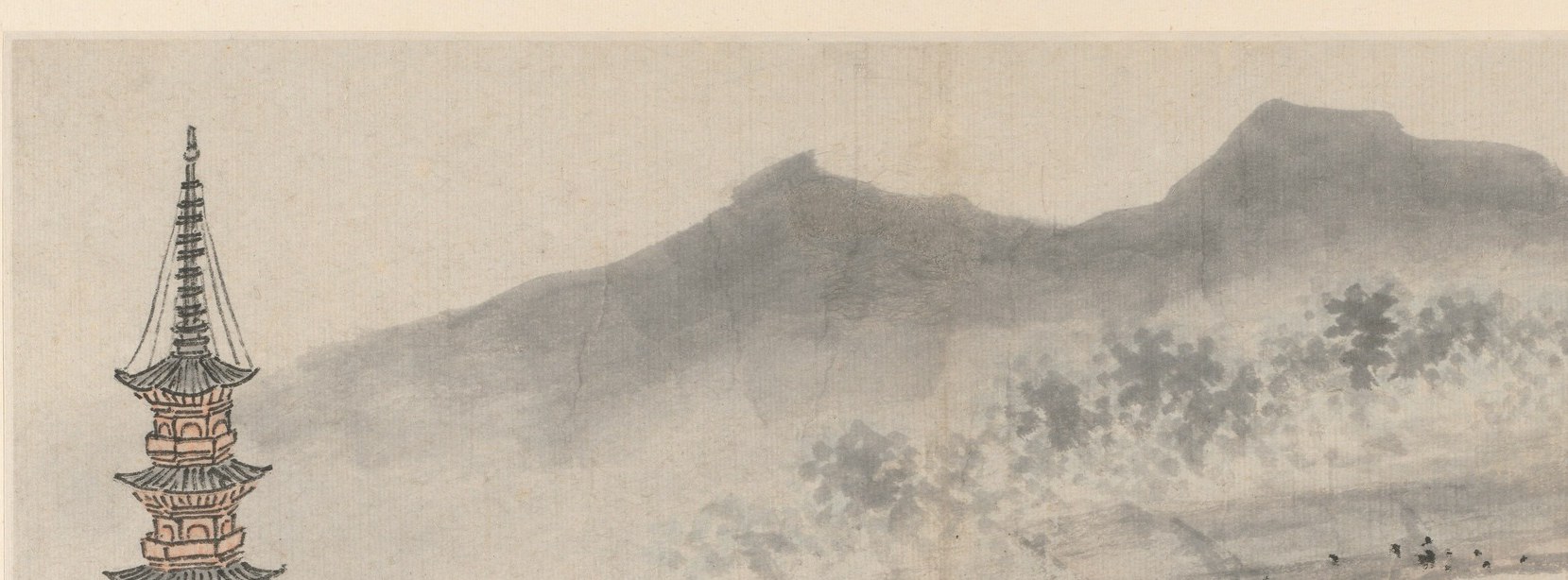
He achieves this through what's known as 'ink play.' Look closely at the foreground trees, painted with rich, wet, and dark strokes that stand out boldly. Then, see how the distant mountains gently fade into soft, pale washes, almost disappearing into the silk itself. This masterful contrast between sharp detail and misty indistinctness draws your eye through the landscape, making a two-dimensional surface feel vast and alive.
Shen Zhou, a prominent literati painter of the Ming dynasty, often explored famous sites like Tiger Hill in his work. He was renowned for his versatile style, moving between copying old masters and developing his own expressive, yet contemplative, landscapes. What details do you notice first?
Details
Transcript
This painter was a master of ink. He renders a complex monastery from above. See how the tiled roofs interlock like a map. He uses wet, dark strokes for trees in front. While distant mountains dissolve into pale washes. This 'ink play' creates depth from a flattened view. His brushwork feels both precise and effortless.