Mother and Child by the Sea by Johan Christian Dahl
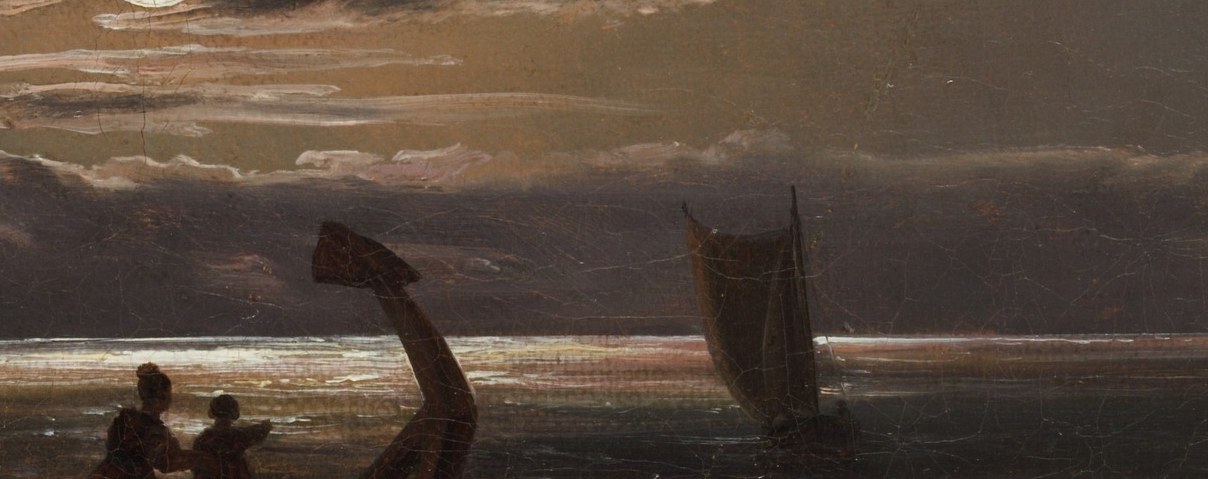
This is "Mother and Child by the Sea," painted by Johan Christian Dahl in 1830. It lives at the Metropolitan Museum of Art. On its surface it is a simple nocturnal coastal scene, but the longer you look, the more it holds its silence.
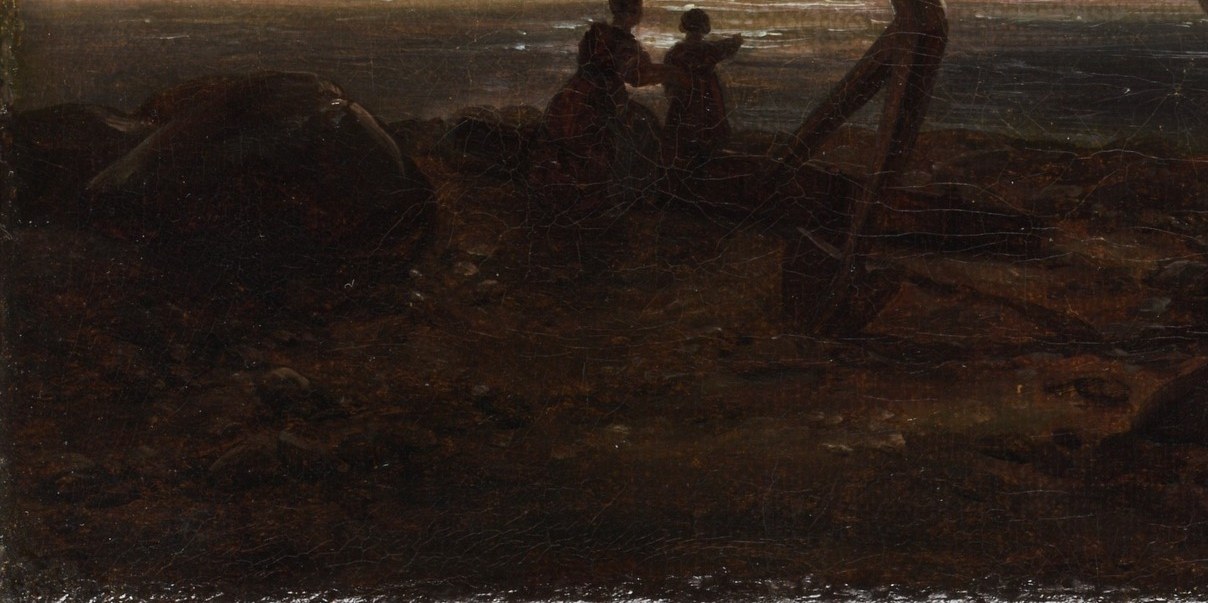
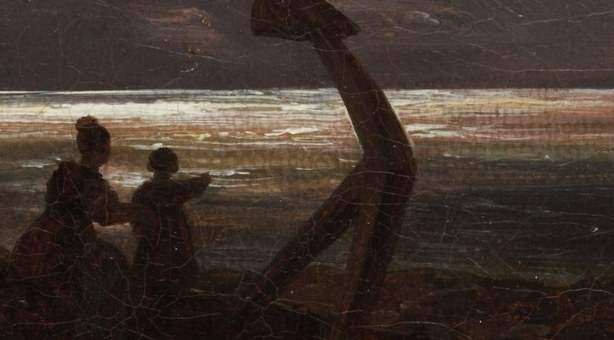
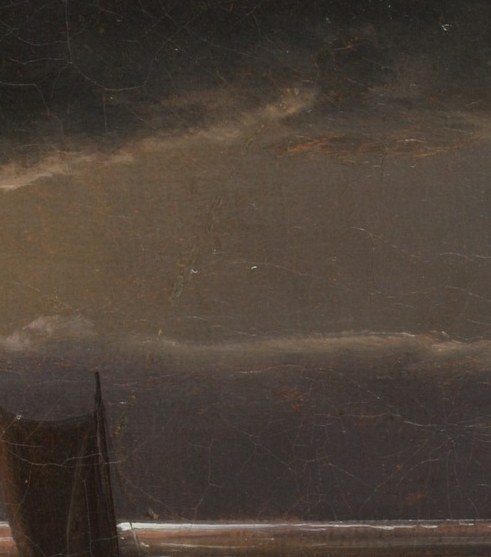
Two figures anchor the foreground: a woman seated on the rocks, bent slightly forward, and a child standing beside her. The woman's arm is raised toward the water, pointing at a single distant sailboat. The gesture is small but everything in the composition follows it. A ribbon of moonlight on the sea connects the shore to the boat, pulling your eye across the dark water in one uninterrupted line. Above, a bank of rolling cloud thins just enough to let the moon through, giving the scene its only light.
Dahl is often called the father of Norwegian landscape painting. He was the first Norwegian painter to build a reputation across Europe, and he spent long stretches of his career in Dresden, far from the fjords and storms he loved to paint. This canvas, made in 1830, shows him working firmly inside the Romantic tradition: nature mirrors human emotion, scale dwarfs the individual, and light is the carrier of meaning. He built the image in a practical, disciplined way, laying in the luminous band of water and moon first, then constructing the heavy darks of the rocks and cloud around it.
The painting does not tell you why the woman and child are there, or whether the boat is arriving or departing. It simply holds the moment of watching. What do you think she is looking at?
Details

Transcript
A woman and child wait on a rocky shore. They have been here a while. Her arm extends toward the distant water. A sailboat is out there, alone on the sea. Johan Christian Dahl painted this in 1830, far from his Norwegian home. He built the scene backwards: light first, then the dark. A sliver of moon breaks through, tying the shore to the boat. The painting asks a single question no one can answer.