Mrs. Robert Shurlock (Henrietta Ann Jane Russell, 1775–1849) and Her Daughter Ann by John Russell
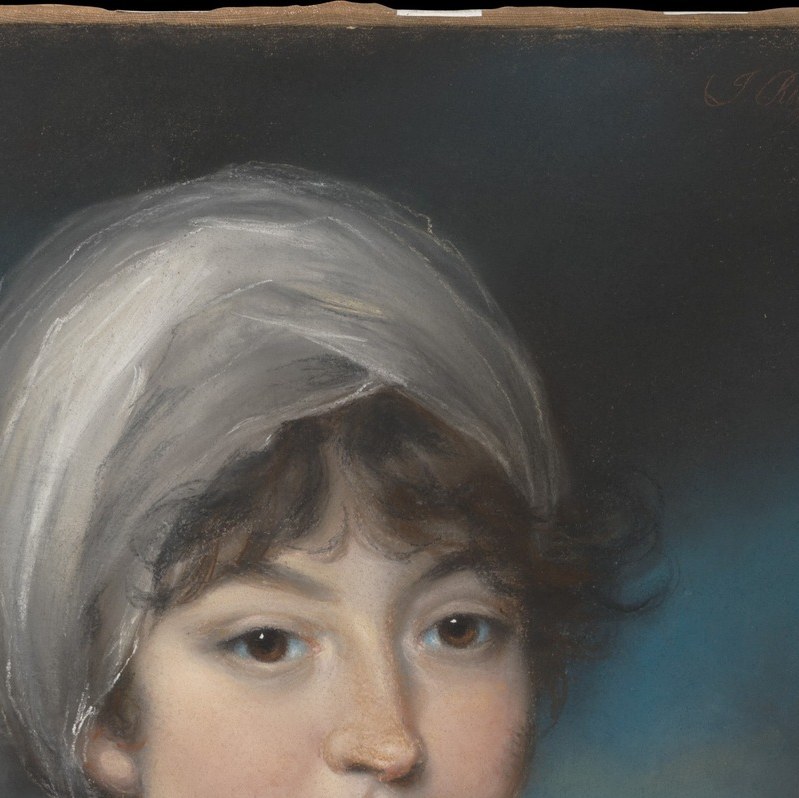
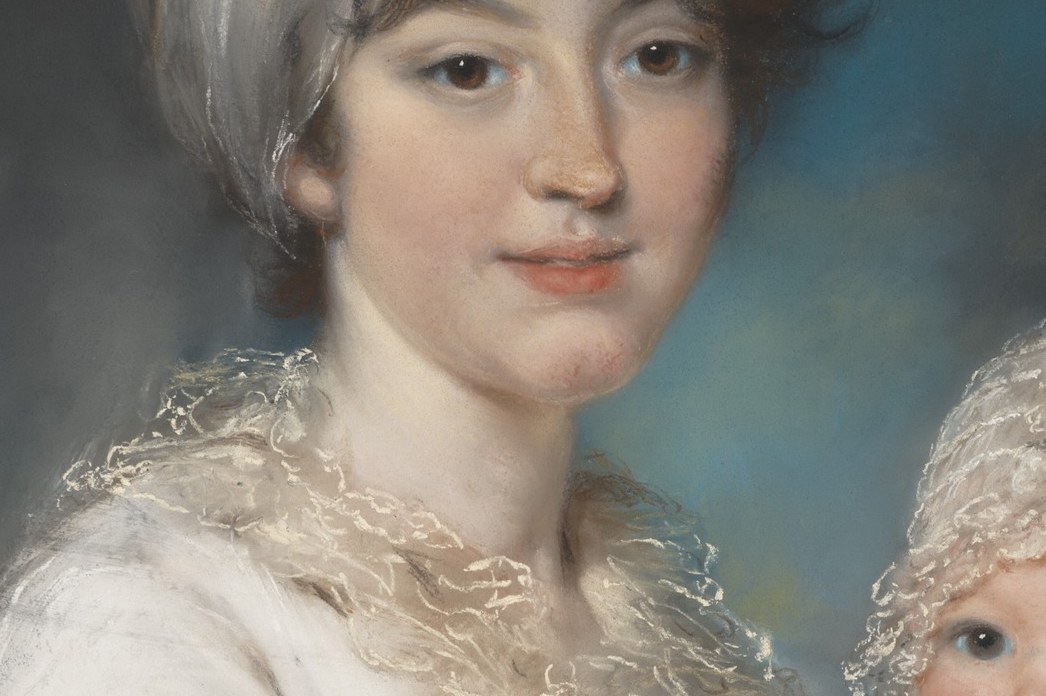
John Russell painted this pastel portrait of his daughter Henrietta Ann Jane and her infant Ann in 1801, and he never took a shilling for it. The work stayed with the family, a private record rather than a commission. Russell was Painter to King George III and a Royal Academician, celebrated for his pastel technique, but this picture was purely personal, a grandfather capturing two generations in white.
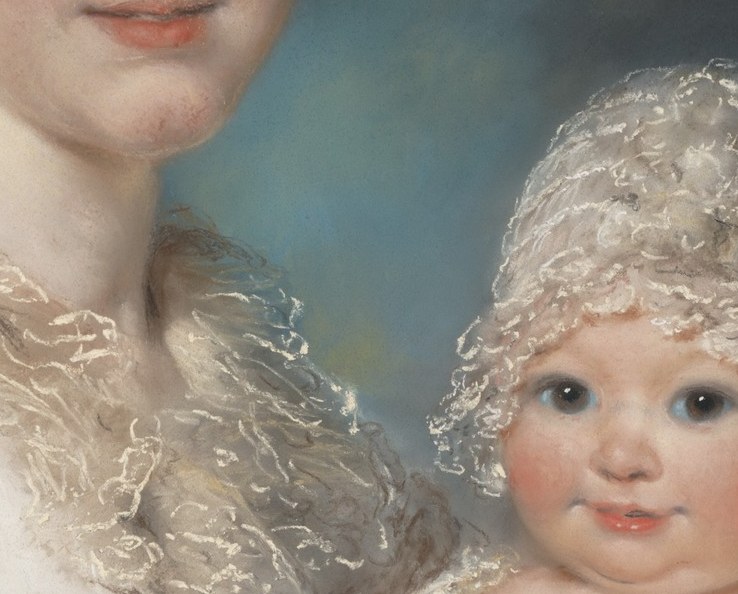
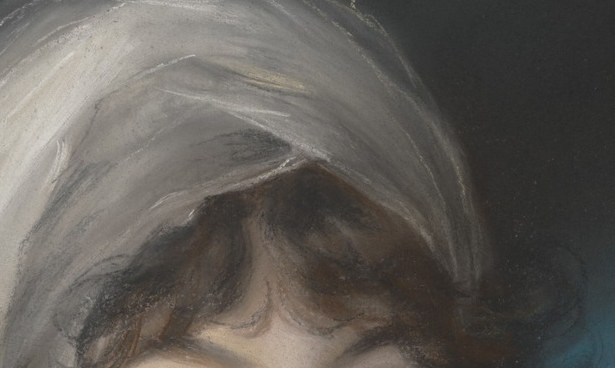
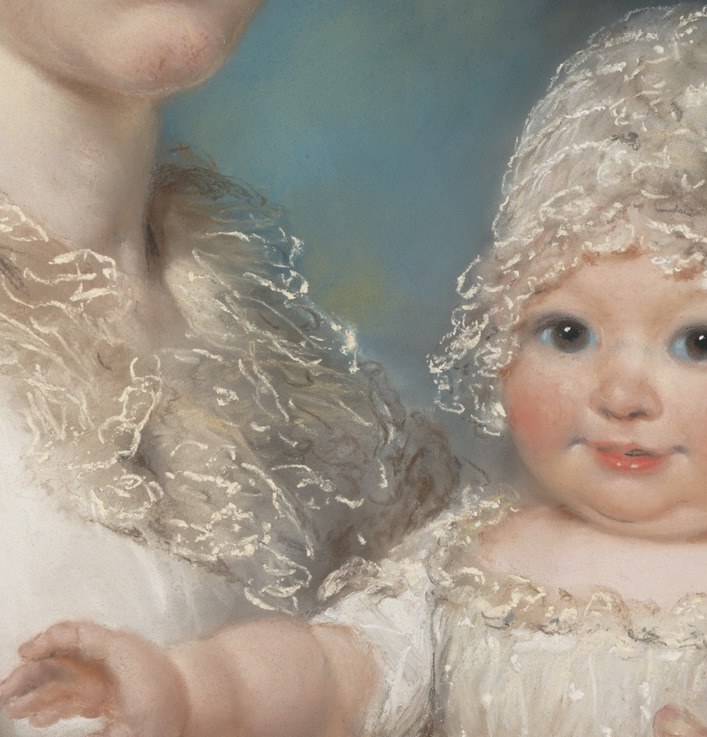
The real show is the white-on-white problem. The mother’s gauze shawl, the baby’s lace cap, the textured cotton dress, all against a near-white gown and a dark ground. Russell differentiated every surface by controlling the tooth of the pastel: soft blending for translucent lace, sharper strokes for embroidery, unblended highlights for the catchlight in two pairs of dark eyes.
Henrietta married Robert Shurlock, a surgeon, and the portrait passed through the family without fanfare. Pastels are notoriously fragile, light-sensitive, impossible to clean, vulnerable to vibration, so its survival in this condition is a minor miracle. The infant Ann’s direct, wide-eyed stare still does the work of pulling a viewer in, while her mother’s composure anchors the picture in Regency decorum.
A painting made for love, not money. What do you notice first, the protective arm, or the baby’s reaching hand?
Details
Transcript
The artist never sold this picture. He painted it for himself. His daughter. Her child. Look at the lace. Pastel on paper, built in soft layers until it reads as transparent gauze. Now the cap. Same white. Entirely different texture. John Russell kept this in his own house until he died.