The Expulsion of Adam and Eve from Paradise by West, Benjamin
View the artwork: The Expulsion of Adam and Eve from Paradise →
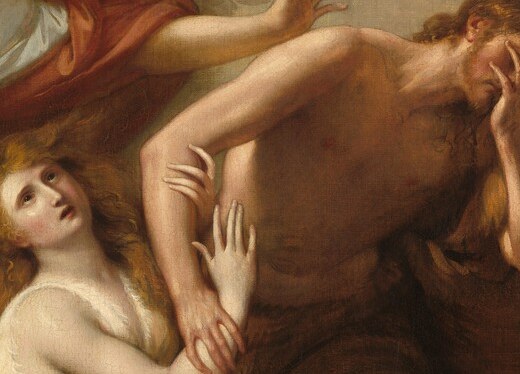
Benjamin West's 'The Expulsion of Adam and Eve from Paradise' (1791) is a monumental canvas that turns a biblical story into a study in light as moral force. Painted for King George III's planned but never completed Royal Chapel at Windsor Castle, the work hung in private collections for two centuries before the National Gallery of Art in Washington acquired it in 1989.
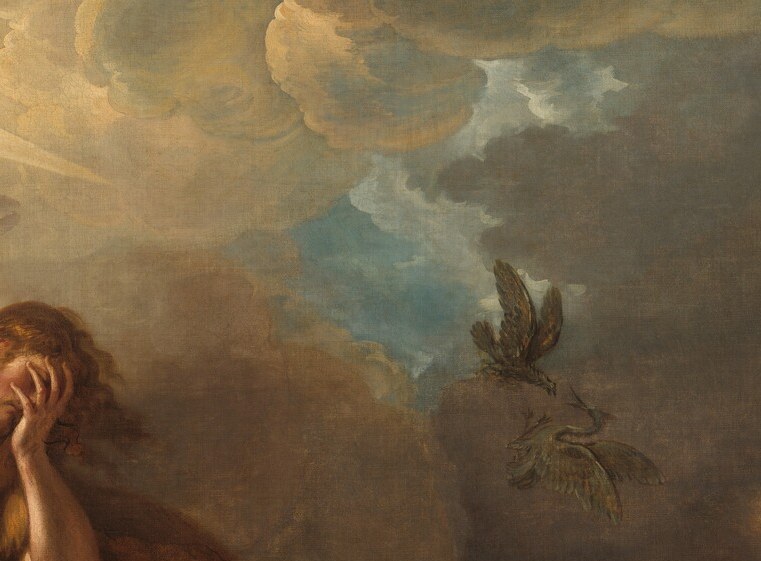
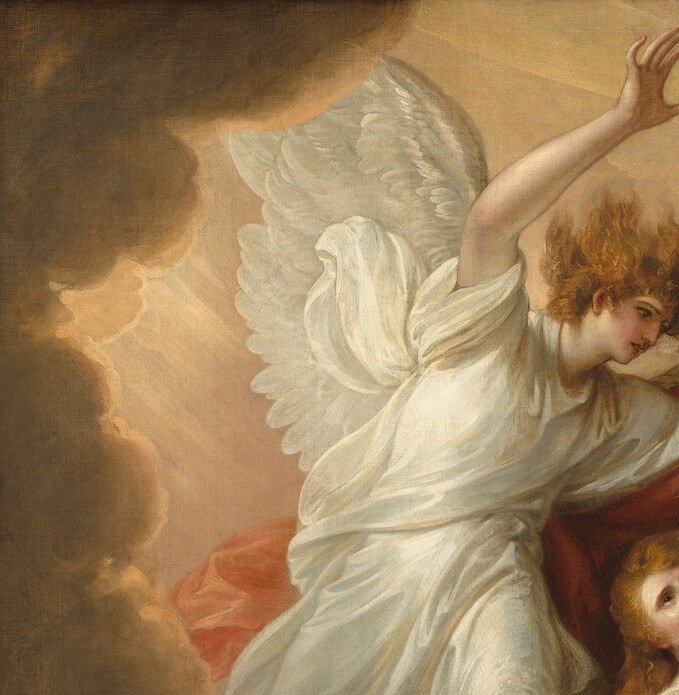
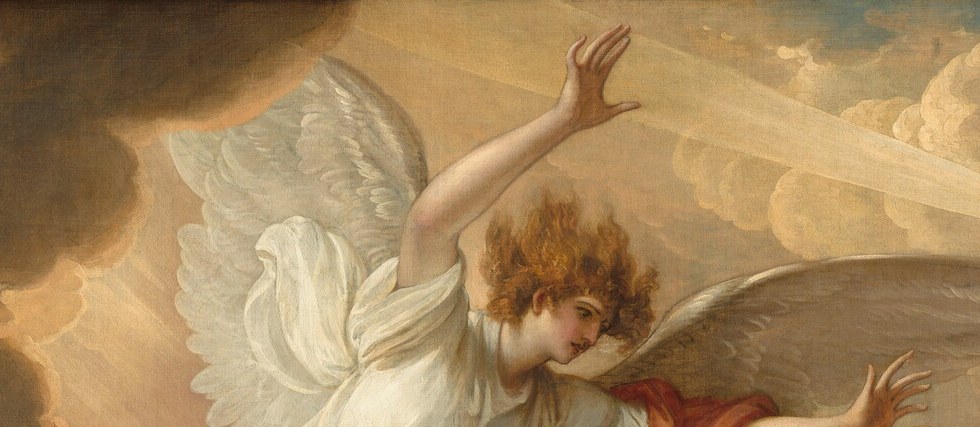
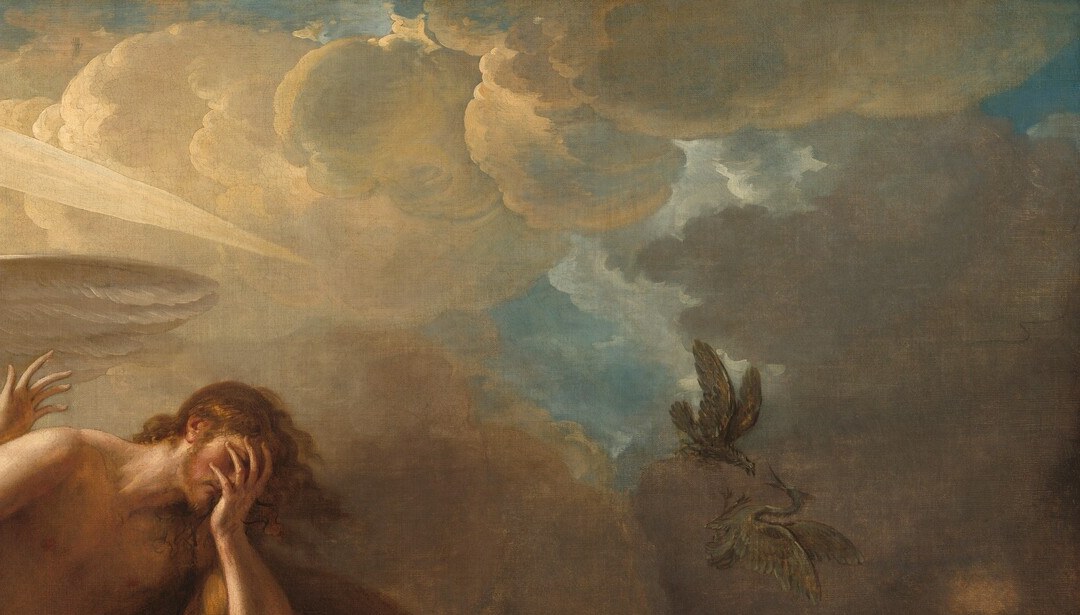
Watch the painting's vertical centerline. On the left, divine gold light floods the Archangel Michael and touches Eve's upturned face. On the right, the sky collapses into storm-grey wilderness. West splits Eden and the fallen world with nothing but paint and contrast.
Eve is the emotional hinge of the composition. Where Adam hides his face, Eve looks directly at the angel, her expression holding grief, supplication, and the first weight of consequence. The angel needs no flaming sword, his pointing arm and that shaft of light carry the expulsion alone.
West was an American who rose to become President of the Royal Academy in London, and the abandoned chapel project was the most ambitious commission of his life. What do you notice in the dark half of the painting that you missed at first glance?
#arthistory #benjaminwest #ngadc
Details
Transcript
One act. Three bodies. And a line of light. Eve alone confronts the angel. Her face is the emotional center of the canvas. The angel's pointing arm carries the entire verdict. No flaming sword, just light as judgment. In 1791, Benjamin West painted this for a king's chapel. He knew: light itself could be theology.