Crusaders before Jerusalem by Wilhelm von Kaulbach
Wilhelm von Kaulbach painted Crusaders before Jerusalem in 1849, and it hangs today in the Metropolitan Museum of Art. What he painted was the moment in July 1099 when, according to multiple crusade chroniclers, the exhausted army camped before the city was swept by a collective religious vision: Christ and a heavenly host appearing above the Mount of Olives. Kaulbach was a German muralist who had already covered walls in Munich with grand historical and mythological scenes; here, working in oil, he brought the same monumental clarity to a private canvas. The result is a painting that treats a 750-year-old written account as a scene you could walk into.
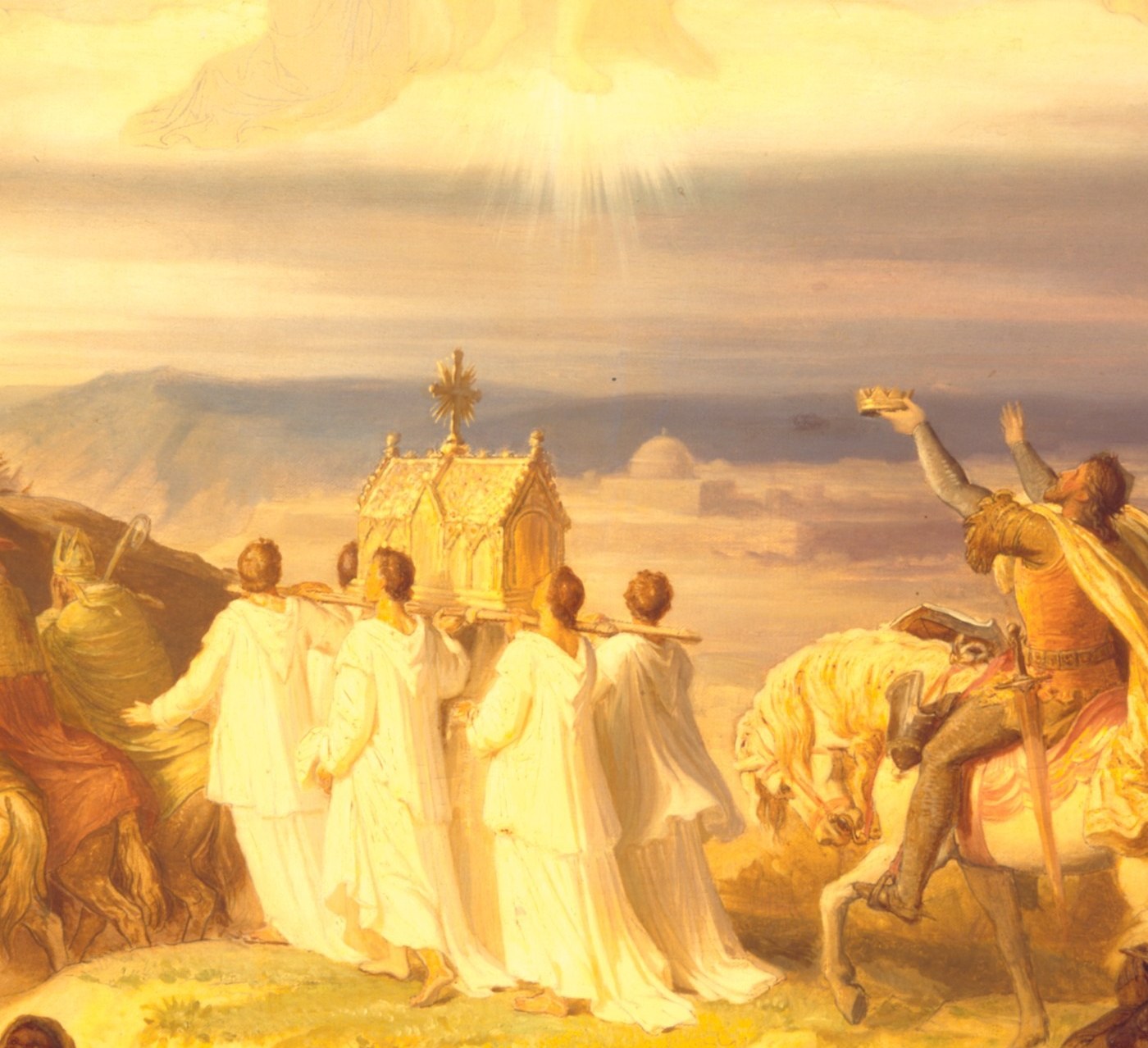
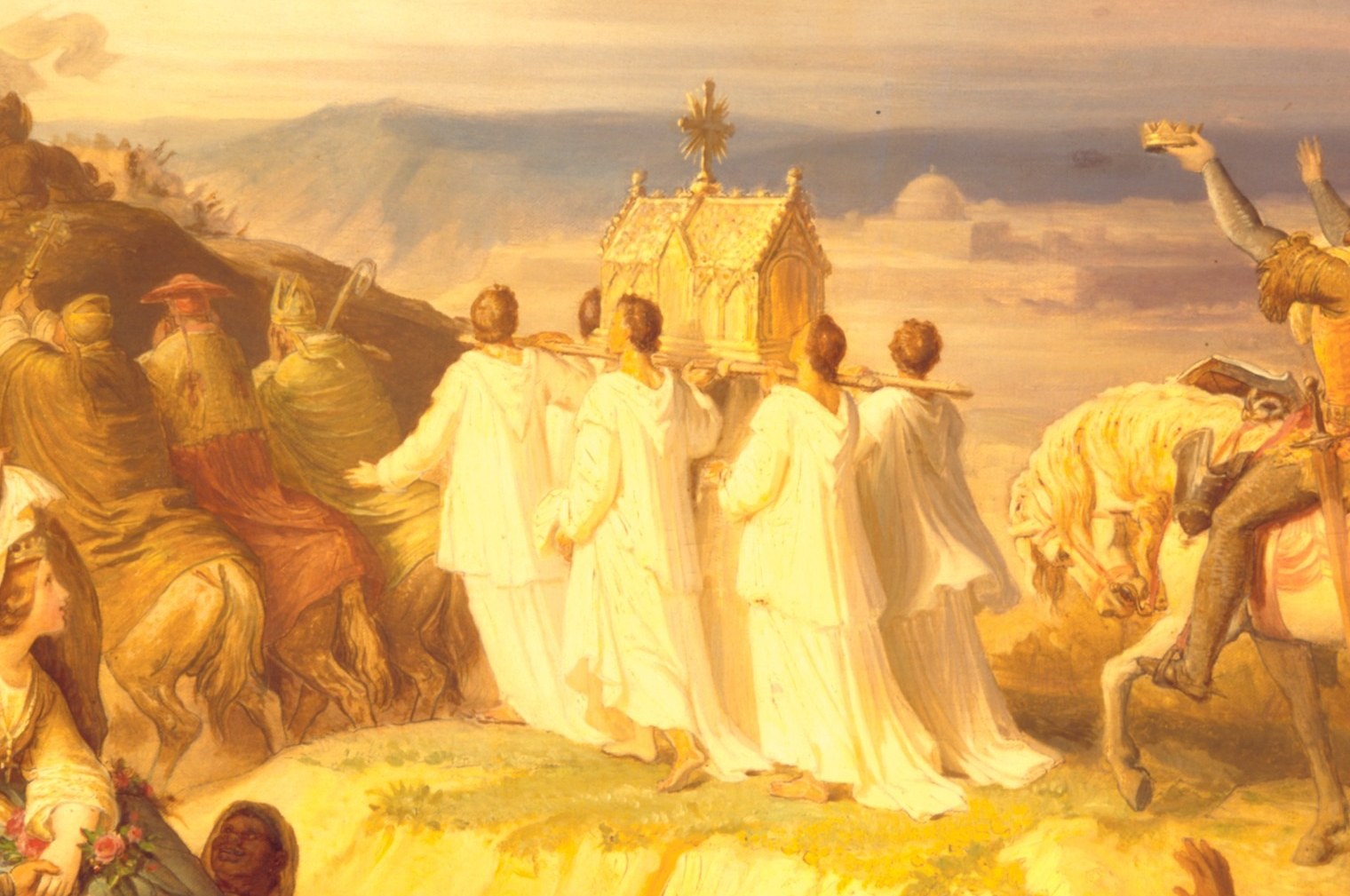
The painting's argument is in its light. The golden radiance around Christ is not symbolic distance, it pours down across the hill and onto the faces and raised arms of the crowd. Kaulbach's strongest technical move is the gradient from that supernatural white-gold into a warm atmospheric haze and then into the browns and blues of earthly armor and shadow. Follow it from the top of the canvas down through the white-robed figures on the crest into the mass of soldiers. The light is the event.
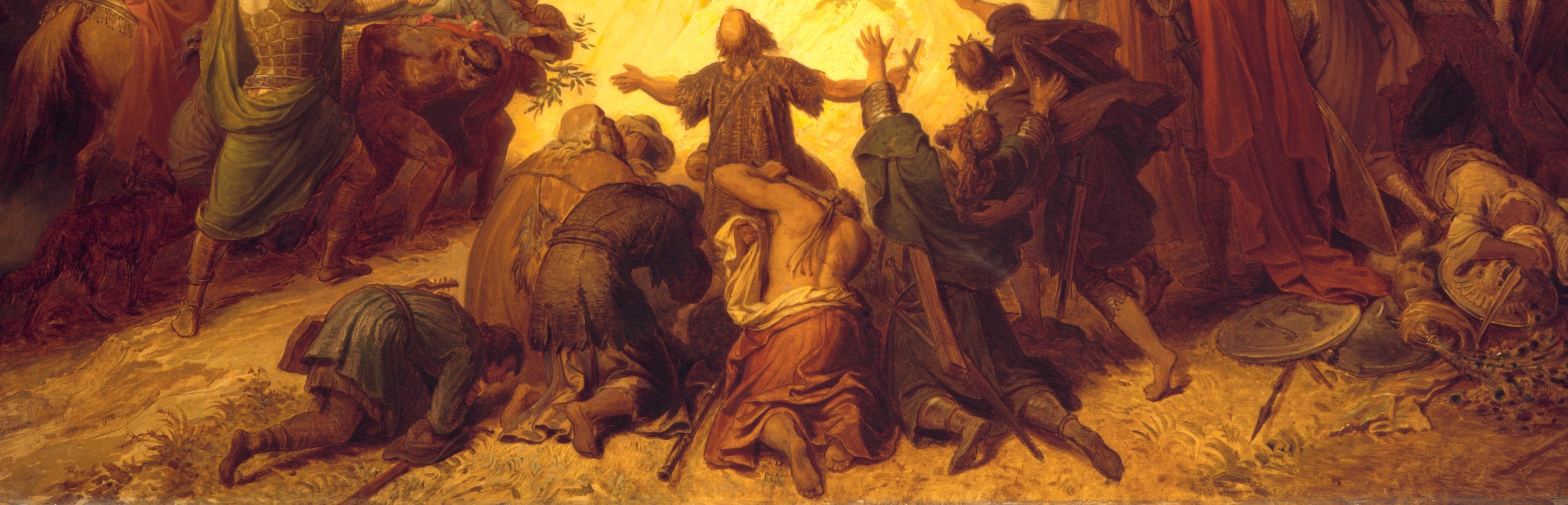
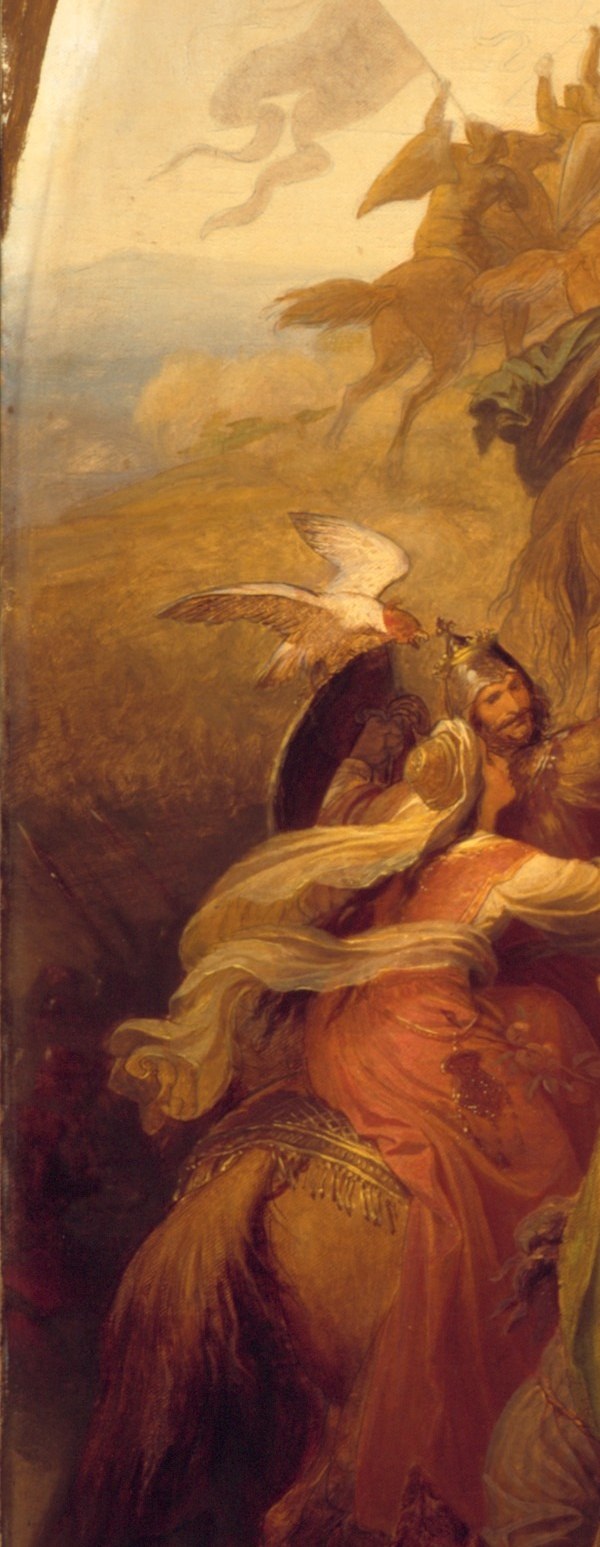
The men in the foreground tell you the emotional register. These are armored soldiers who have crossed continents, and they are prone, kneeling, their martial identity collapsed into sheer supplication. The left margin complicates the story: shadowed warriors with shields who do not yet seem to have seen what everyone else is reacting to. Kaulbach folded the delay of recognition, some still looking down or at each other, into the same frame as the ecstasy. It's a historical painting that reads like a psychological one.
The painting belongs to the German Romantic tradition, where the Middle Ages were reclaimed as a period of spiritual intensity and national feeling. Kaulbach treats the crusaders' experience as genuine, a divine apparition as historical fact, which is what separates his approach from an ironic modern one. He wants you to understand what it would feel like to see what they claimed to see.
Details

Transcript
Jerusalem, 1099. The crusaders have reached the walls. Chroniclers wrote that a heavenly vision appeared above the Mount of Olives. Kaulbach makes it physical. Christ blazing over the hill. The white-robed figures are the hinge, they see it first. Arms rise. The mass of soldiers becomes a single body in worship. Look at the foreground. Men in armor are on their faces. But these men in shadow haven't seen it yet. The city they fought to reach is a blue ghost on the horizon.