Melon and Lemon by French 19th Century
A single melon, a slice, and a lemon. At first glance, this quiet painting is a celebration of simple, domestic abundance. But a closer look reveals a more coded message: a meditation on time itself. Melon and Lemon is an oil on panel by an anonymous 19th-century French artist, created around 1900, and now held in a private collection.
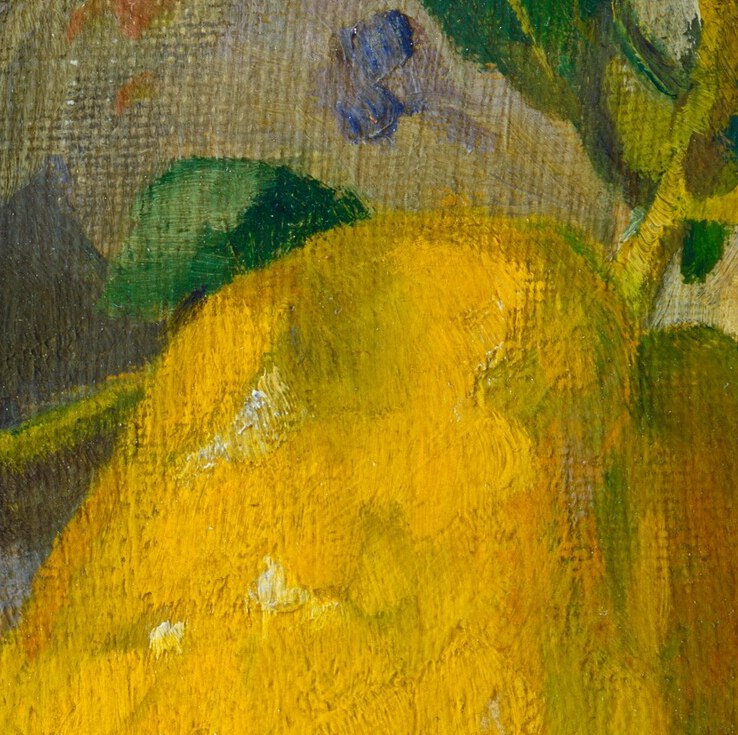
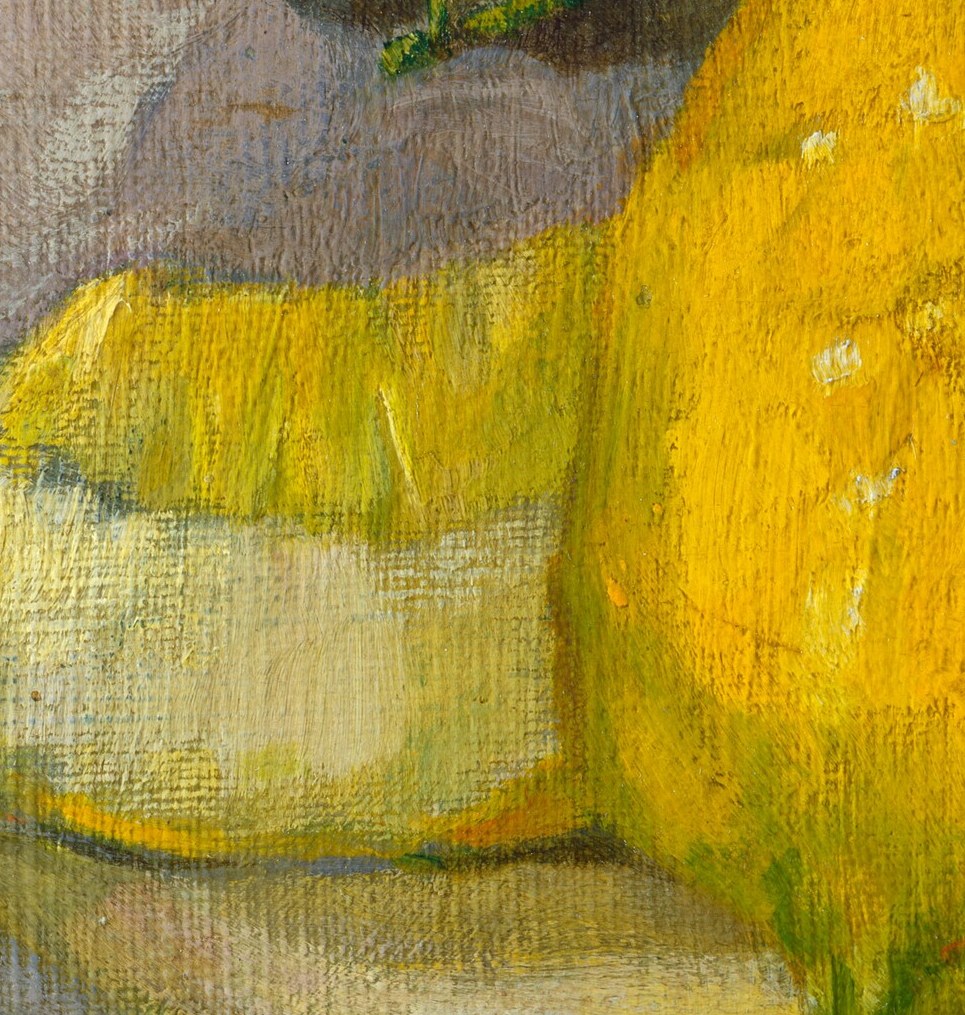
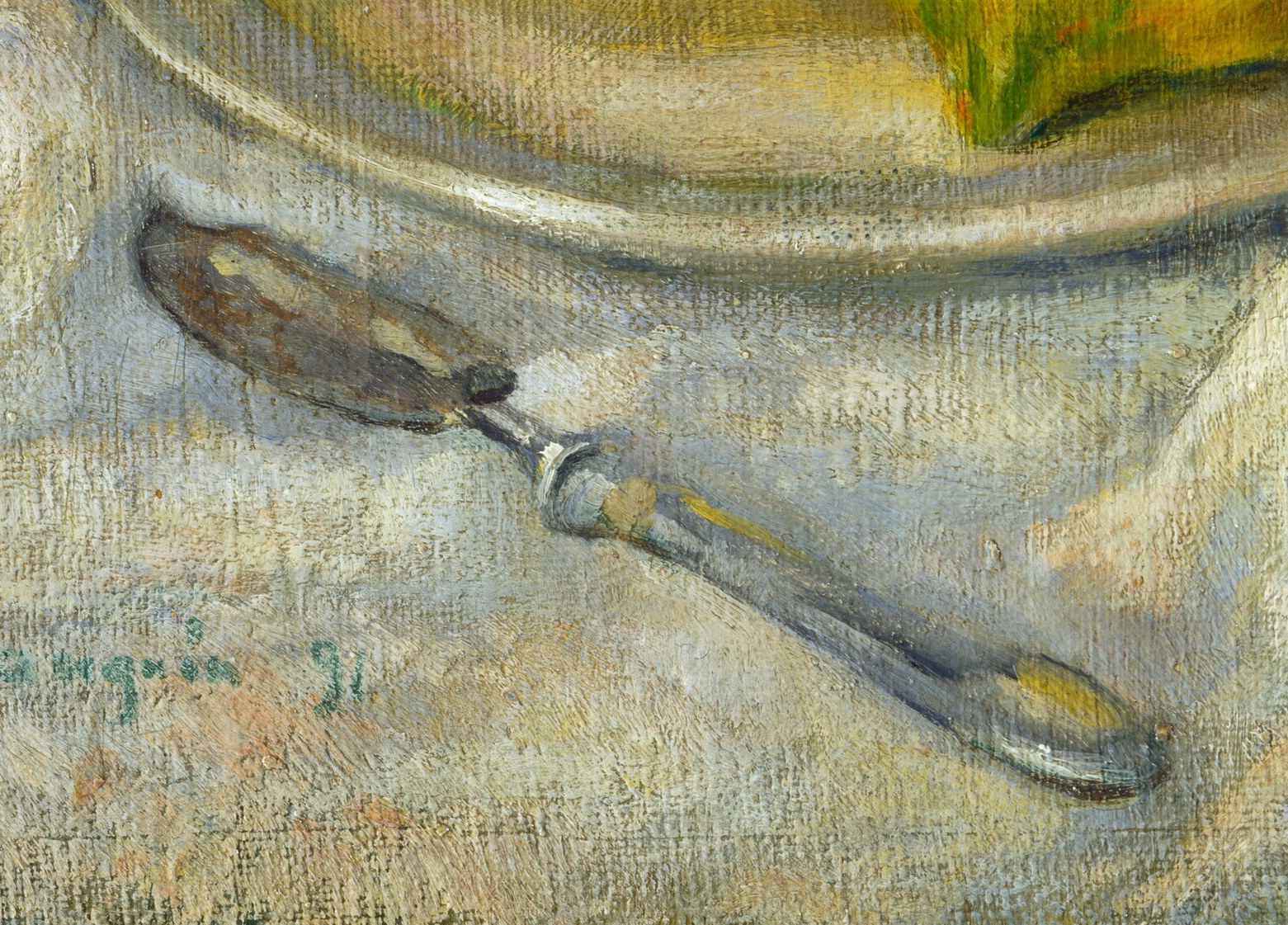
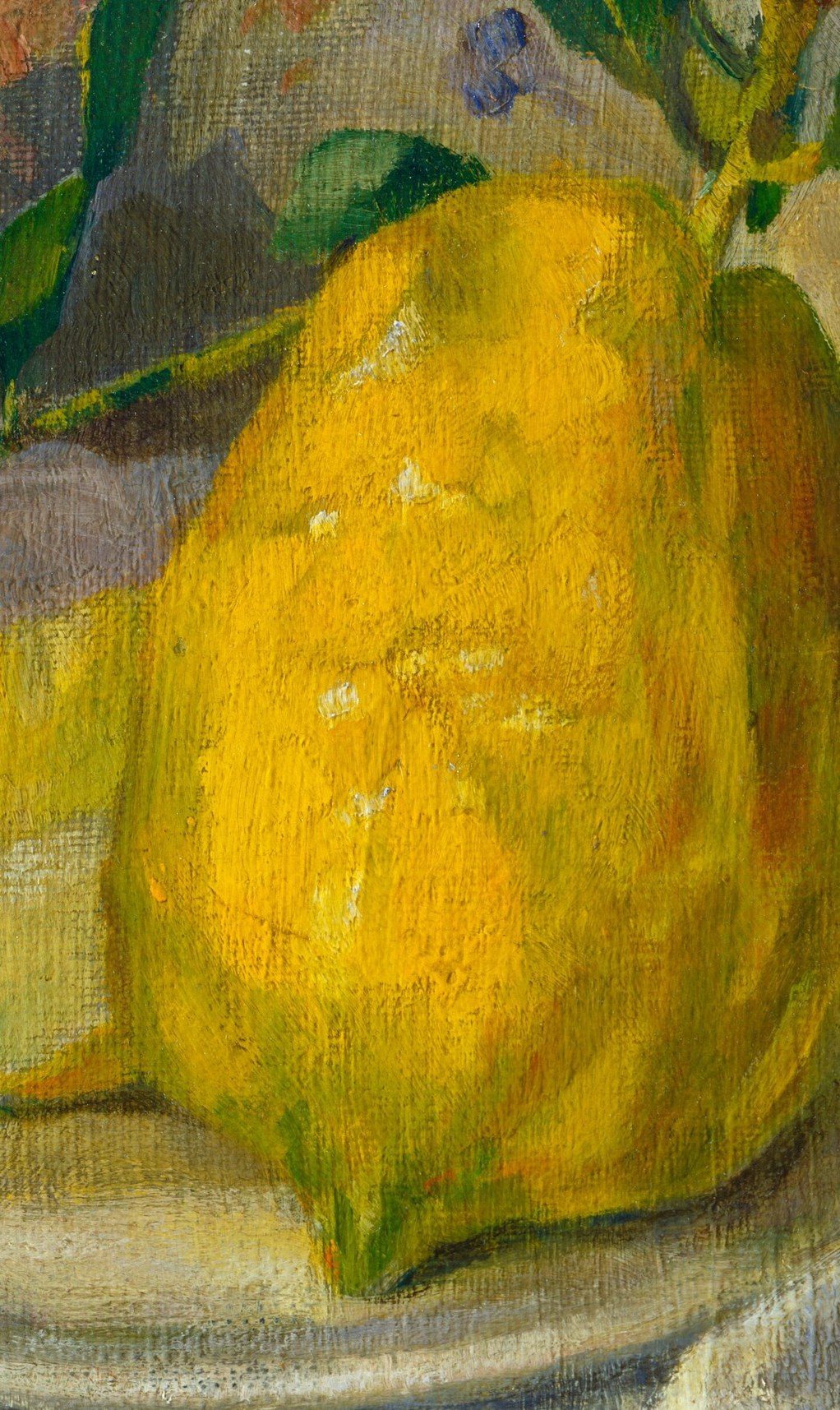
The painting’s code is in its details. The whole melon, with its leafy stem still fresh, represents life in its prime. Beside it, the cut slice exposes the fruit’s interior, a signal that its peak moment has arrived. The silver knife, the instrument of that revelation, rests discreetly nearby, its work done.
In the still-life tradition, such everyday objects were never just decorative. A cut fruit was a classic emblem of vanitas: a reminder that ripeness and decay are two sides of the same coin. This modest, carefully observed painting asks us to look closely at objects that will soon be gone, and to find their beauty precisely because their time is fleeting.
What do you see when you look at the space between the whole and the cut fruit?
Details
Transcript
It looks like a simple still life. A melon, whole and vibrant, glowing with ripeness. Its leafy stem is still attached, a sign of life. Then a slice is cut, revealing the flesh inside. The silver knife rests beside it: the instrument. In the 19th century, a cut fruit spoke of passing time. Its peak is also its end, preserved only by paint.