The Bridge by Albert Pinkham Ryder
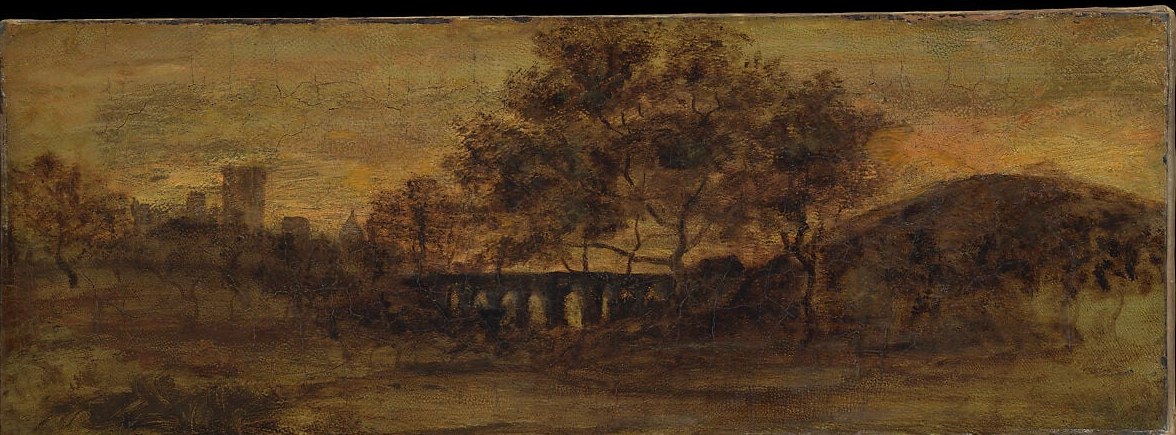
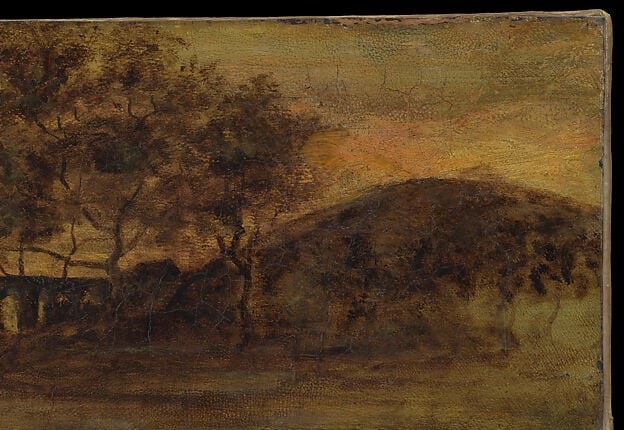
Albert Pinkham Ryder painted "The Bridge" around 1880, not on canvas, but on gilt leather, a support so unconventional it shaped the painting's entire character. The gold leaf beneath the thin oil glazes produced an internal luminosity that no mixed pigment could achieve alone.
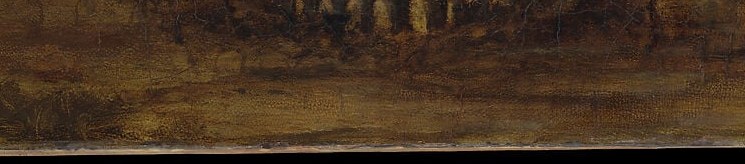
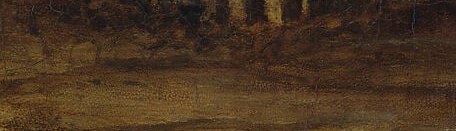
Look closely at the dark water beneath the bridge. The reflected arch completes the span above into a near-perfect oval, a geometric surprise inside what first reads as a loose, atmospheric study. Ryder built structure into the murk, and finding it rewards the patient eye.
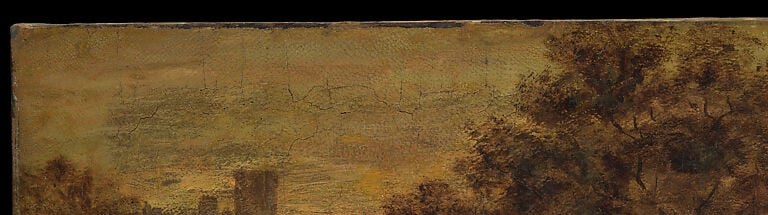
Ryder was an eccentric, a solitary New Yorker who became a legend for reworking his paintings obsessively, layering varnish and glaze until the surfaces cracked into rich, mosaic-like textures. The fine craquelure across this picture is not a flaw, it is a feature of his method, and it reveals the gold ground that makes the scene glow from within.
What quiet structures have you found hiding in a painting's shadows?
Details
Transcript
A dark bridge crosses still water. The painter worked on a strange surface: gilt leather. As the paint aged and cracked, the gold beneath began to glow. Now look at the water. The reflection completes the arch into a near-perfect oval. A hidden geometric shape, buried in the atmosphere.