Winter by Giaquinto, Corrado
Corrado Giaquinto’s “Winter” (c. 1745) is a mid-18th-century Italian painting of people simply getting through a cold night together. It is not a grand history or a religious scene. It is a small, glowing act of survival.
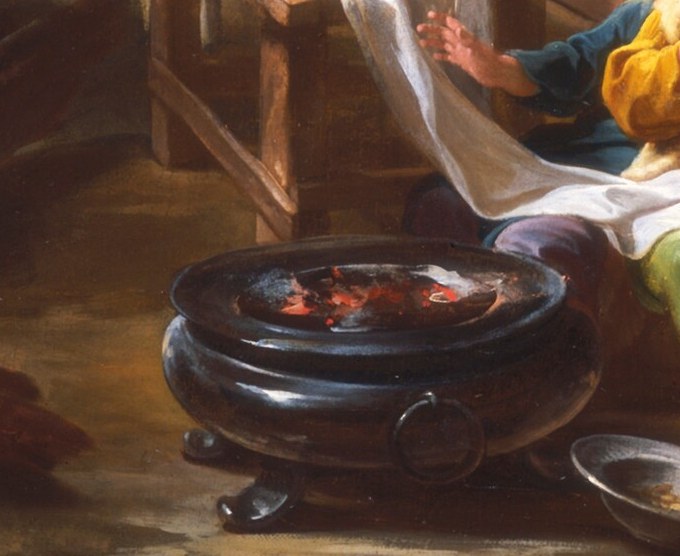
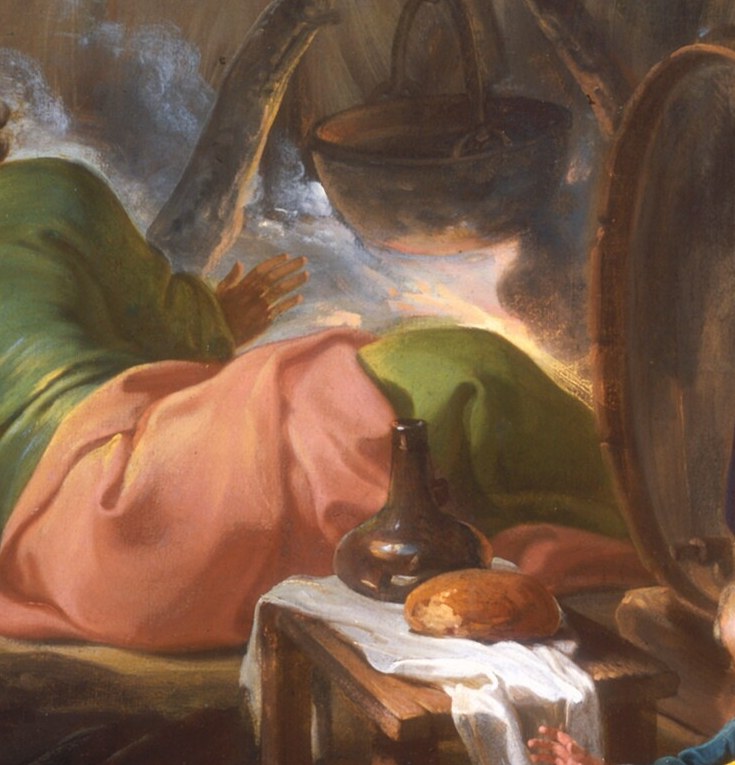
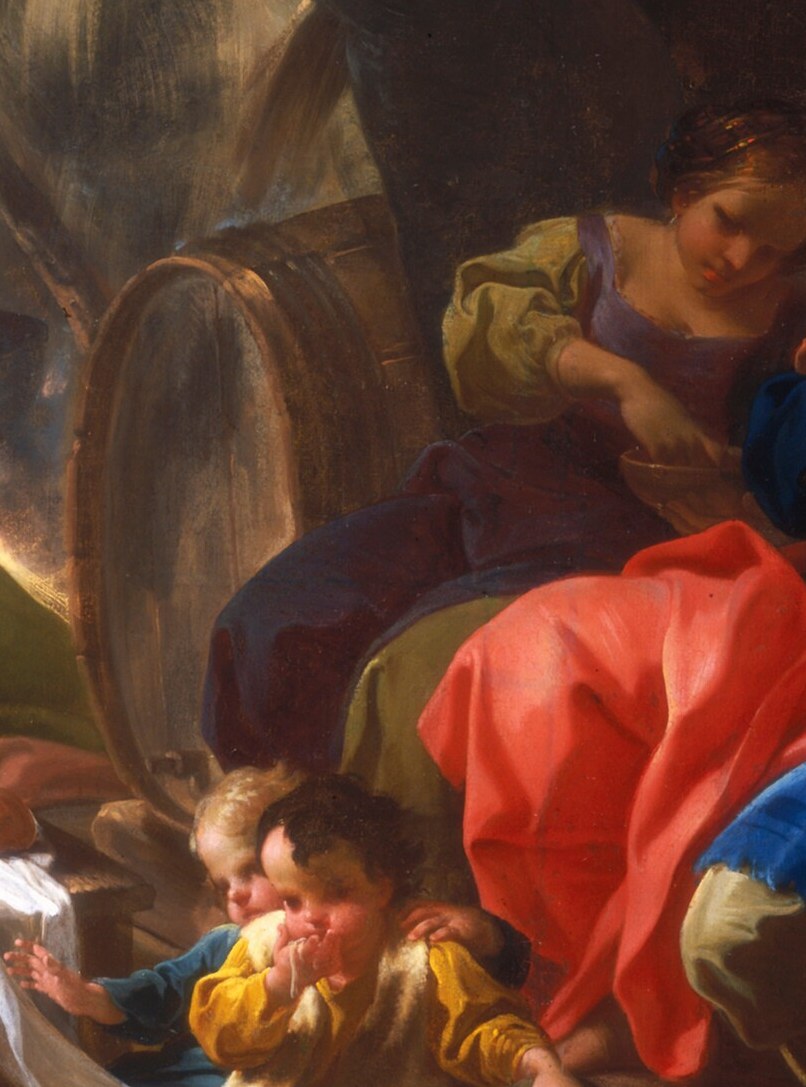
Look at how the dark, stormy sky presses down. Then look at the faces around the fire. Giaquinto uses the light from the embers to pull your eye from face to face: a man carving meat, a woman and child huddled close, a dog looking up for scraps. The red fabric draped nearby adds a visual burst of warmth exactly where the painting needs it.
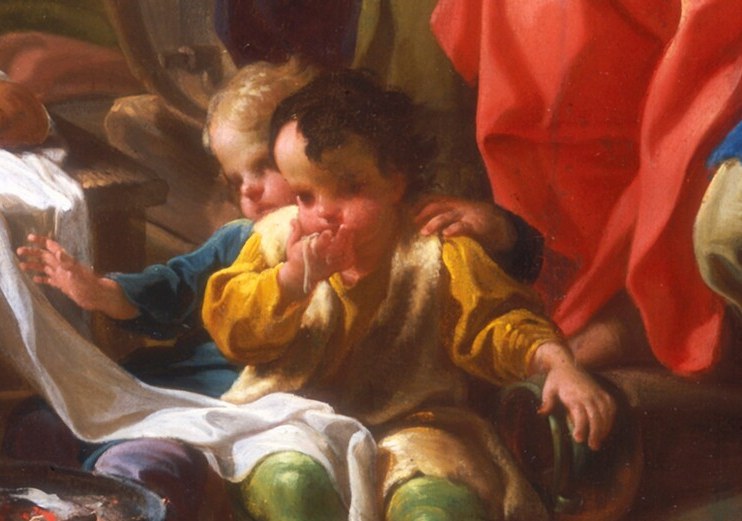
Giaquinto was a leading Rococo painter who worked for royal courts in Turin and Madrid, often producing airy, decorative frescoes for palace ceilings. Here, he chose a different register: a grounded, almost documentary glimpse of pastoral life. Such seasonal scenes were popular with aristocratic patrons who idealized rural existence, but the strength of this painting is in its plainness. One child is just eating.
A painting like this asks us to remember that before electricity, the hearth was the center of everything. What do you think they are sharing besides the fire?
Details
Transcript
Look at the sky. It is the dead of winter, around 1745. So everyone pulls close to the only heat. A man carves meat. A meal is coming. The painter makes the fire glow on their faces. A child eats. Not a grand feast; just food. The dog knows exactly what is happening. Giaquinto painted this not as a myth, but as a real evening.