The Happy Mother by Jean Honoré Fragonard
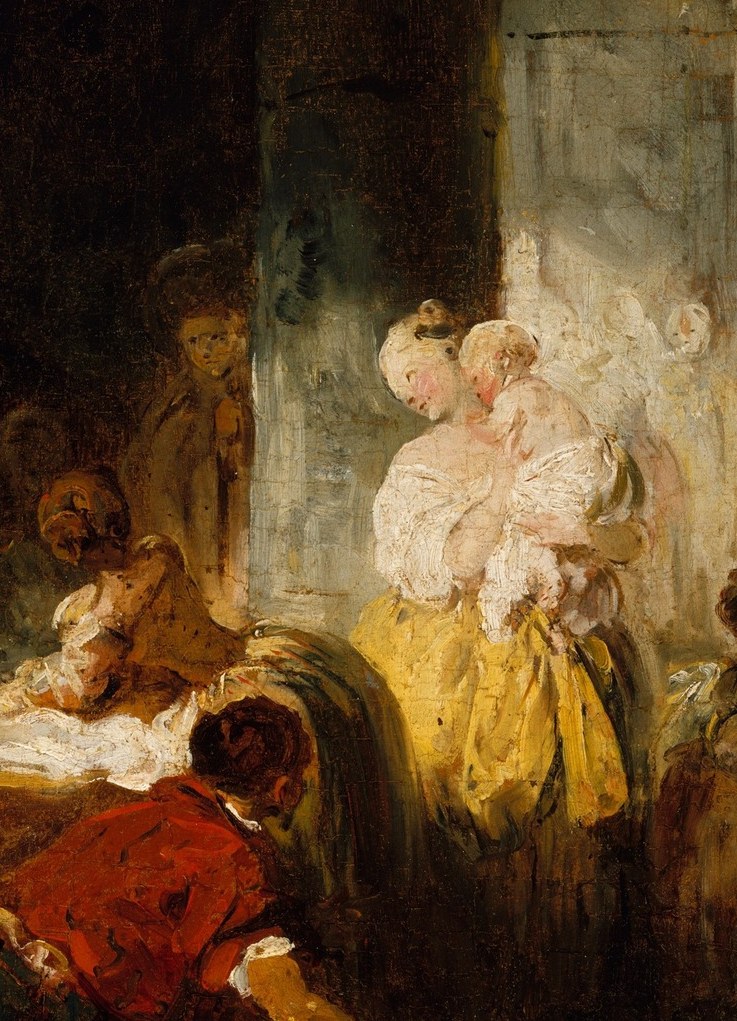
Jean Honoré Fragonard painted The Happy Mother in 1760, and then he kept it. For forty-six years, until his death in 1806, this canvas stayed in his studio. It is one of only five dated paintings in an output of over 550 works, which makes that inscribed year a deliberate signal: this one mattered to him.
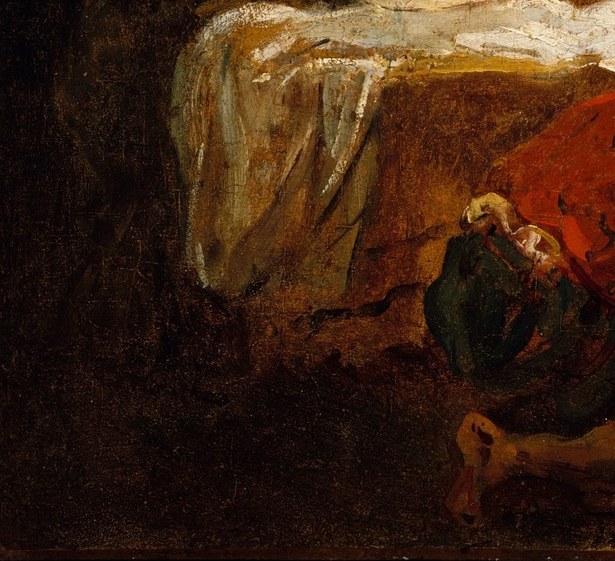
Watch her face. Fragonard achieved that soft, absorbed expression with a single stroke of wet paint laid over dry underlayers. The effect is called bravura handling, and it means he never fussed with it. The yellow gown is built the same way: loose, separate marks that at a distance read as luminous silk. The light from the doorway in back is pure Rococo theater, staging the room so everything orbits the infant's small bright form.
Fragonard had just returned from the French Academy in Rome when he painted this. He was 28, unknown, and competing for attention in Paris. Large domestic scenes were a bid for serious notice, not the small erotic cabinet pictures that later made his name. The Met acquired the painting in 1941 from a private French collection; it had never before been shown in a museum.
The dog, the kneeling figure, the witness standing in the doorway: every element pulls the eye back to the mother's face. He built a whole warm world, and then he kept it for himself. What do you see in her expression?
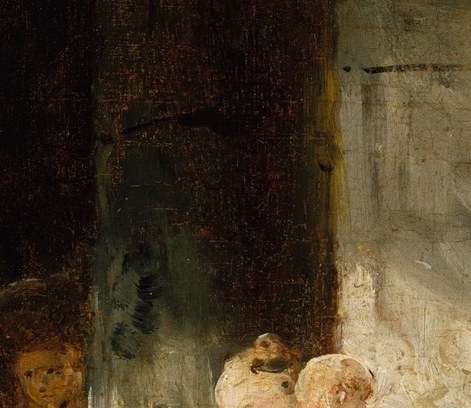
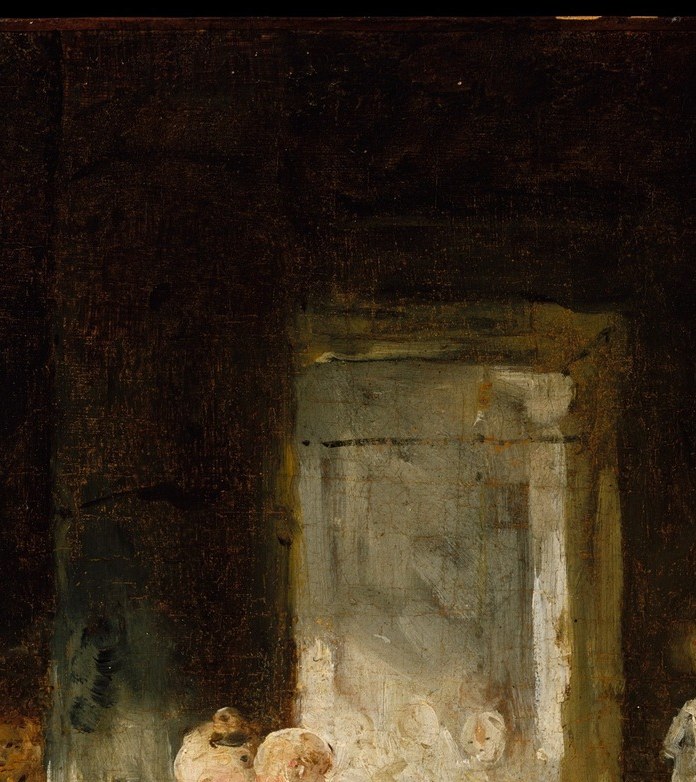
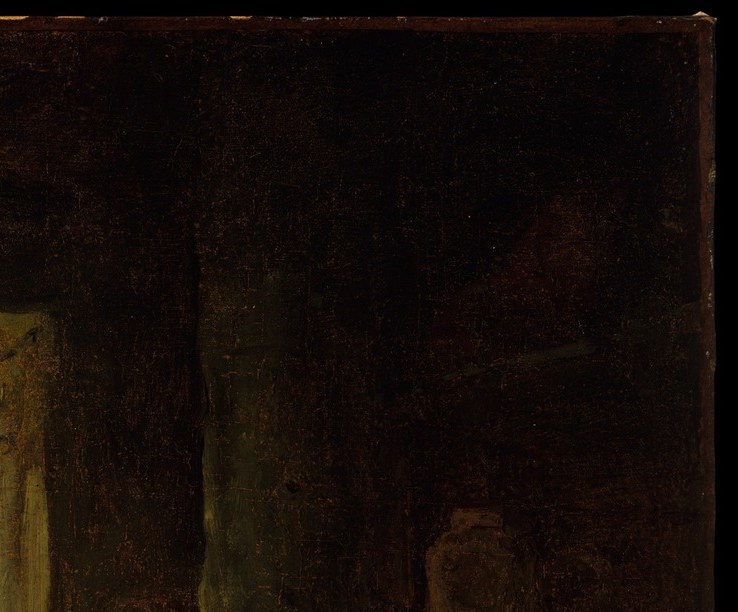
Details
Transcript
Fragonard painted over 550 works. He dated exactly five of them. 1760 is on this canvas. Look at her face. That softness is not blended. It is one fast, wet stroke on dry paint. He was 28. He had just returned from Rome. This was his announcement. The Met bought it in 1941. It had been in private hands for 180 years. He never sold it. He kept it in his studio until he died.