The Camera Obscura by Van Loo, Charles Amédée Philippe
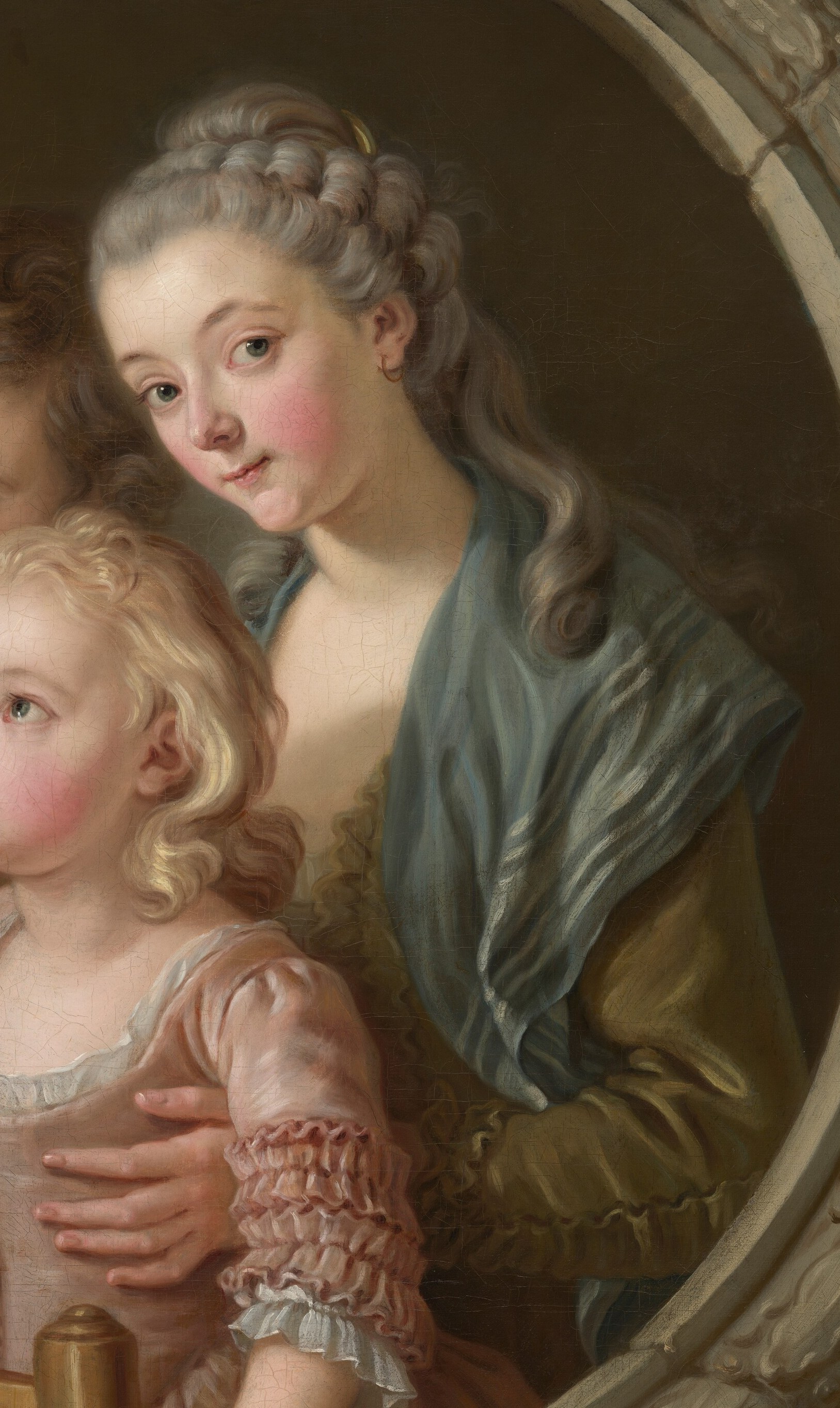
In *The Camera Obscura*, painted in 1764 by Charles-Amédée-Philippe van Loo, we see an intimate domestic scene centered around an early scientific instrument. This Rococo oil on canvas captures a moment of wonder and discovery, set within a distinctive circular frame that adds to its charm.
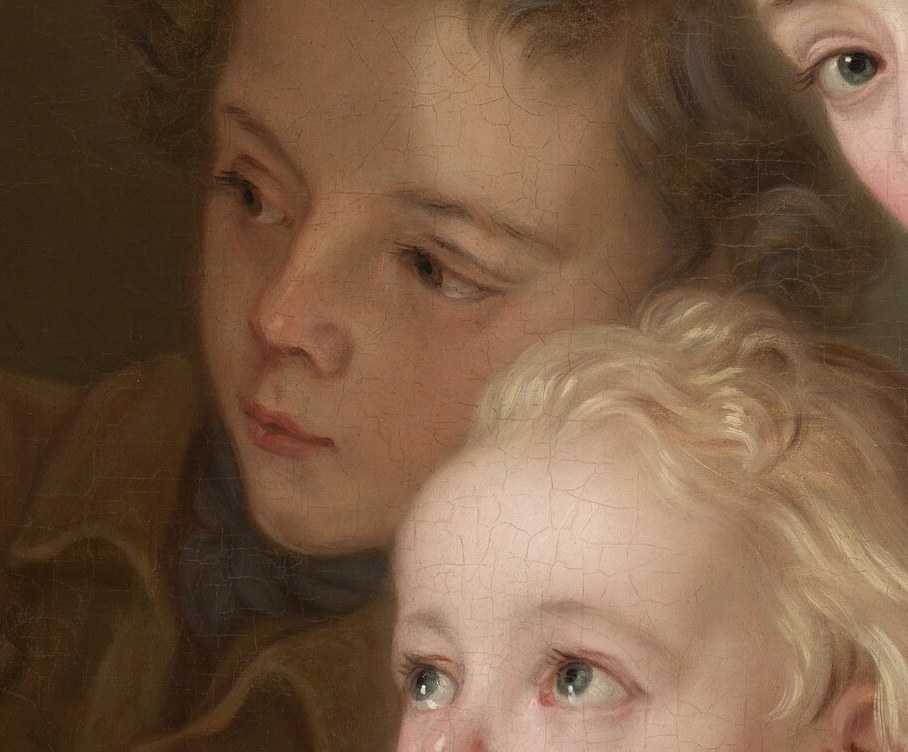
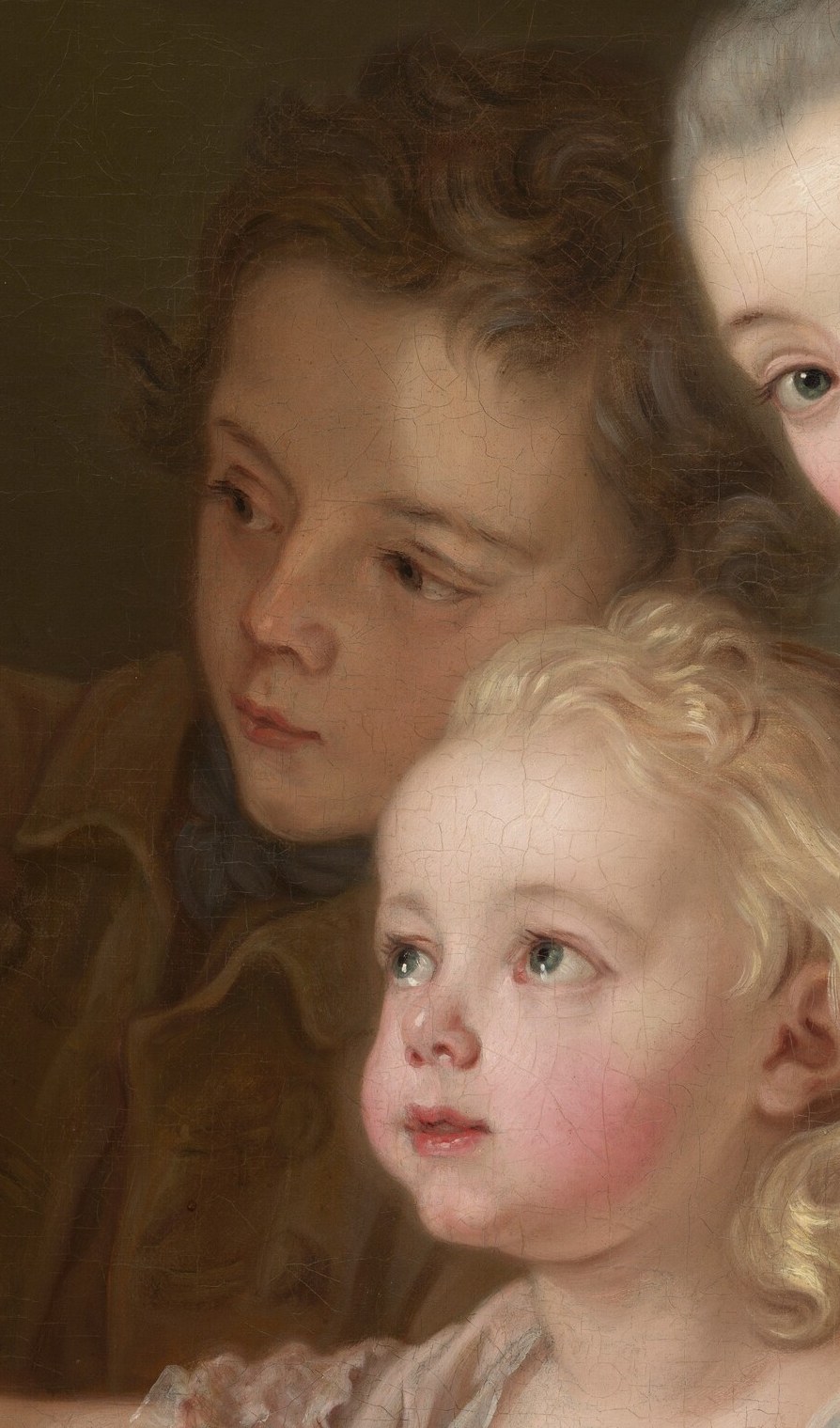
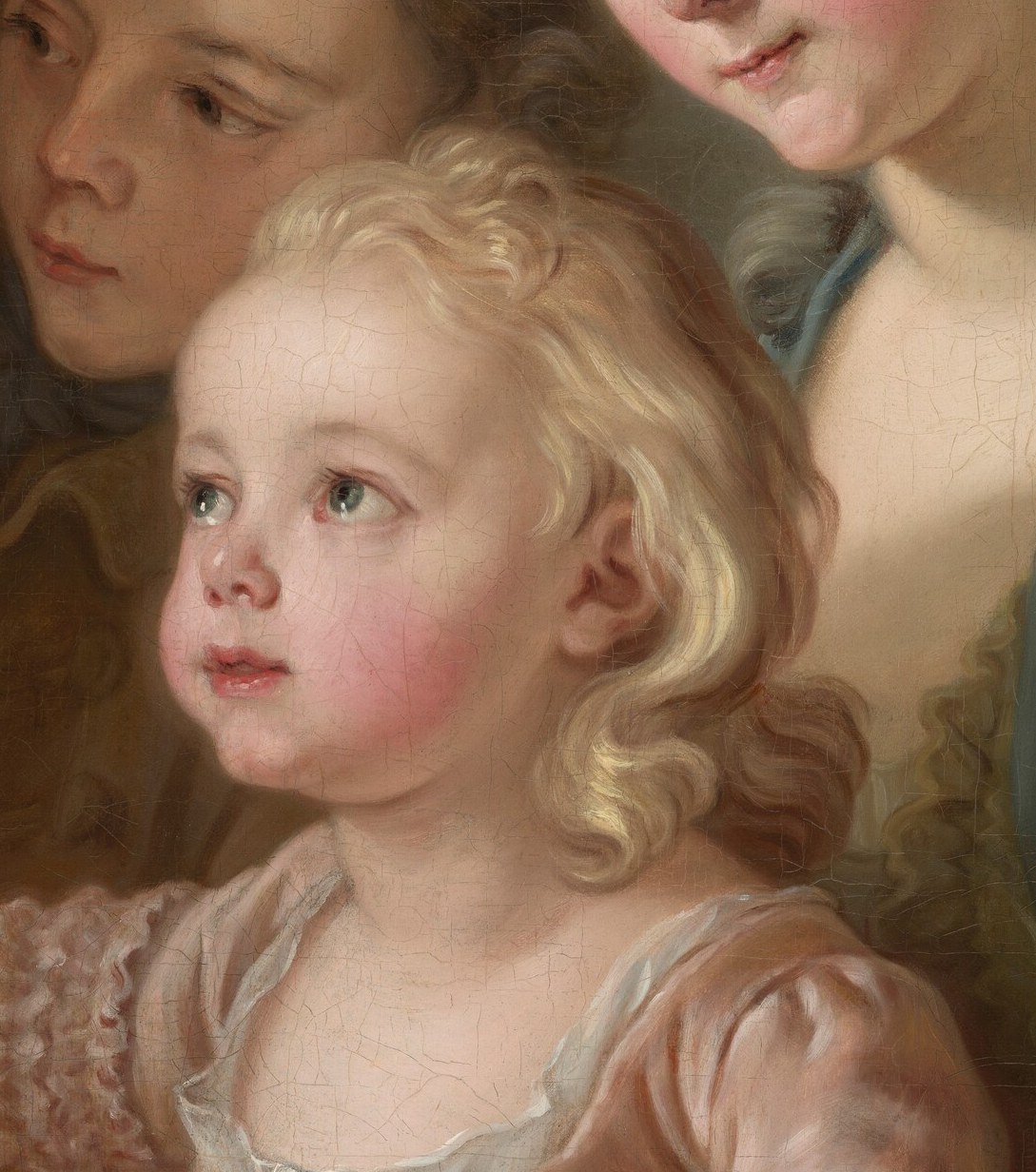
Observe the young boy's focused engagement with the camera obscura, projecting an image for his younger sister. Her outstretched hand and wide-eyed gaze convey pure fascination, while their mother looks on with quiet amusement, reflecting the joy of shared curiosity.
Van Loo, a French painter known for allegorical works and portraits, created this piece during a period of burgeoning scientific interest. The camera obscura itself, a device for projecting images, represents a fascinating precursor to modern photography, making this painting a window into 18th-century intellectual life. The artist's smooth brushstrokes and subtle play of light further enhance the lifelike quality and intimate atmosphere of the scene.
This painting invites us to consider how science and discovery were once brought into the home, transforming everyday spaces into realms of wonder.
Details
Transcript
This 1764 painting shows a scientific device entering the home. This is a camera obscura, a precursor to modern cameras. A young boy operates the device, projecting an image. His younger sister reaches out, mesmerized by the projection. Her mother watches, enjoying her children's curiosity. This work captures the wonder of early optical experiments at home.