A Crow Chief at His Toilette by Catlin, George
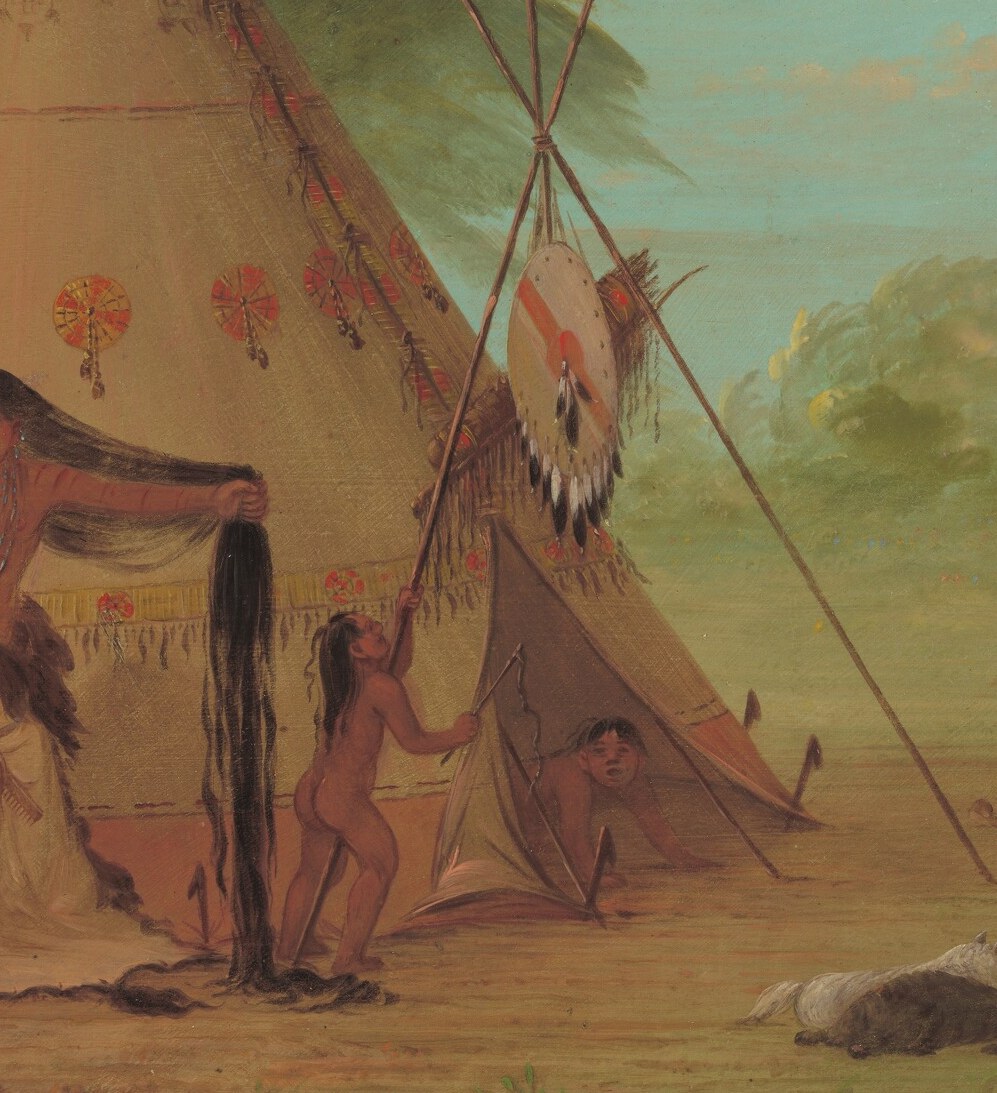
The title is “A Crow Chief at His Toilette,” painted by George Catlin in 1865. It is not a grand battle portrait. It is a quiet, private scene of a leader preparing for his day. Catlin was an American lawyer who abandoned that career to document the Plains Indians. He made five expeditions to the West in the 1830s, producing an enormous visual record of their daily lives.
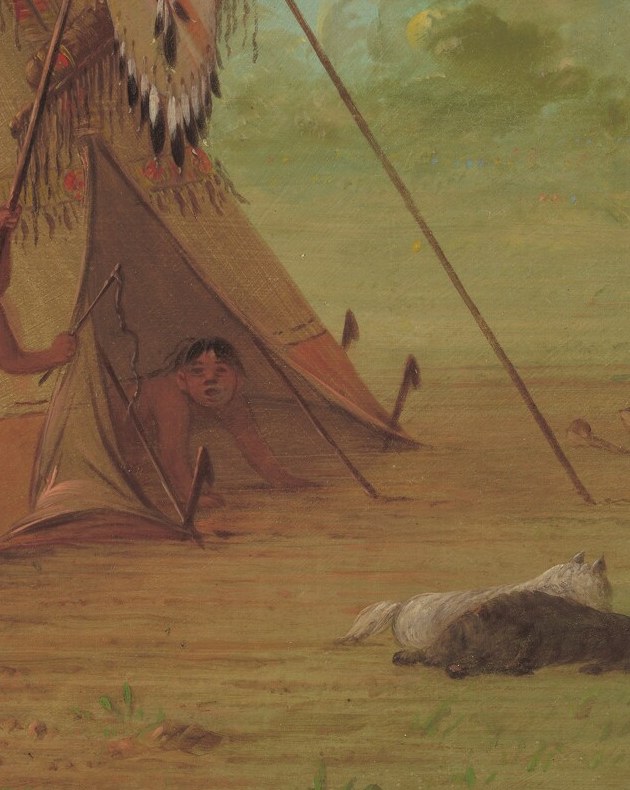
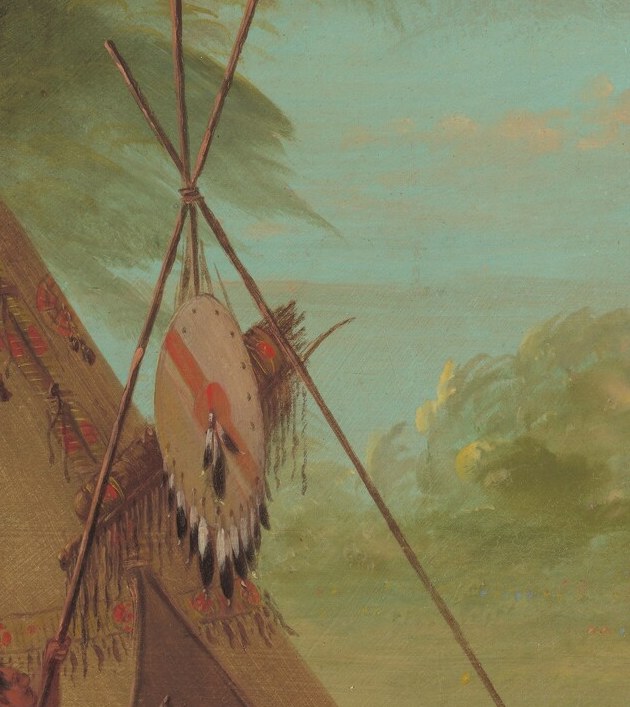
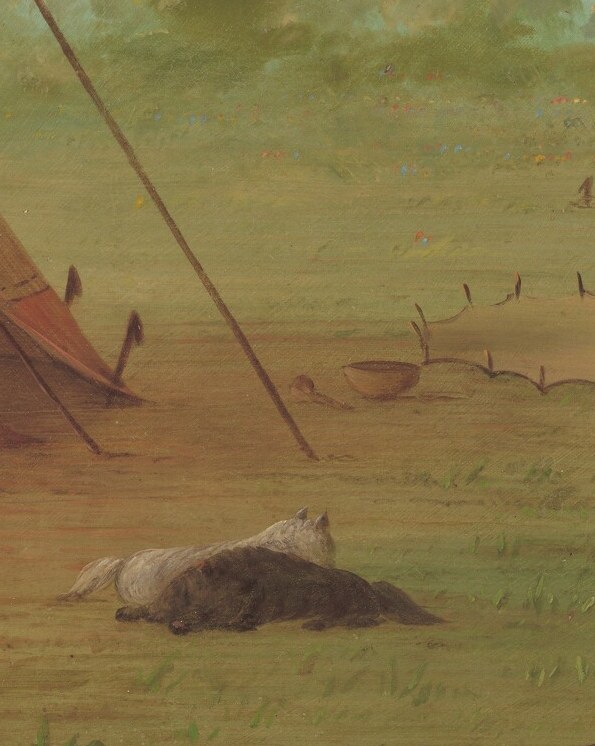
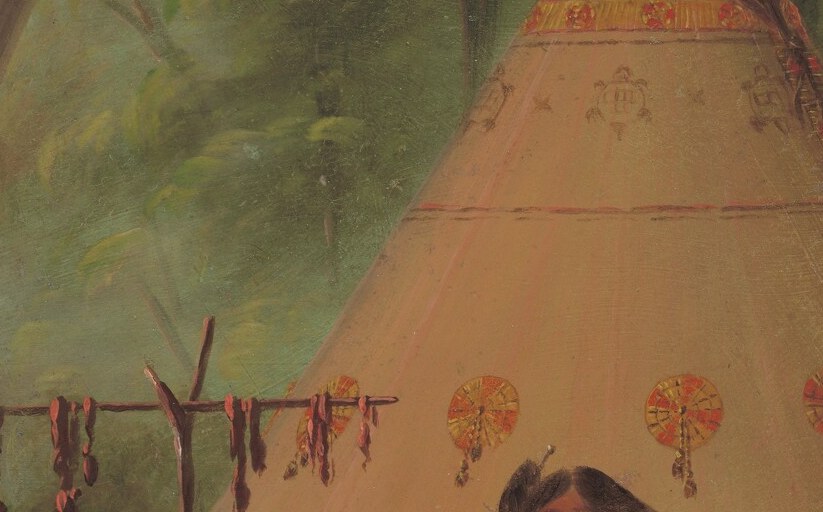
Look at the smaller figure to the right, helping the chief wash his long black hair. The chief’s elaborate feathered headdress hangs nearby, waiting to be put on. This is a communal, unhurried ritual. An open teepee and domestic objects hang behind them, while a horse grazes in the distance. Catlin paired ethnographic observation with a painter’s eye for light and texture.
By 1865, Catlin was in the later phase of his career. This smaller oil-on-card work reflects a shift toward the everyday experiences of the people he had long championed. His subjects were often shown within their natural landscapes, underscoring their deep connection to the land. The painting is now part of the Smithsonian American Art Museum’s collection.
Catlin once said he wanted to preserve “the looks and customs of the vanishing races of native man in America.” Seeing a chief attend to his own toilette, without ceremony or battle, makes that preservation feel strikingly human.
Details
Transcript
A moment of quiet preparation. George Catlin was a lawyer before he became a painter. He traveled to the American West five times in the 1830s. His focus: the daily life of the Plains Indians. A younger figure assists him with his hair. His feathered headdress waits beside him. Catlin wanted to record a culture under enormous strain. The painting is intimate, not a war scene.