The Boating Party by Cassatt, Mary
View the artwork: The Boating Party →
Mary Cassatt's "The Boating Party" (1893/94) is not a family portrait. It is a study of class, gender, and labor, painted by an American woman who had embedded herself in French Impressionism.
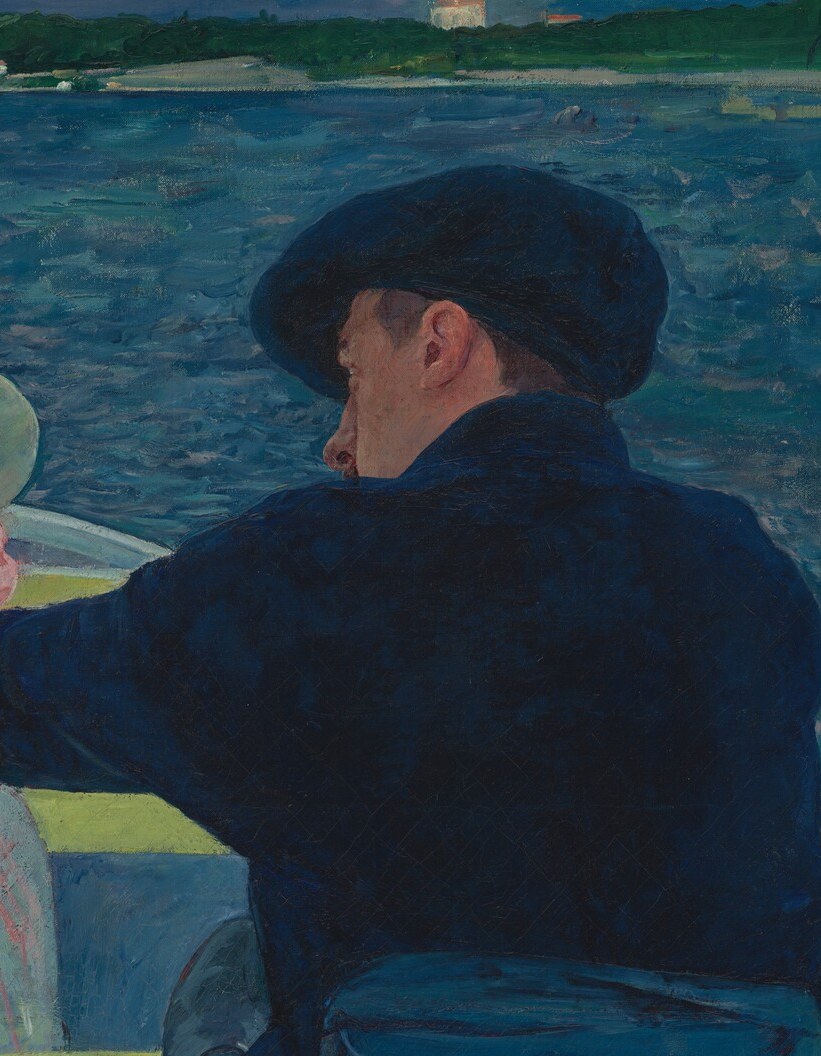
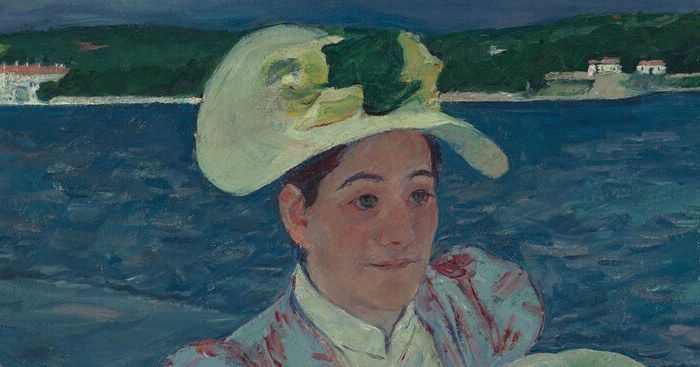
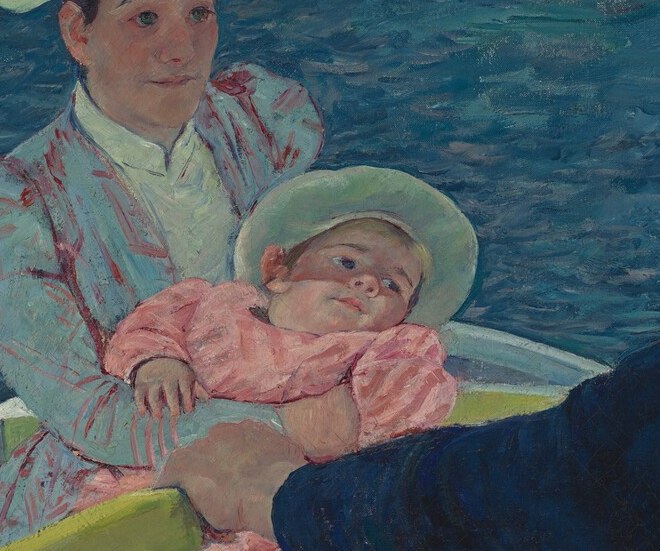
Look at the man. He is reduced to a near-silhouette in a dark navy coat, his face barely legible. Compare him to the woman and child, whose skin, clothing, and features are rendered with full, vivid attention. Cassatt withholds identity and interiority from the working figure while lavishing it on the paying passengers.
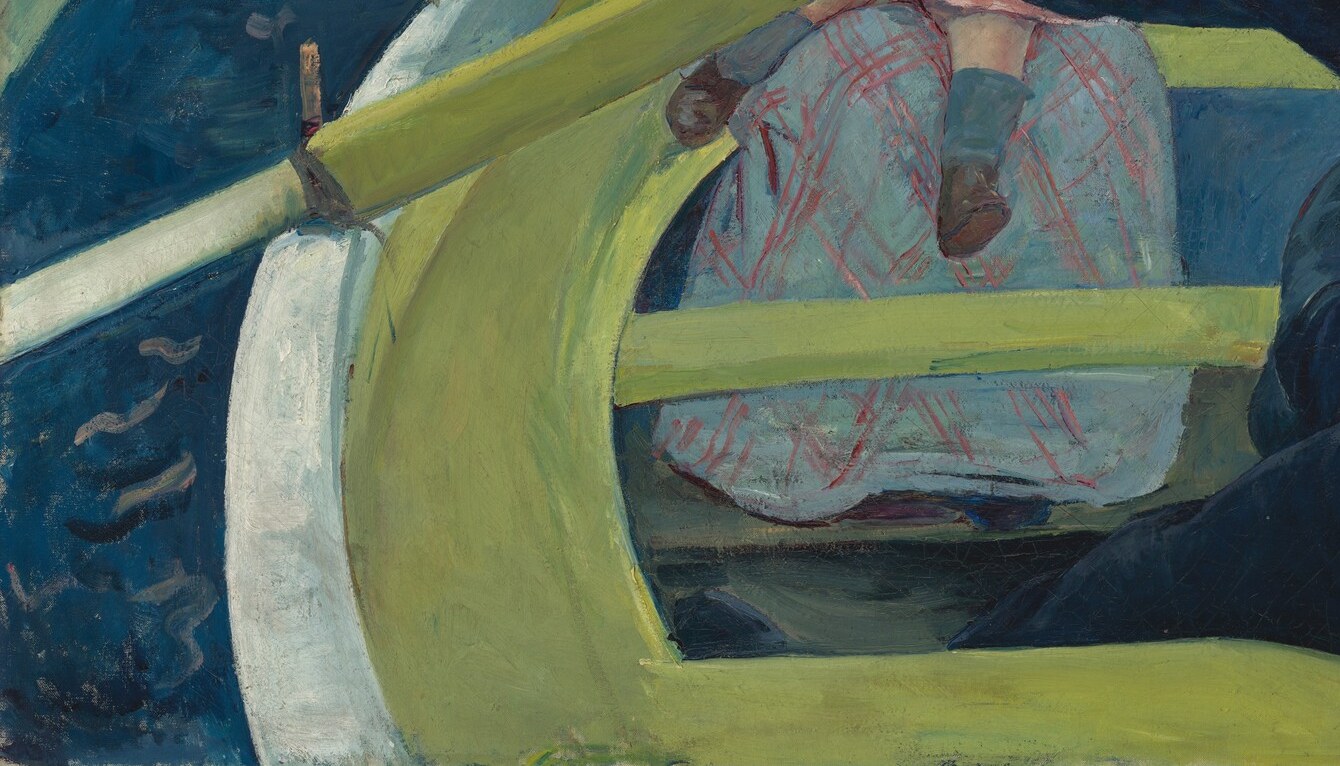
Cassatt painted this near Antibes on the French Riviera. At nearly three by four feet, it was one of her largest and most ambitious canvases. The bold diagonal oar slashing across the foreground was a direct borrowing from Japanese woodblock prints, Hiroshige, in particular, and it unsettled Western viewers when the painting was first shown. The flat water with no horizon line was equally radical, compressing all spatial depth into the three figures.
The painting entered the National Gallery of Art in Washington, D.C., in 1963 as part of the Chester Dale Collection, where it remains. Cassatt never married, never had children, and spent her career painting the social and private lives of women, often the very world of leisure that a figure like this boatman made possible.
#arthistory #marycassatt #impressionism
Details
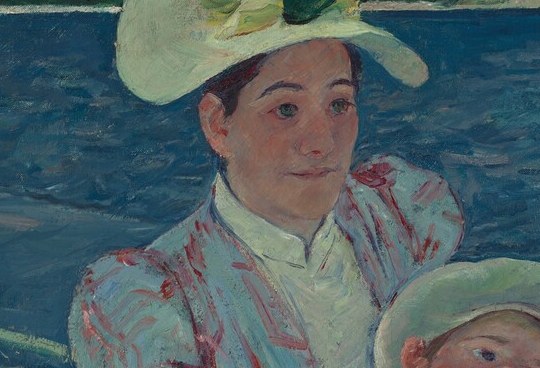
Transcript
A mother, a child, a man at the oar. It looks like a family outing. But the man is not her husband. He is a hired boatman. An employee. Cassatt paints him as a dark, faceless silhouette. While the woman and child are rendered in full, vivid detail. The hierarchy is deliberate. His labor pays for their leisure. An American woman in France painting the unspoken class structure of a single afternoon.