Five Iquito Indians by Catlin, George
This is George Catlin's "Five Iquito Indians," painted around 1862. It is a rare and poignant record of a people pushed to the brink. Catlin, famous for his portraits of Plains Indians, traveled to the Amazon in the 1850s, driven by a lifelong obsession to document Native cultures he believed were vanishing.
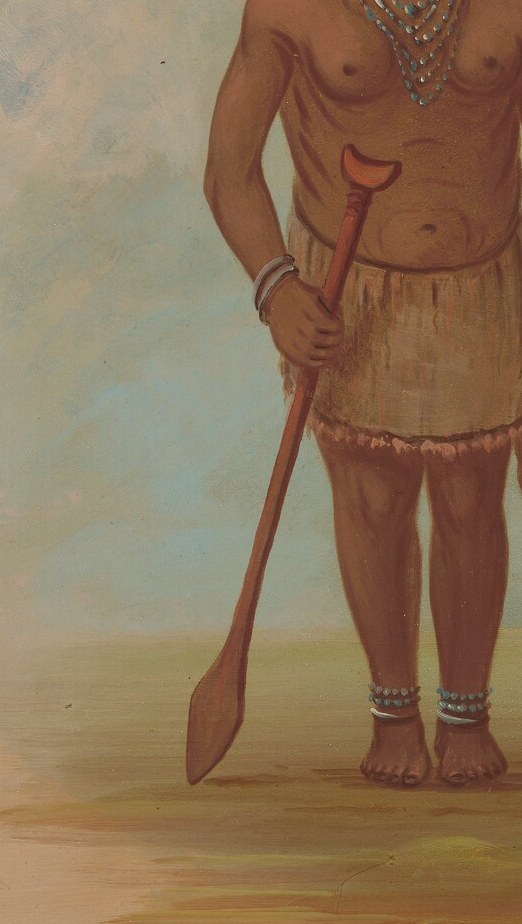
The painting itself is sparse and direct, executed in oil on a simple card. Your eye goes straight to the central figure and the solemn heart-shaped pendant he wears, a small but powerful emblem of life and identity. Catlin's style here is documentary, almost flat, stripping away any romantic landscape to force our attention onto the five individuals standing before us.
By the time Catlin arrived, the Iquito had been decimated by disease and displacement, their numbers reduced from thousands to a mere handful. This work is part of a late, urgent chapter in his career. He wasn't just painting a portrait; he was gathering evidence of a world that was being actively destroyed, hoping to preserve it in oil before the last voices fell silent.
These are not defeated faces. They meet our gaze with a quiet, unbroken presence. What do you see in their stillness?
Details
Transcript
In the 1850s, deep in the Amazon, a tribe faced the unthinkable. Forced from their land, the Iquito people dwindled to a few. This man stands with the bearing of a leader in exile. Look at the heart-shaped pendant on his chest. A symbol of life, worn by a witness to his culture's end. George Catlin painted them not as subjects, but as survivors. He feared their faces would be forgotten. He made sure they weren't.