Diana and Endymion by Fragonard, Jean Honoré
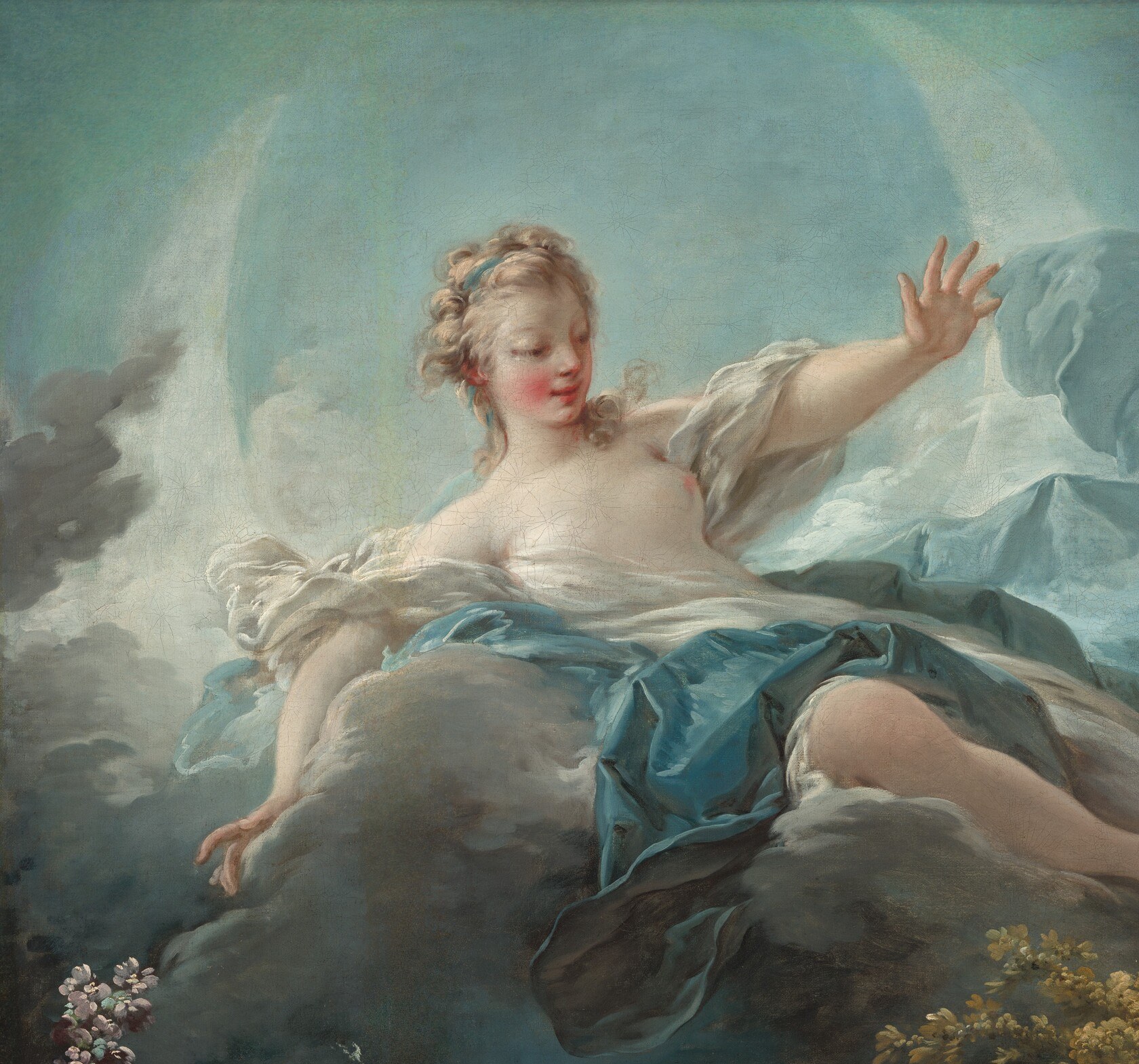
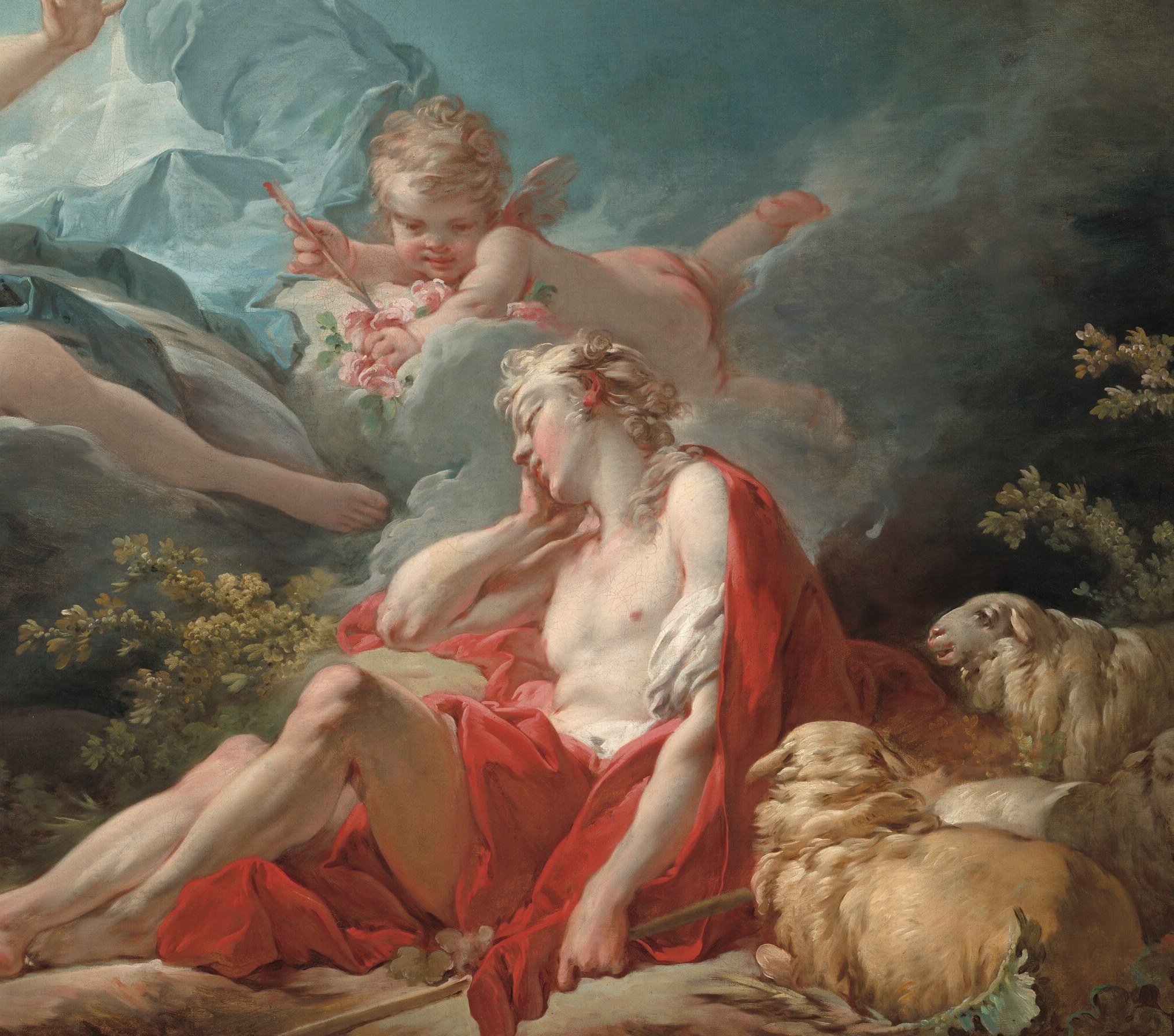
Jean Honoré Fragonard's 'Diana and Endymion' (c. 1753/1756) at the National Gallery of Art, Washington D.C., offers a rarely seen, tender side of the powerful moon goddess. Usually depicted as a formidable huntress, Diana here is shown in a moment of quiet intimacy, descending from the heavens to gaze upon the sleeping shepherd Endymion. This early work by Fragonard, painted shortly after his return from the French Academy in Rome, showcases his mastery of a soft, luminous palette and delicate brushwork.
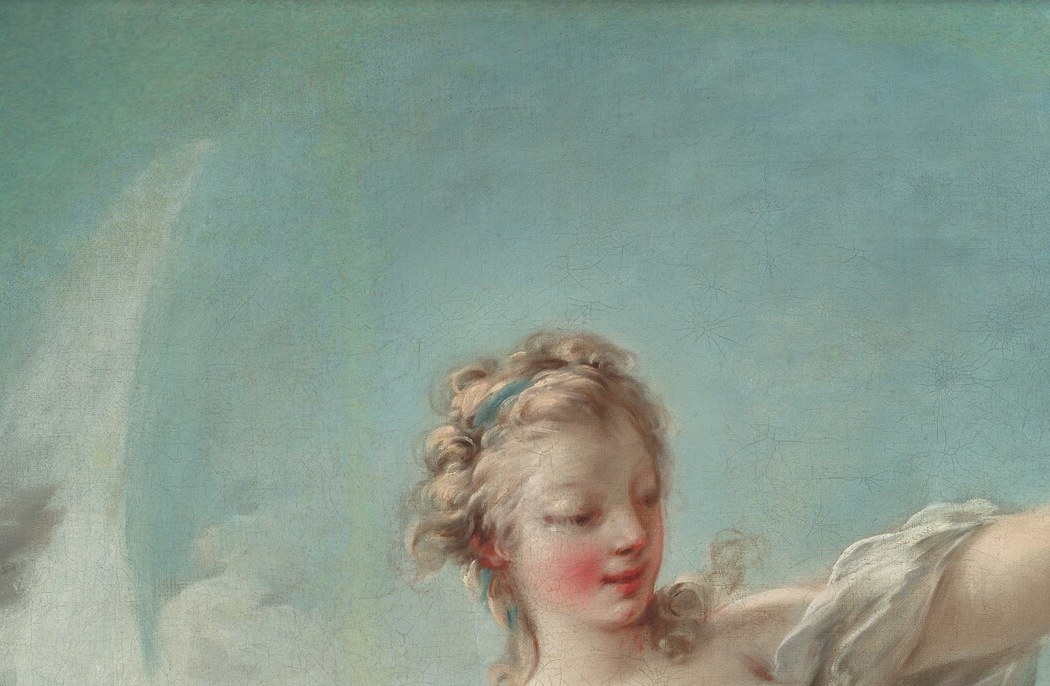
Notice Diana's gentle expression and her outstretched arm, suggesting desire tempered with restraint. The small crescent moon in her hair is the key to her identity, but it is the overall dreamlike atmosphere and the tenderness of the scene that truly define this interpretation of the myth. Fragonard deliberately chose to emphasize vulnerability and secret longing over more dramatic narratives typically associated with mythological subjects.
This painting is an important example of Fragonard's early Rococo style, demonstrating the influence of his teacher François Boucher. It highlights his ability to infuse classical mythology with a sensuous and decorative aesthetic, a hallmark of mid-18th century French art. This approach laid the groundwork for his later, more dynamic works, yet it captures a subtle beauty all its own.
What do you think this intimate portrayal reveals about the goddess Diana?
Details
Transcript
Diana, goddess of the hunt and moon, was usually fierce. But this painting, made in 1754, shows her very differently. Here she descends to gaze at the sleeping shepherd Endymion. A small crescent moon identifies her, but the mood is tender. Her outstretched arm expresses desire held in careful check. The painter was Fragonard, early in his Rococo career. He chose intimacy over drama, a goddess's secret vulnerability.