Mortlake Terrace by Turner, Joseph Mallord William
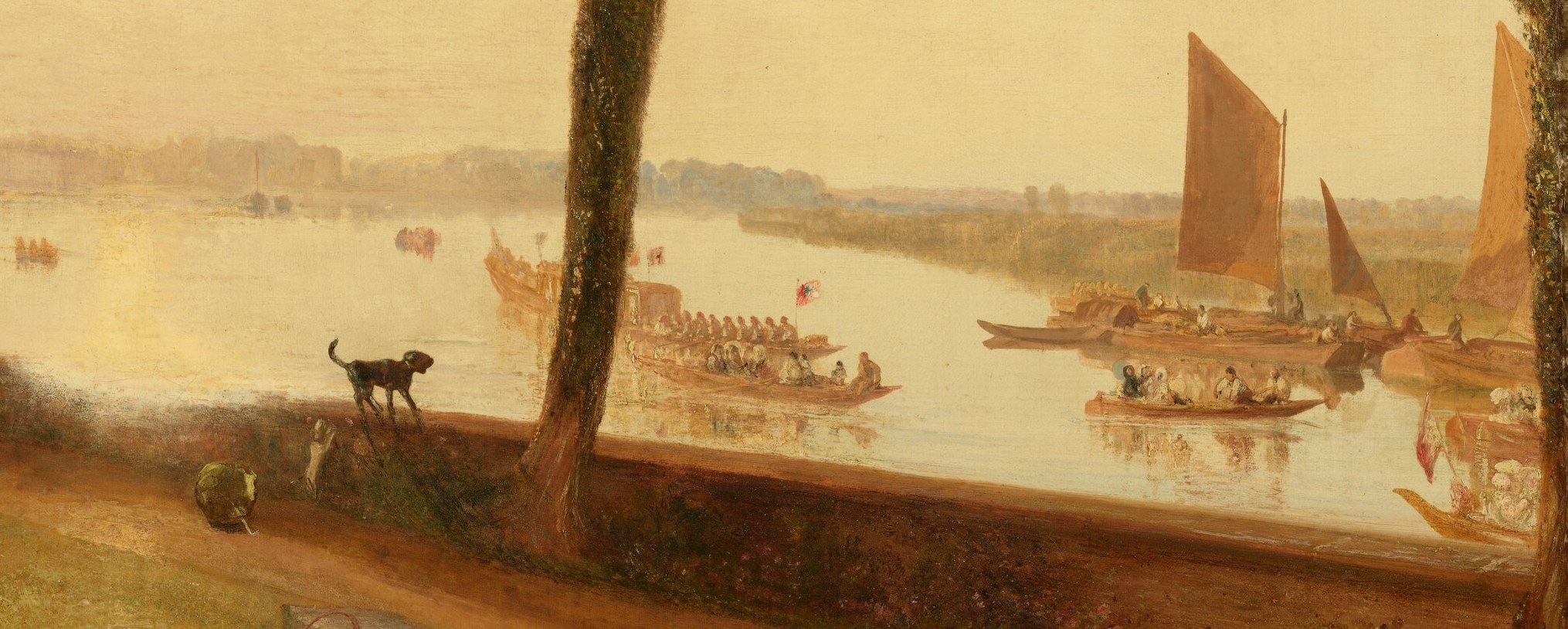
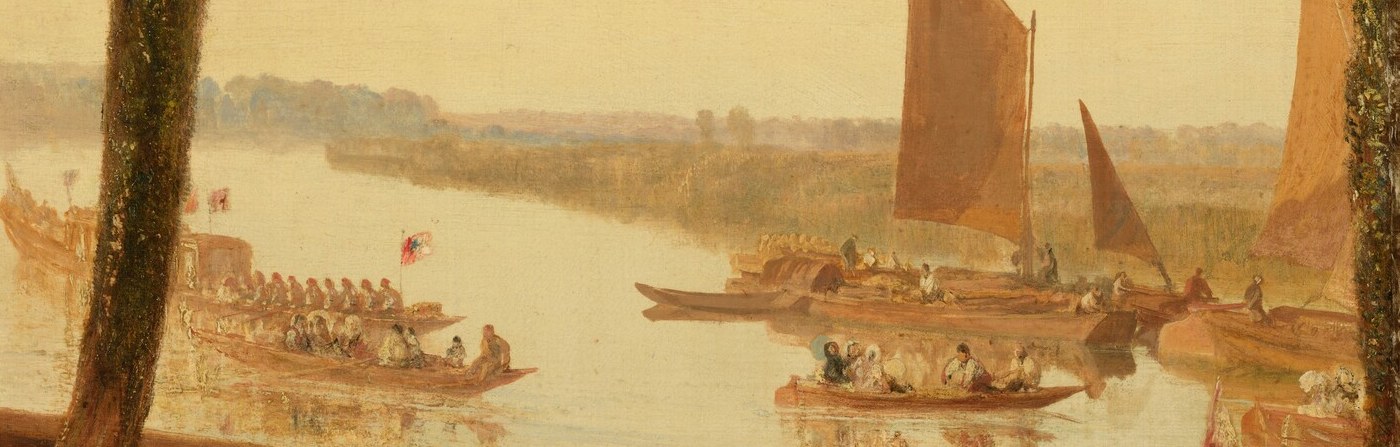
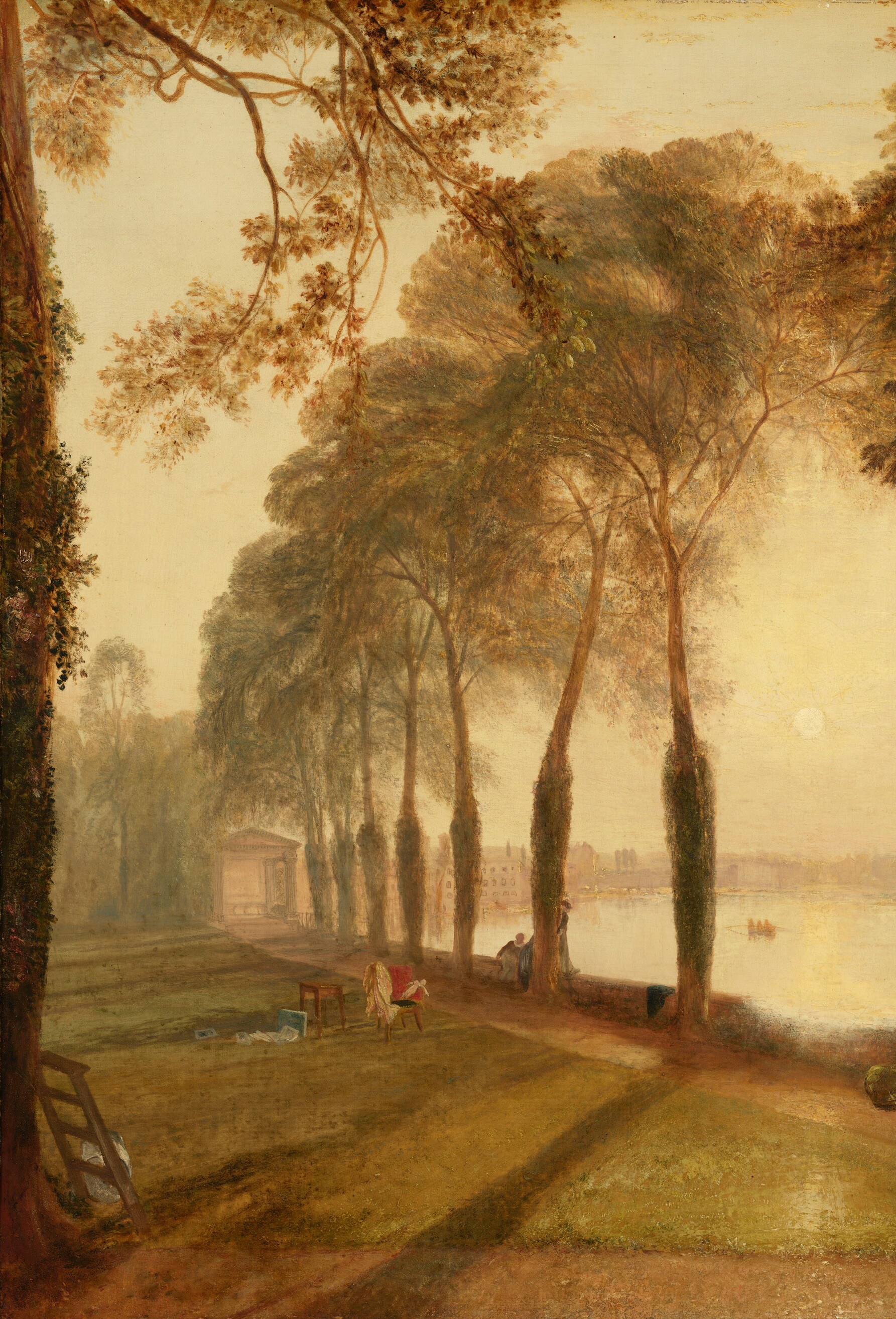
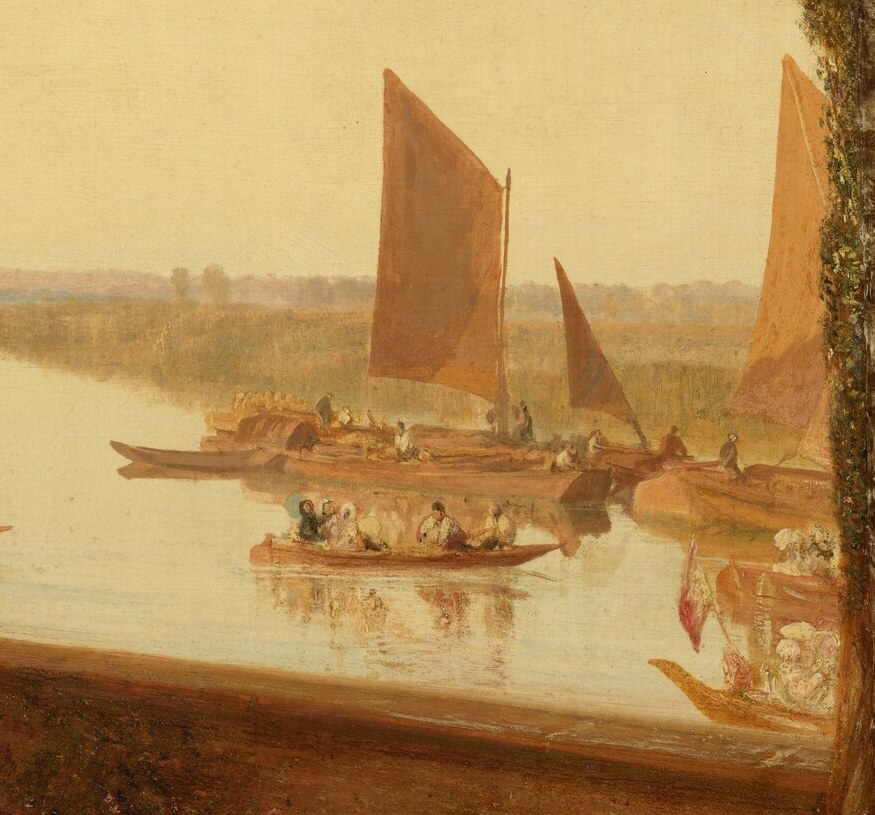
This is Mortlake Terrace, painted by J.M.W. Turner in 1827. It hangs in the National Gallery, London, and it carries a scar you would never guess from the serene scene it depicts.
Look at the painting now. A large tree frames the left edge, the Thames flows calmly in the center, and a warm, late-afternoon sun softens the distant shore. The light is the real subject, Turner used thin glazes of gold and green to dissolve the buildings into the atmosphere. A red chair sits on the grass, an ordinary detail that anchors the whole poetic view.
In 1974, a visitor attacked the painting inside the National Gallery. She slashed it with a sharp instrument, leaving a long vertical gash that tore through the river and the distant buildings. The canvas was shredded, and the luminous continuity Turner had built with layer after layer of glaze was physically broken. Conservators worked painstakingly to mend the linen, fill the losses, and inpaint the damage so that the intervention became invisible. They succeeded so completely that the attack is now just a footnote, and the painting still breathes the same quiet, golden afternoon Turner intended.
Turner had a difficult, resilient life himself. Born above a barber shop in Covent Garden, he lost his mother to mental illness and was sent to live with an uncle. Painting became his refuge, and light became his lifelong obsession. Perhaps that is why a restored Turner feels like a kind of double endurance.
Details
Transcript
London, 1974. The National Gallery. A visitor walked in carrying a sharp instrument. And then she slashed this painting. The blade tore through the river and the distant shore. The cuts spanned nearly three feet. Restorers spent weeks reconstructing the luminous haze. You are looking for scars. But Turner's light won.