The Adoration of the Skulls by Dandré-Bardon, Michel-François
Michel-François Dandré-Bardon’s "The Adoration of the Skulls" (c. 1733) is not a typical vanitas painting. It hangs in a museum and forces a specific question: what is that chain doing around a living man’s neck?
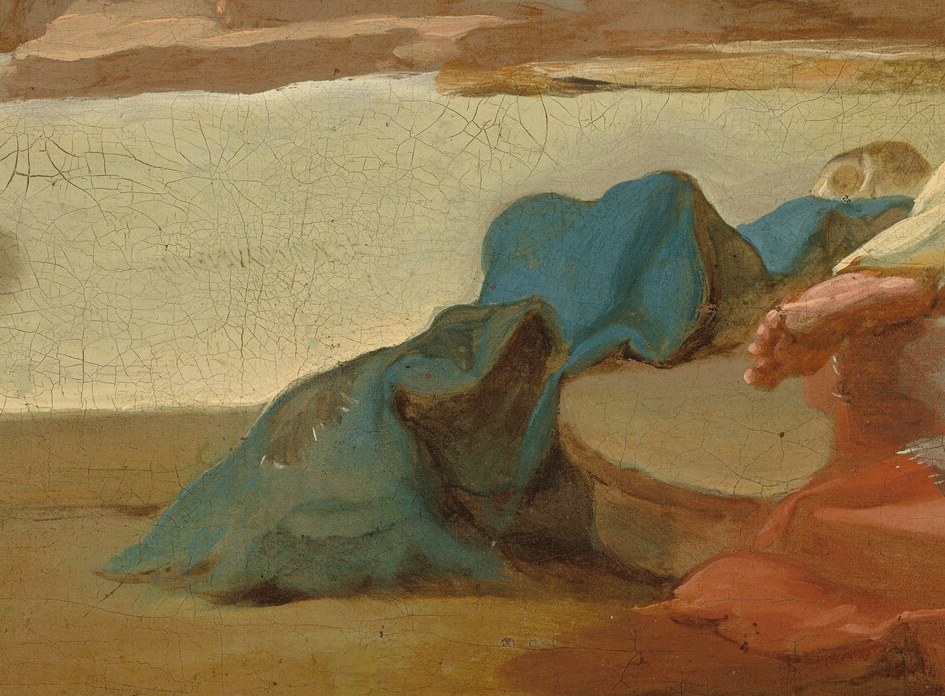
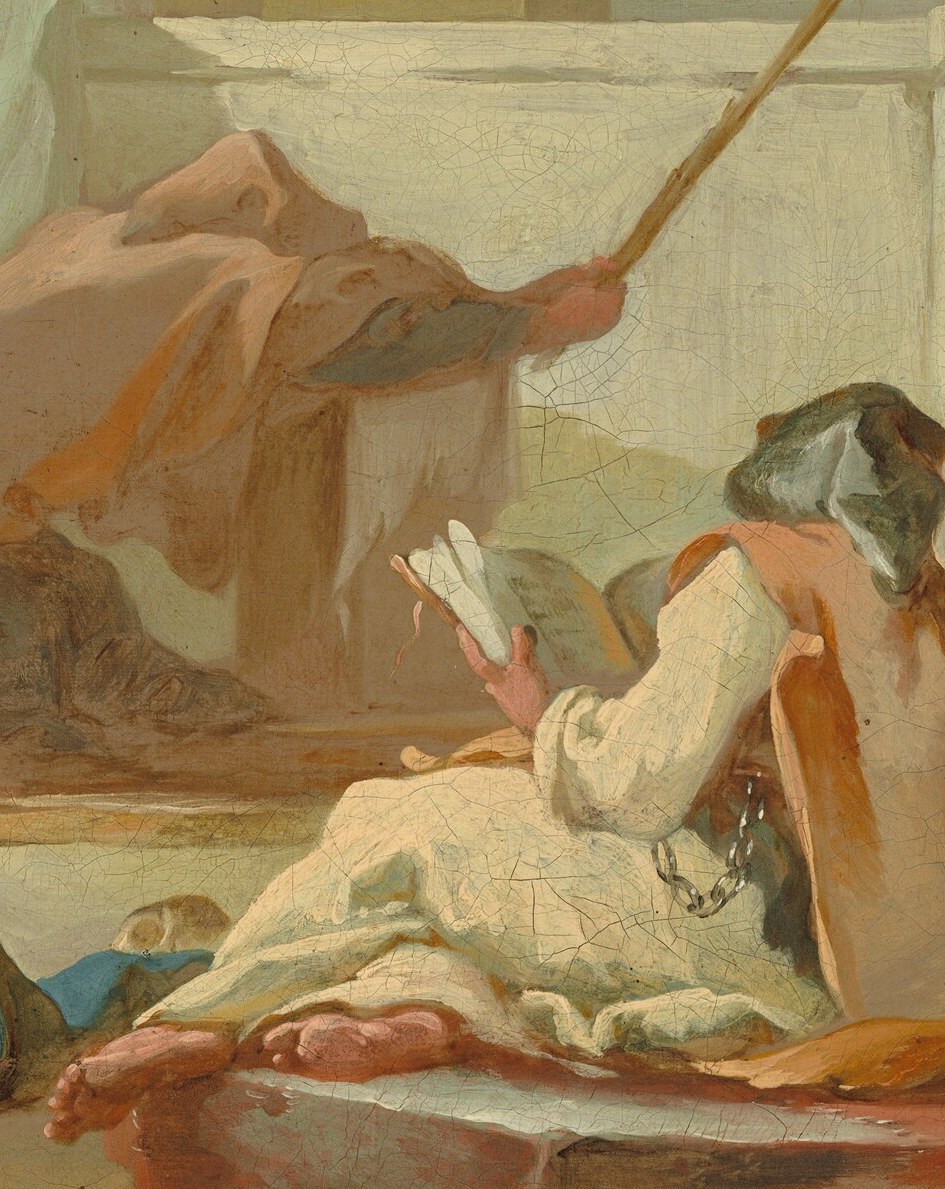
Find the kneeling figure wrapped in a deep blue robe at the lower left of the composition. His posture suggests reverence, but follow the iron links that circle his throat. While everyone else appears to be a voluntary mourner or scholar, this single ominous detail separates him from the crowd.
In 18th-century allegorical painting, heavy chains often represented the bondage of sin or earthly attachments that the soul cannot shake. Dandré-Bardon, a French history painter, gave us a memento mori with a sharper edge: it isn’t just that we will die, but that we might die carrying unresolved weight.
What do you see when you linger on his face?
Details
Transcript
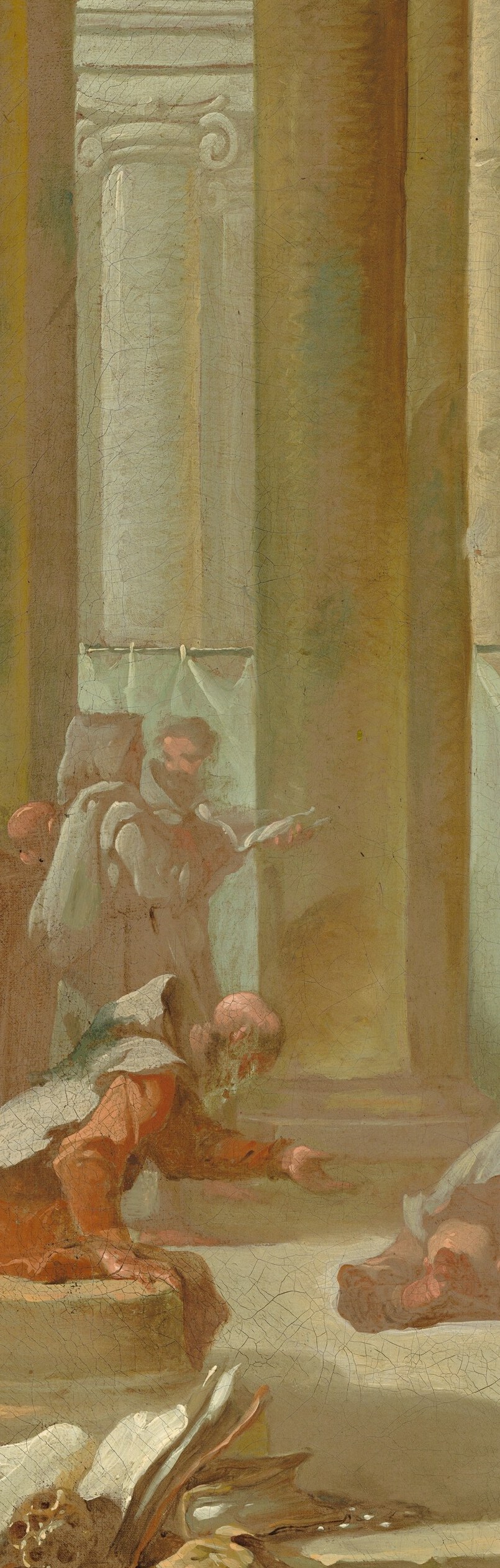
They gather to honor the dead. A skull on a staff sits at the center. But look at the kneeling figure in blue. His neck is wrapped in heavy iron chains. Dandré-Bardon painted this in 18th-century France. Chains like these were symbols of unconfessed sin. Not just a memento mori. A burden you carry into death.