The Cliffs at Beg-ar-Fry, Saint-Jean-du-Doigt by Maxime Maufra
Maxime Maufra, a French artist associated with the Pont-Aven circle, masterfully captures the dramatic beauty of the Breton coast in his 1898 oil painting, *The Cliffs at Beg-ar-Fry, Saint-Jean-du-Doigt*, held at The Cleveland Museum of Art.
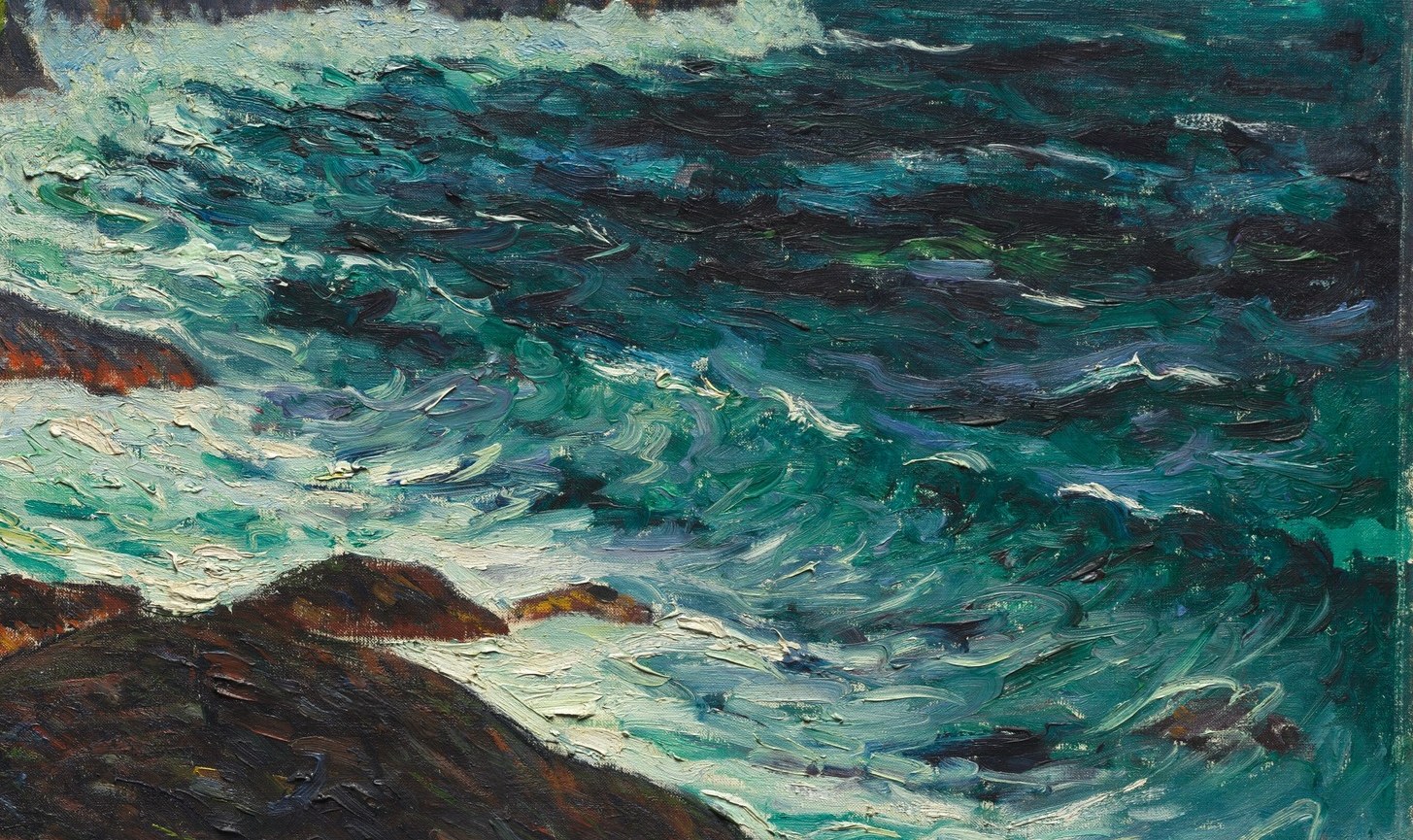
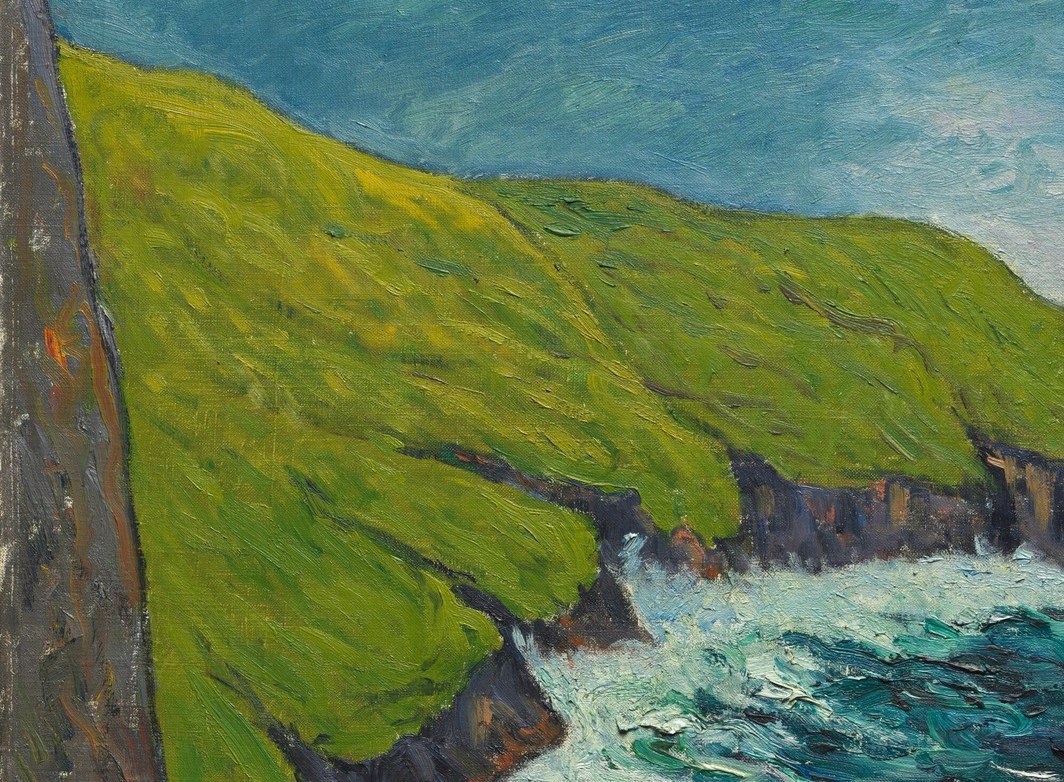
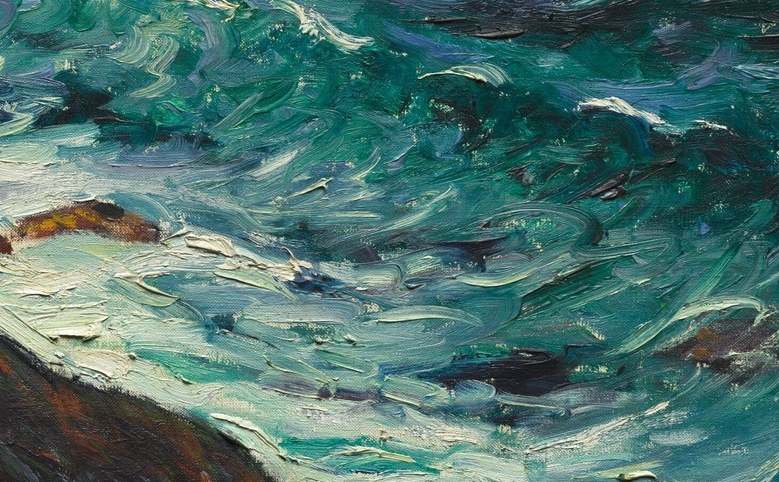
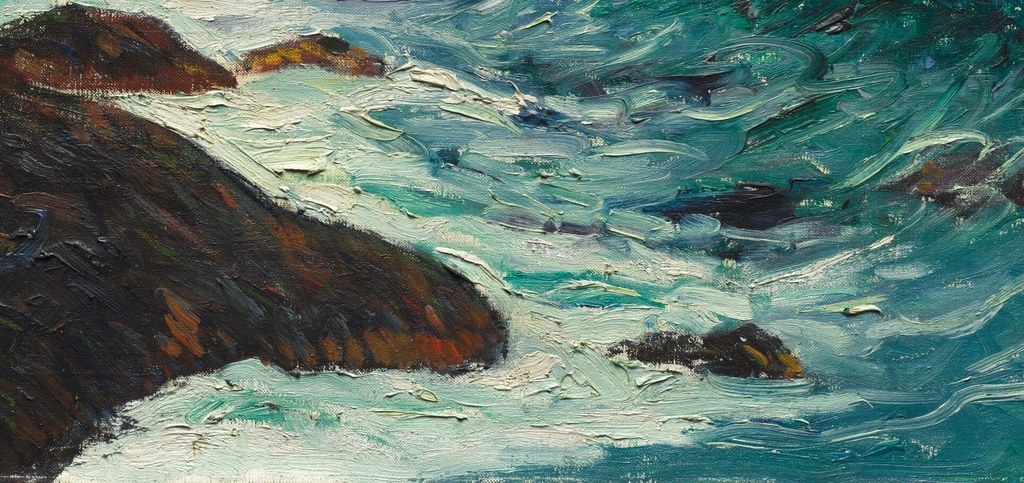
His pronounced impasto technique, especially evident in the rugged cliff face and turbulent waves, gives the painting a tactile, almost sculptural quality. The dynamic brushstrokes convey the raw energy of the sea as it crashes against the jagged rocks, creating a sense of immediacy and vigor.
Maufra frequently painted coastal subjects, drawing inspiration from the dramatic light and terrain of his native region. This work reflects a broader trend among late 19th-century French painters who sought to depict the untamed aspects of nature.
The small, confident red signature near the bottom center is a testament to the artist's presence and pride in his work. What details do you often look for first in a landscape painting?
Details
Transcript
This painter was drawn to the wild coast of Brittany. He captures the sheer power of the waves hitting rock. Notice the thick paint on the cliff face, almost sculptural. His brushwork conveys raw energy, like the sea spray. This artist's bold signature anchors the painting. It's small, red, and full of confidence.