A party of chess players outside a Turkish coffeehouse and barbershop by Martinus Rørbye
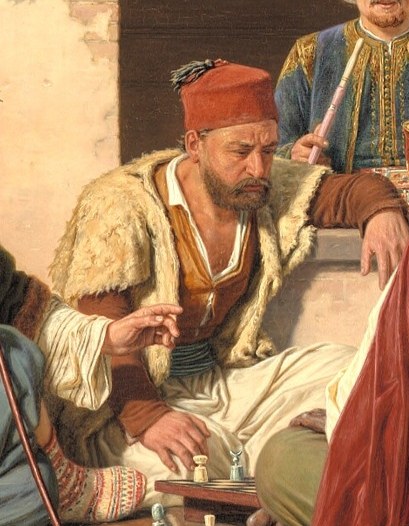
This is Martinus Rørbye's A party of chess players outside a Turkish coffeehouse and barbershop, painted circa 1845. The painting uses coded objects to signify leisure and social interaction.
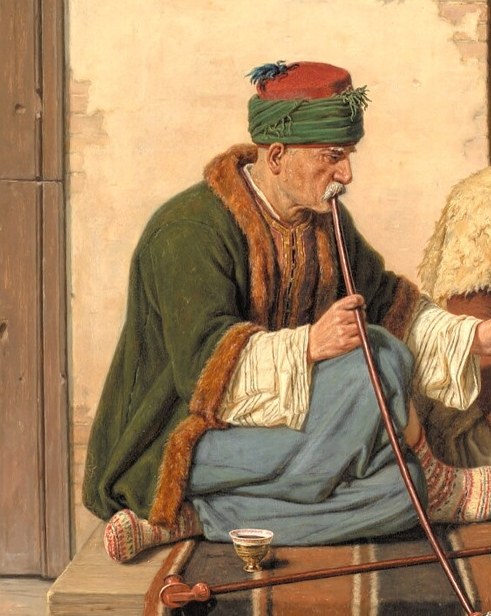
Look at the discarded slippers on the ground, a clear sign of informality and relaxation. The prominent hookah pipe further enhances this mood, suggesting a laid-back social gathering.
Rørbye, a key figure of the Danish Golden Age, was known for his travels and genre scenes. He often documented everyday life and social customs, as seen here, capturing a moment of communal engagement outside a coffeehouse and barbershop.
These elements combine to paint a picture of cultural exchange and quiet, shared time.
Details
Transcript
A party plays chess outside a coffeehouse. The hookah pipe signals a leisurely social atmosphere. Discarded slippers suggest an informal environment. His intense focus suggests a competitive spirit. The chess game itself denotes communal interaction. Rørbye documented social interactions on his travels. He painted this in 1845.