Madonna and Child with Saint Jerome, Saint Bernardino, and Angels by Sano di Pietro
View the artwork: Madonna and Child with Saint Jerome, Saint Bernardino, and Angels →
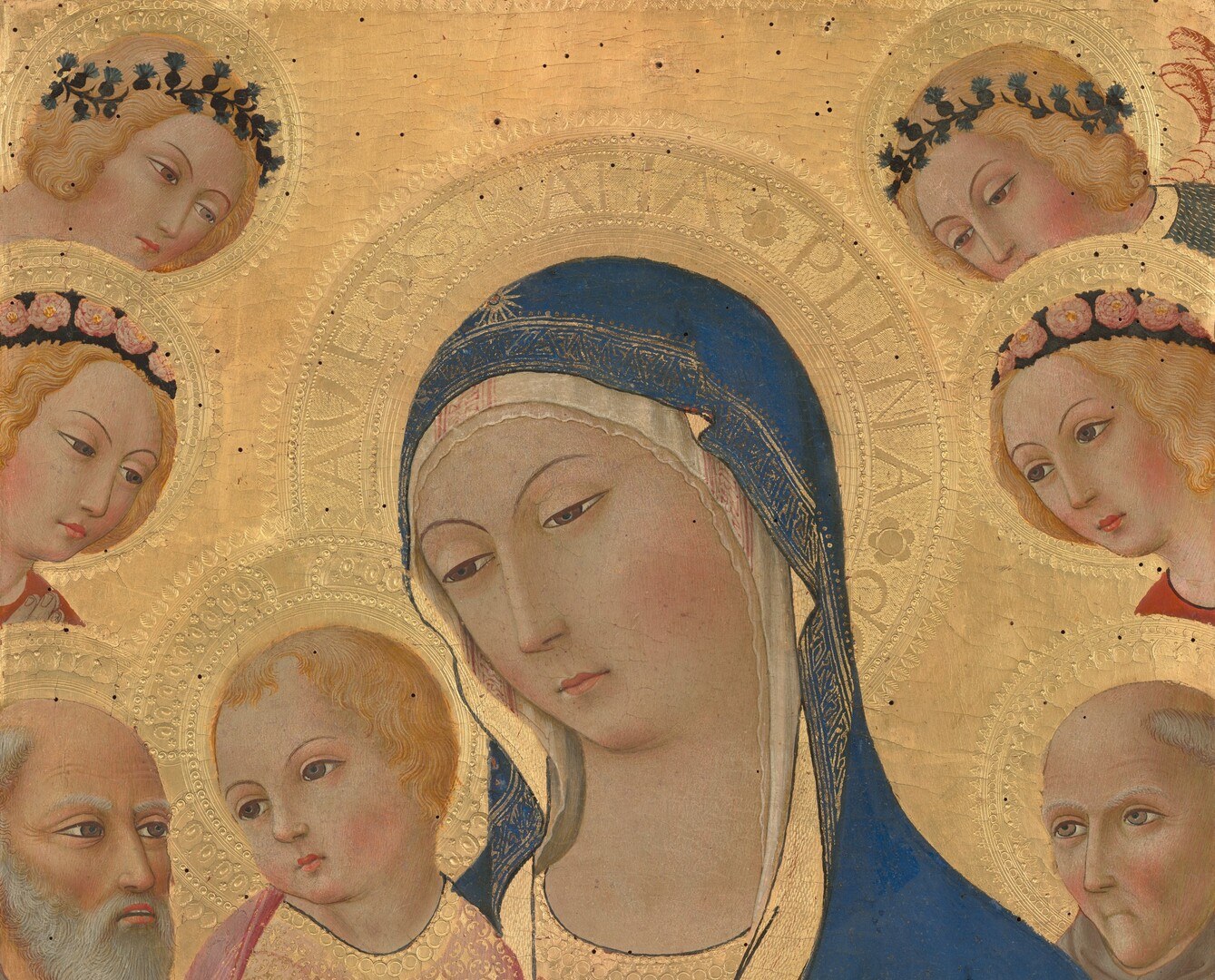
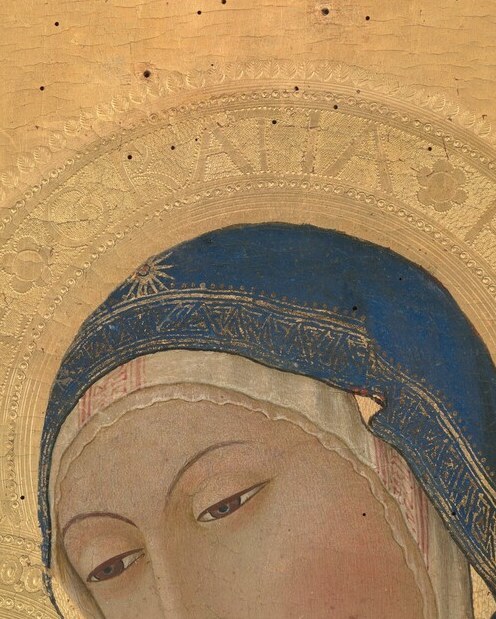
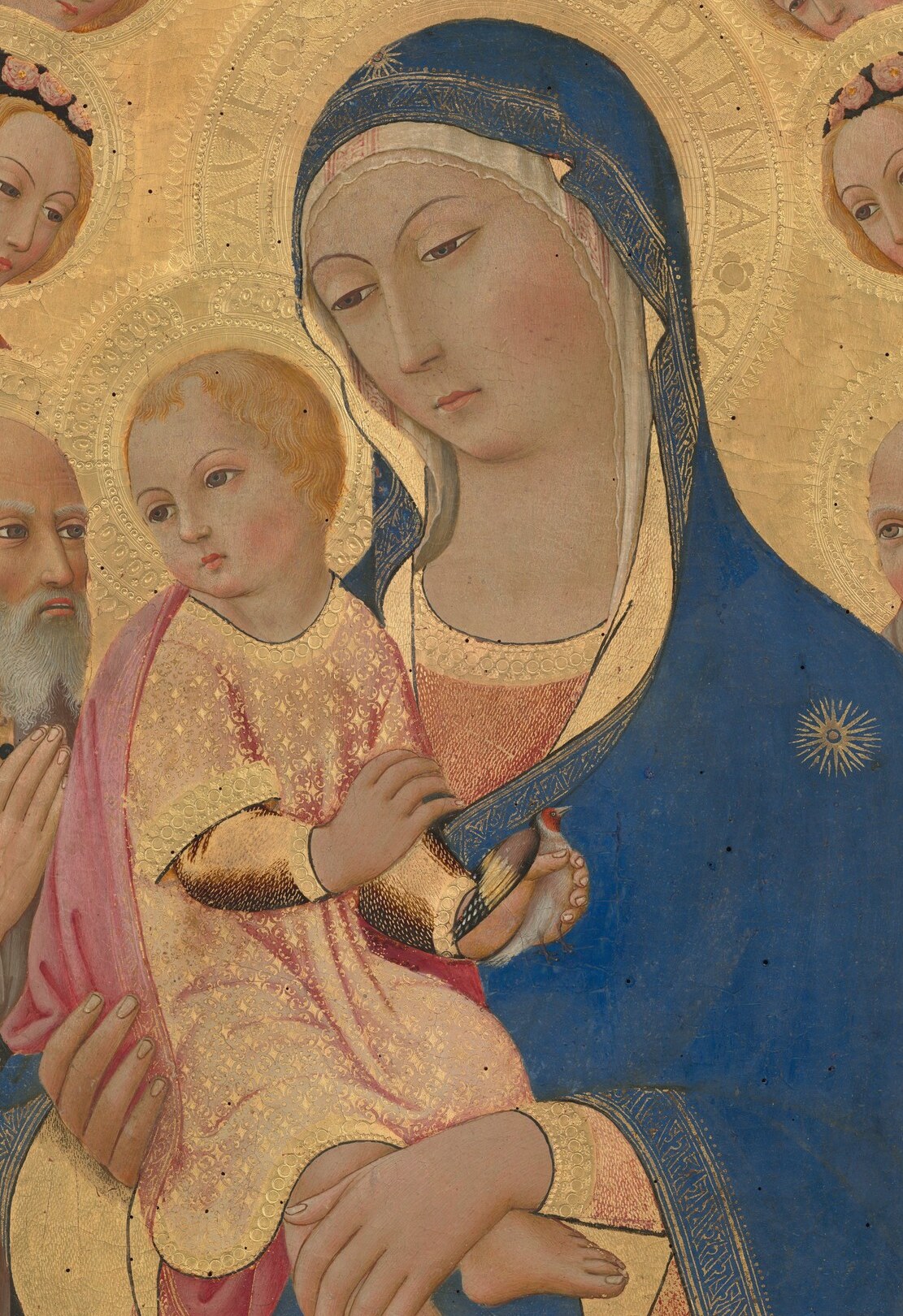
This is "Madonna and Child with Saint Jerome, Saint Bernardino, and Angels" by Sano di Pietro, painted in tempera on panel around 1460 to 1470. It lives at the National Gallery in London. The real story here is in the paint itself, the Virgin's mantle is brushed in ultramarine, a pigment made from crushed lapis lazuli that arrived in Italy from a single mine in Afghanistan and cost literally more than gold. A patron who commissioned this was not just being pious; they were making a financial statement to everyone who saw it hanging in a chapel or private palace.
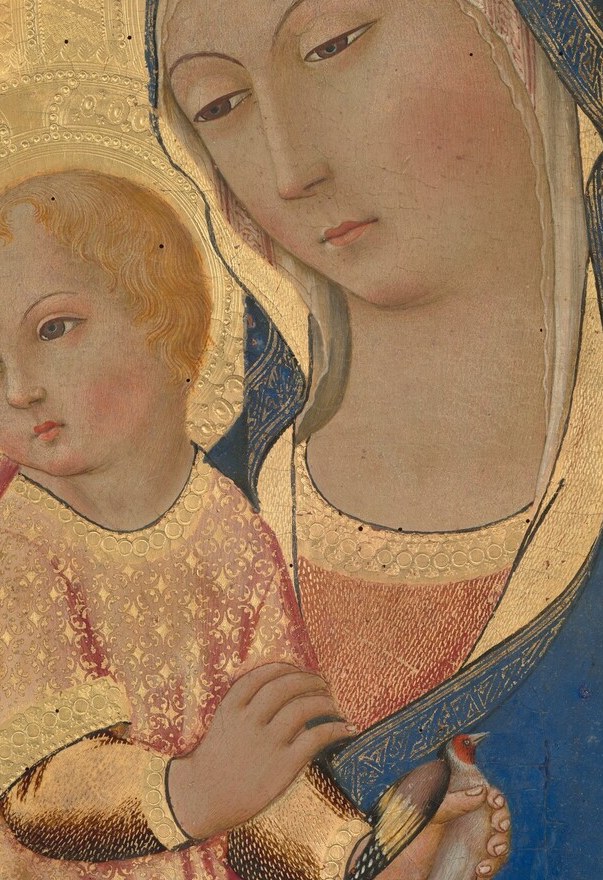
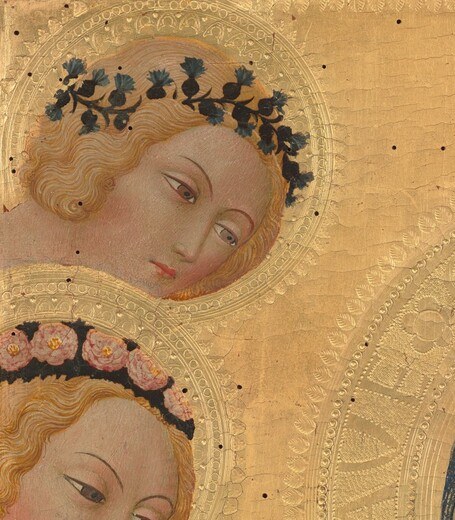
Let your eye land on that deep cobalt blue of the Virgin's robe, then drift up to the gilded background. The gold leaf is not a sky, it's sacred light, and it would have flickered dramatically in candlelit interiors. Then look at Mary's hands. They aren't just holding the child; they're presenting him outward, the way a priest offers the Eucharist. The two saints flanking her, Jerome and Bernardino, tie the work to Franciscan networks in Siena. Bernardino in particular was a celebrity preacher who used a golden IHS monogram disc to whip crowds into devotion, and if that emblem appears on his chest here, the panel was likely painted to channel his specific spiritual brand.
Sano di Pietro ran one of the most prolific workshops in 15th-century Siena, alongside contemporaries like Giovanni di Paolo. His studio used traced patterns and recycled compositions to meet demand, look at the near-identical angel clusters at upper left and right and you're seeing an efficient business in action. But you couldn't trace ultramarine. Every commission that called for it was a fresh negotiation and a fresh expense. The panel is a record of that negotiation, carried out in pigment, gold, and reputation.
That shade of blue survived five and a half centuries without dimming. The patron whose name we've lost is still showing off.
#arthistory #sienesepainting #earlyrenaissance
Details
Transcript
A devotional panel, circa 1465. The contract is lost. But the materials speak. Her mantle is pure ultramarine. Lapis lazuli, ground by hand, cost more than gold by weight. A Sienese patron paid for that pigment, and he paid for the gold. He also paid for two saints with Franciscan ties, Bernardino and Jerome. The preacher's IHS emblem, if it's here, tied this panel to a mass revival. And at the center, Mary offers the child like a liturgical act. The painter ran a workshop. He reused patterns. But the blue had to be bought fresh every time.