Still Life with Fruit and Asparagus by Adriaen Coorte
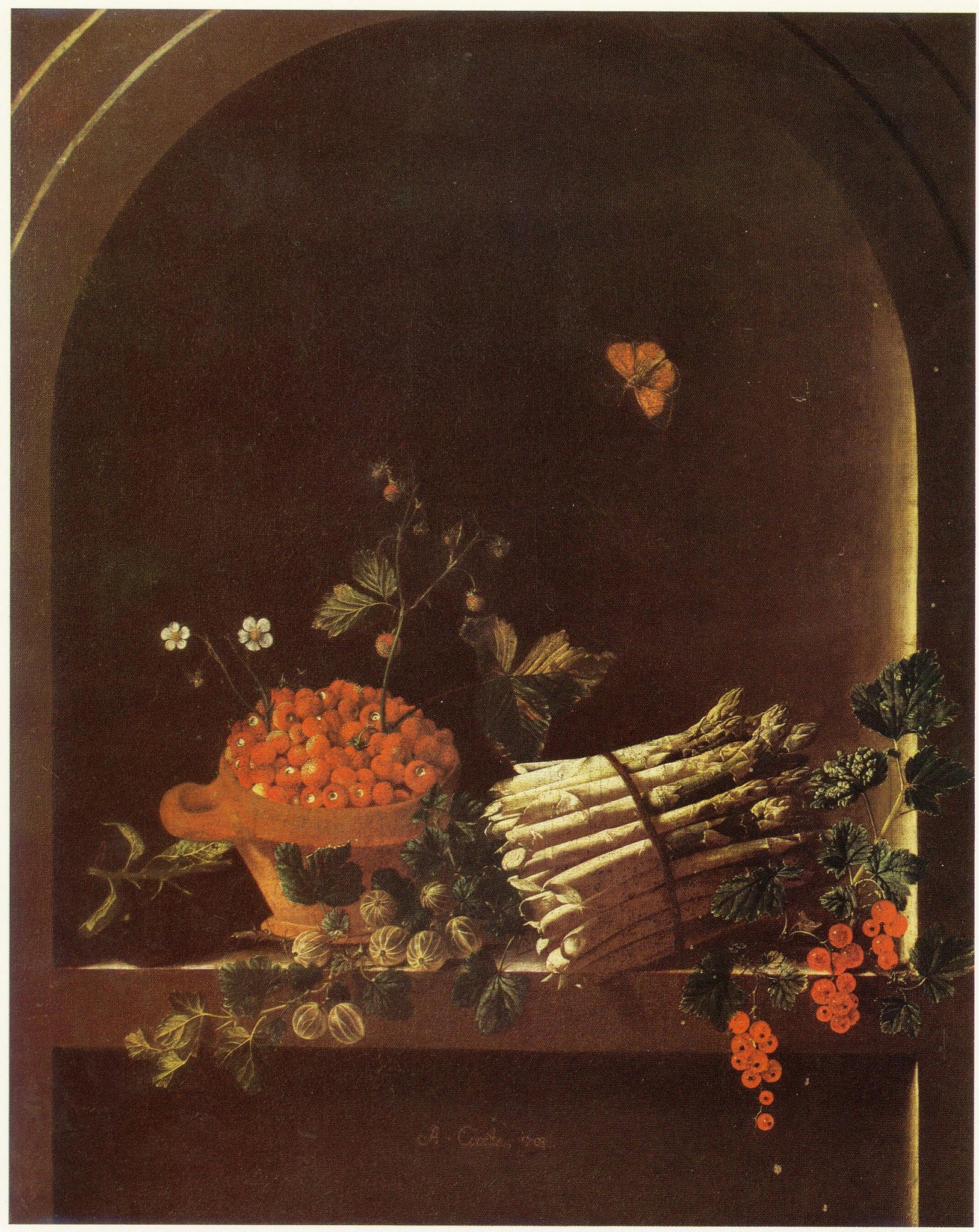
Adriaen Coorte's "Still Life with Fruit and Asparagus," painted in 1703, is a remarkable example of Dutch Golden Age still-life painting, now held at the Royal Museum of Fine Arts Antwerp. While many artists of his era favored opulent, bustling scenes, Coorte chose an intimate, subdued approach.
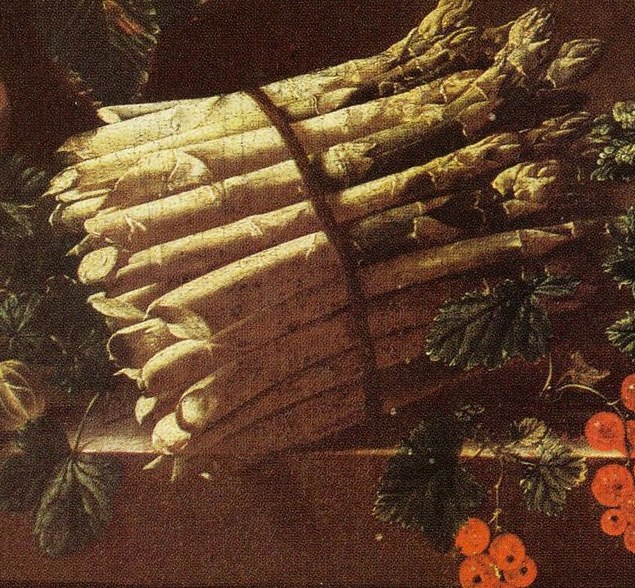
Look closely at the meticulous detail in each element, from the delicate translucence of the gooseberries to the vibrant red of the currants and the earthy texture of the asparagus. The artist brings these everyday items to life with extraordinary precision, inviting quiet contemplation.
Coorte was active between 1683 and 1707, working in a style that harked back to earlier traditions. His focus on modest subjects reflects a cultural interest in the observation of nature and the subtle beauty of the ordinary. The butterfly, a common symbol, also reminds us of life's transient beauty.
What everyday object do you find yourself appreciating more after seeing it rendered with such care?
Details
Transcript
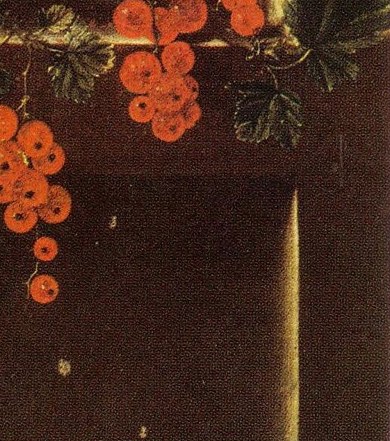
This painting was made in 1703, in the Dutch Golden Age. Its quiet style was unusual for the time, which preferred grander scenes. Asparagus was a seasonal luxury, celebrated for its delicate taste. The painter captures the freshness of the berries with luminous detail. This butterfly, often a symbol, suggests the fleeting nature of life. His signature is a small, quiet assertion in this humble arrangement.