Woman with a Red Zinnia (Revery) by Cassatt, Mary
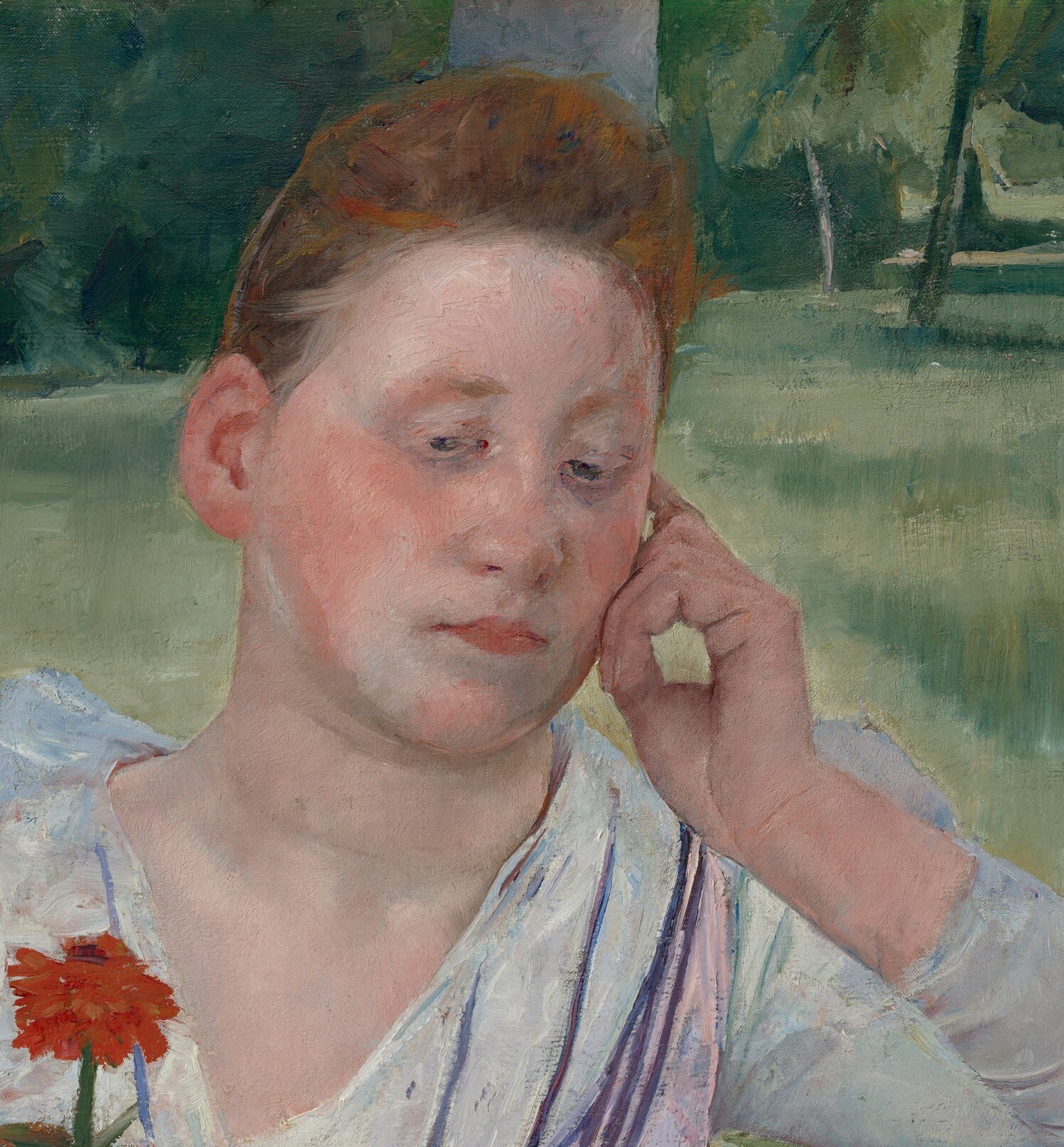
Mary Cassatt's 'Woman with a Red Zinnia (Revery),' painted in 1892. An American who became a central figure in French Impressionism, Cassatt dedicated her career to painting the social and private worlds of women. This portrait lives at the intersection of both.
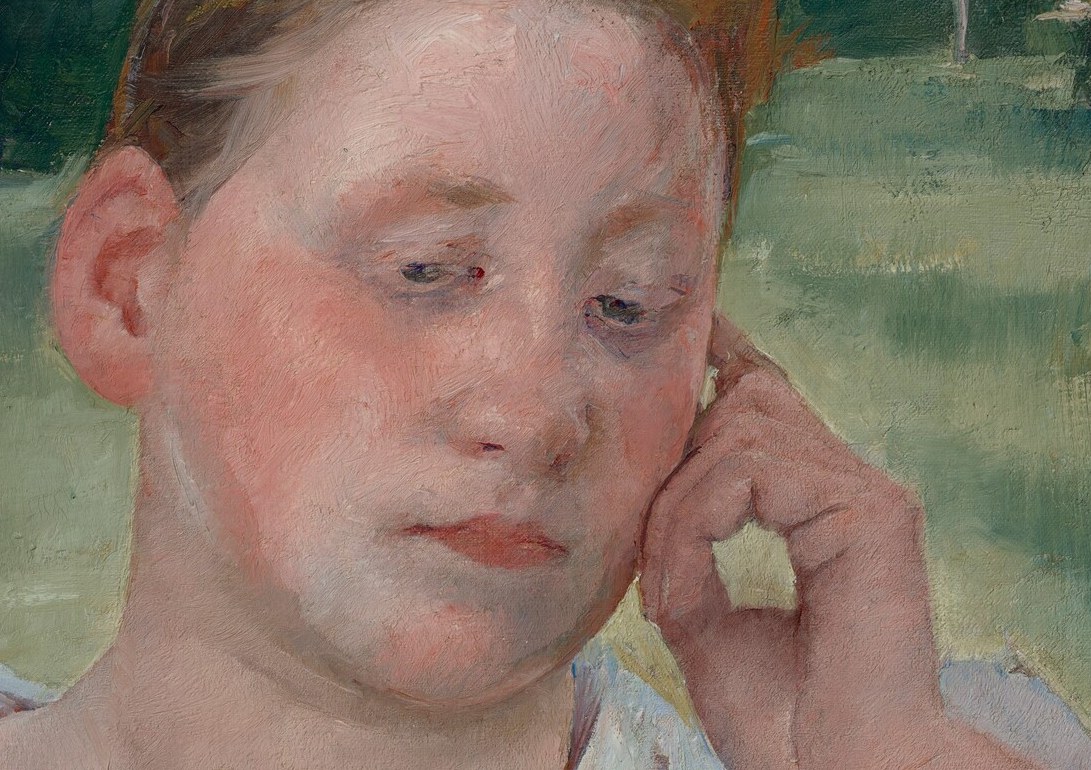
Notice first what she denies us: her eyes. She does not meet the viewer's gaze. Cassatt understood that refusing the glance creates intimacy, we are not a guest being greeted, but a quiet observer of a genuinely private thought. The hand pressed to her cheek is the classic pose of reverie, absorbed and unselfconscious.
Now read the objects. The single-strand pearl necklace was shorthand for bourgeois respectability, a quiet class marker Cassatt used often. In her loose hand, a red zinnia. Nineteenth-century floriography, the coded language of flowers, assigned the zinnia a specific meaning: thoughts of an absent friend. Together, the reverie, the pearl, and the flower form a complete sentence about feminine inner experience, a rich emotional life conducted beneath a composed surface.
Cassatt never married, building her life around her work and her friendships, particularly with Edgar Degas and the Havemeyer family, who became important American patrons of Impressionism through her guidance. She was later called one of the 'three great ladies' of the movement. This painting is on view at the National Gallery of Art in Washington, D.C.
What quiet thought do you think she is holding?
Details

Transcript
She is not looking at us. 1892. An American painter in Paris captures a private thought. A single-strand pearl at the throat. Respectability itself, worn quietly. Cassatt painted the inner lives of women the public world ignored. The flower is a red zinnia. In the language of flowers, it means thoughts of an absent friend. The code adds up. The reverie, the pearl, the zinnia, she is thinking of someone she cannot be with.