Ripening Pears by Decker, Joseph
Joseph Decker's 'Ripening Pears' (c. 1884) is a masterclass in focused seeing, housed today in an American collection specializing in 19th-century Impressionist art. Decker, a German-born painter who worked in the United States, made a career out of painting edible things: not tables set for a meal, but the food itself, suspended against soft, misty skies. His specialty was so narrow it becomes profound.
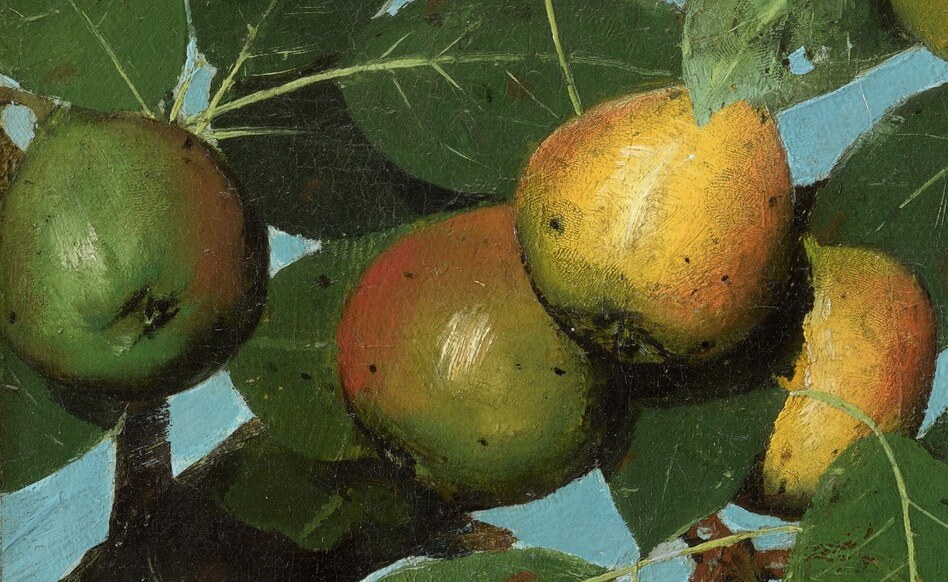
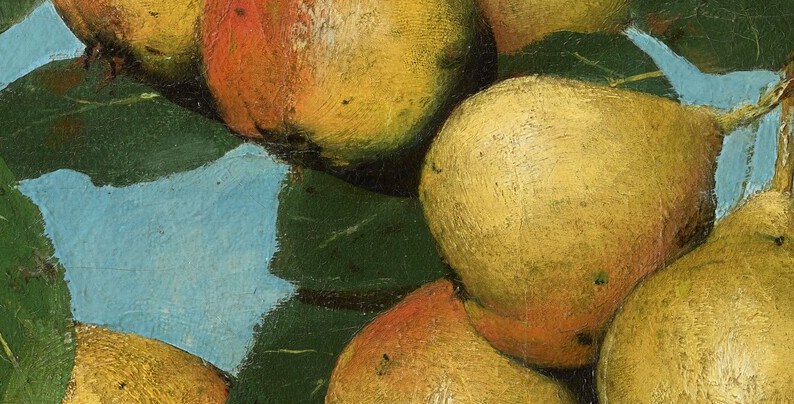
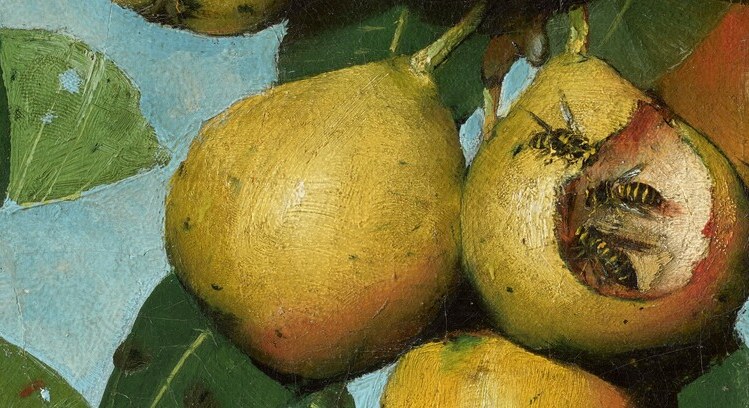
Look at the branch. This isn't a generic basket of plenty. Every pear is at a different stage: hard green, blushed gold, and fully ripe yellow. Decker includes the blemishes and even a pear that has been eaten away to its core. The painting tracks a natural timeline from growth to decay.
By the late 1800s, American artists were absorbing the Impressionist focus on everyday light and common subjects. Decker chose the most humble subject possible, a piece of fruit, and gave it the same careful attention another painter might give a portrait. His thin glazes of paint make the skin look alternately glossy and matte.
A whole season of growth, ripening, and inevitable decline, all happening on one quiet branch. What does the bitten pear make you feel most: curiosity about who ate it, or a small pang for the fruit that's already gone?
Details

Transcript
This painter had a very narrow specialty. He painted edible things. Not dishes or tables. Just the food. Look at this single branch of pears. Three pears, each a different shade of ripeness. And here, one has already been eaten. Decay was part of the job. He painted it faithfully. Joseph Decker showed ripeness as a process, not a moment.