The Vigilant Stuyvesant's Wall Street Gate by John Quidor
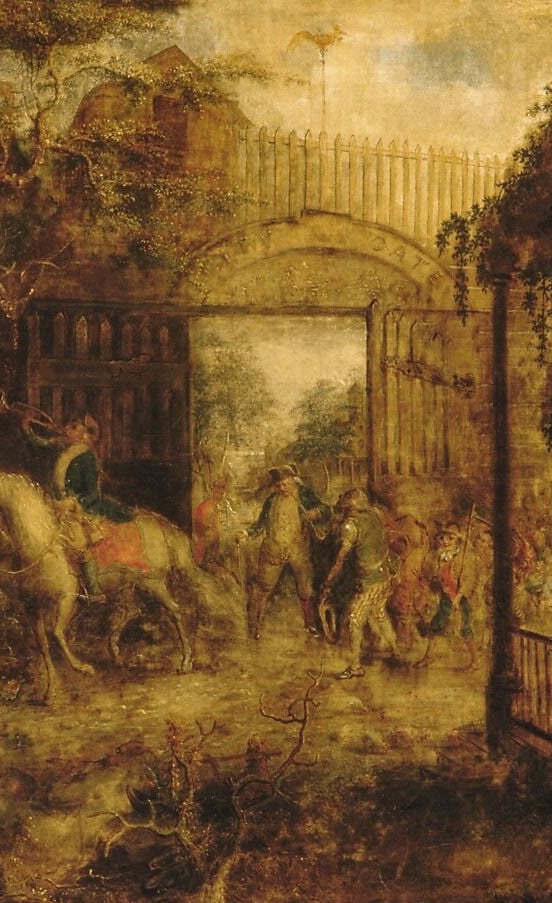
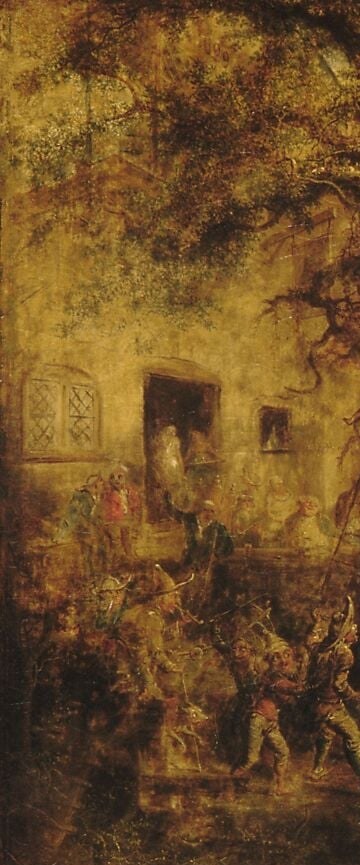
John Quidor's "The Vigilant Stuyvesant's Wall Street Gate" (1863), held at the American Wing, offers a dramatic, romanticized vision of a vanished New York landmark. Quidor painted this scene long after the original Wall Street gate had disappeared, blending historical memory with his own vivid imagination. It's not a literal depiction, but a mythic recreation of a moment in New Amsterdam's past.
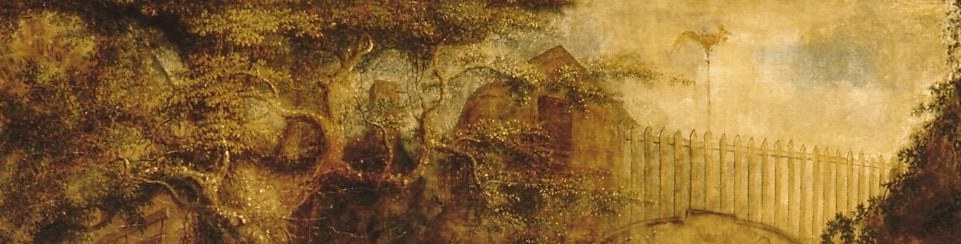
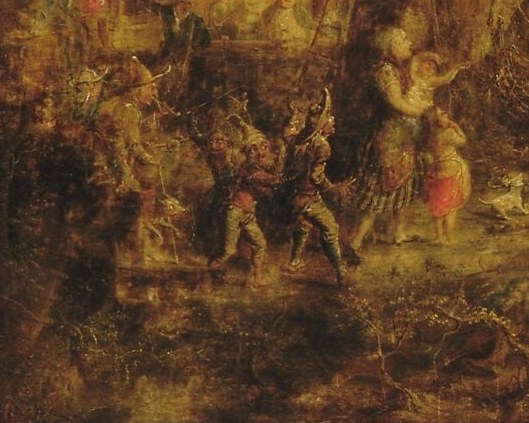
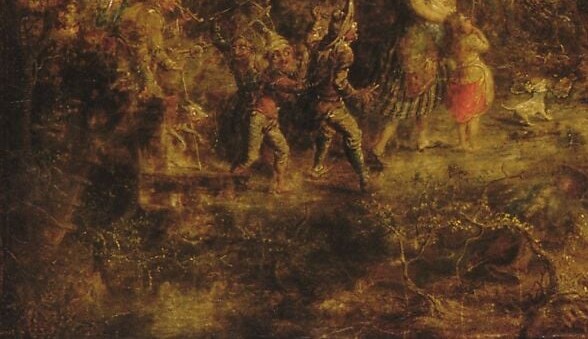
Notice the turbulent, golden-brown sky and the rearing horse, which give the painting a heightened sense of urgency and drama. In the lower left, two small boys blow trumpets. Their actions, and those of the surrounding crowd, create an ambiguous narrative: are they sounding a fanfare, or an alarm?
Quidor was known for his paintings inspired by Washington Irving's stories about Dutch New York. He used thick impasto paint to create texture, especially in the stormy clouds, giving the scene a tangible sense of movement and depth. This expressive approach allows Quidor to explore themes of history, drama, and the passage of time through a uniquely personal lens.
This painting invites us to consider how history is remembered and reimagined through art. What story do you see unfolding here?
Details
Transcript
This painting reimagines New York's old Wall Street gate. The artist painted this scene long after the real gate was gone. A powerful storm builds in the sky over this dramatic scene. Two boys blow trumpets, but what are they announcing? Look closely at the figures in the lower left. Are they welcoming new arrivals, or warning of danger?