Iowa Indians Who Visited London and Paris by Catlin, George
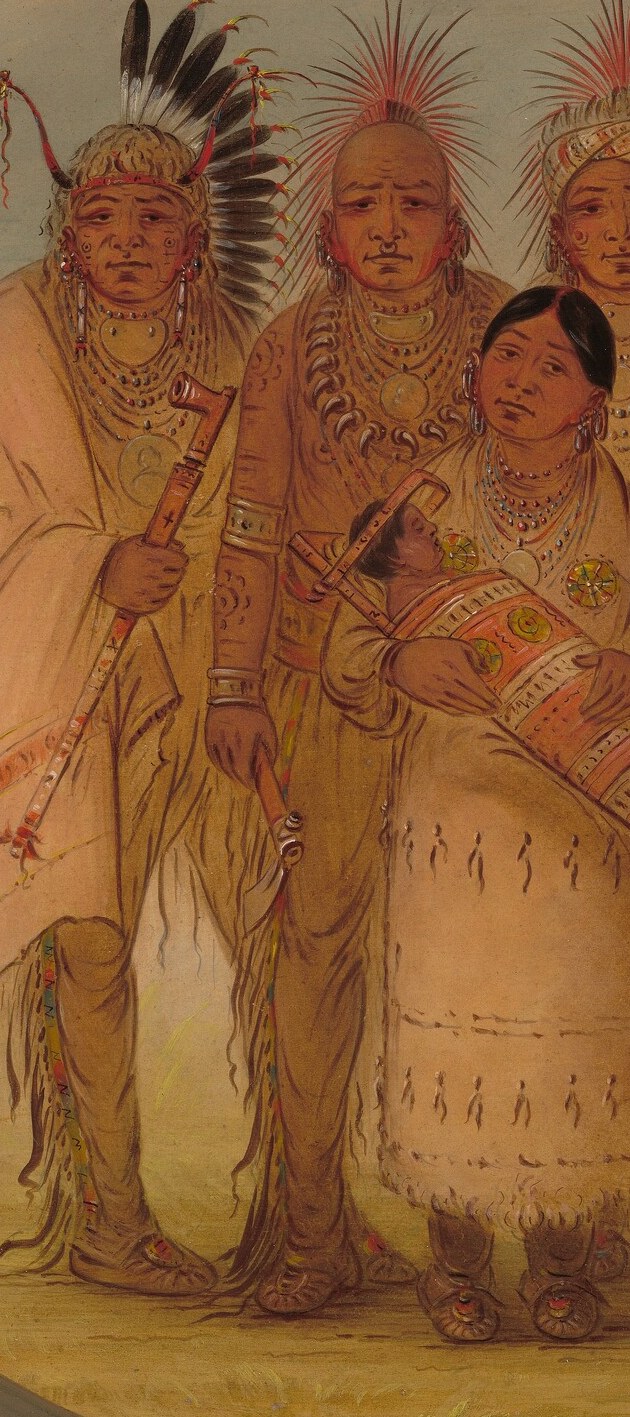
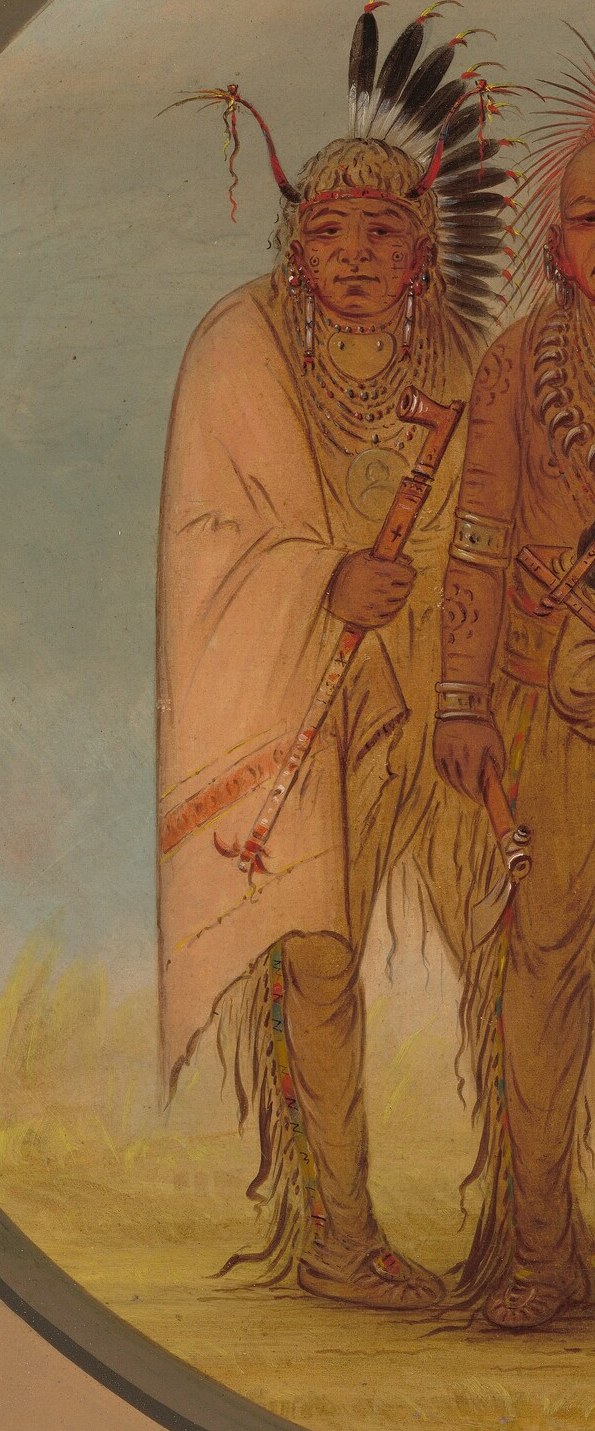
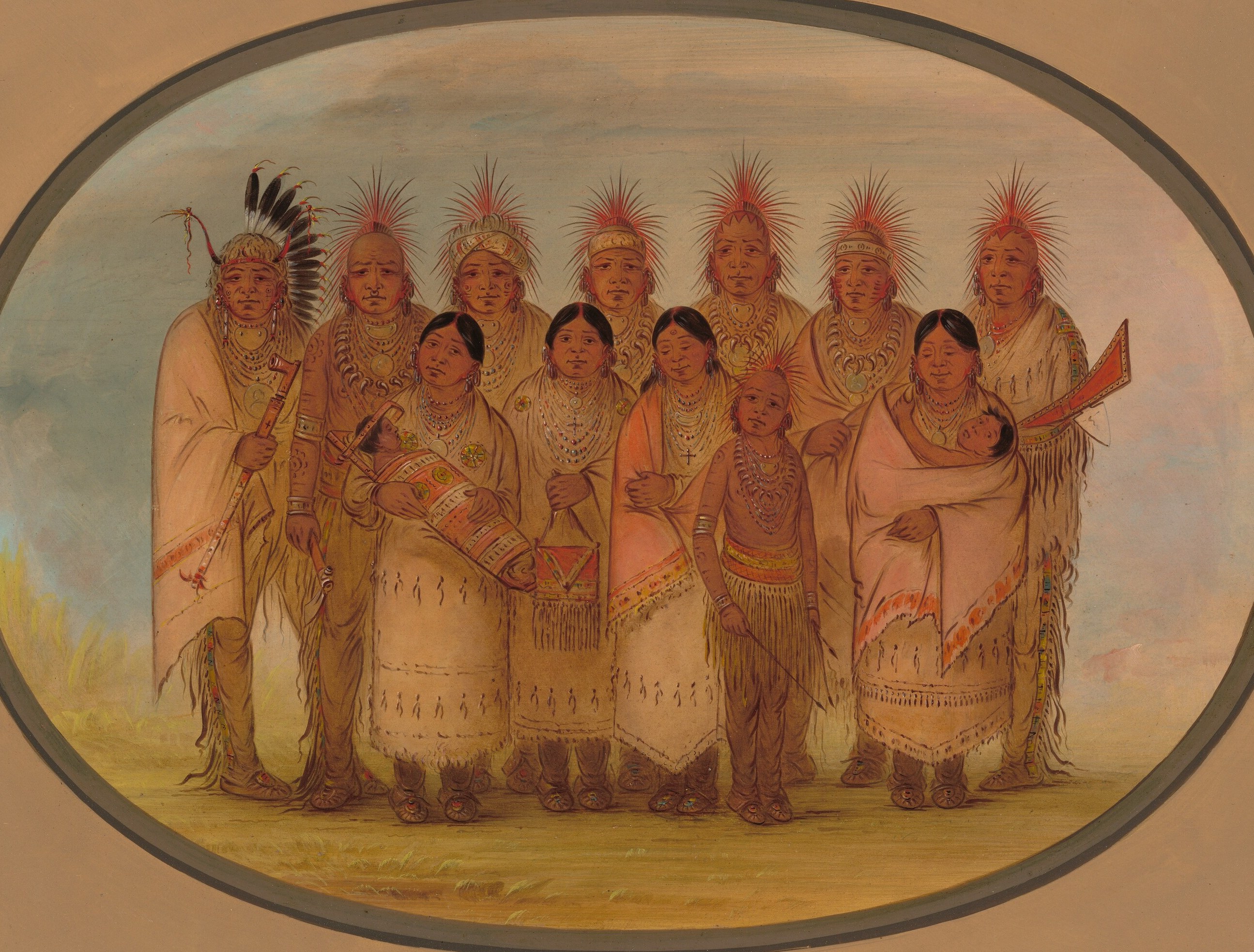
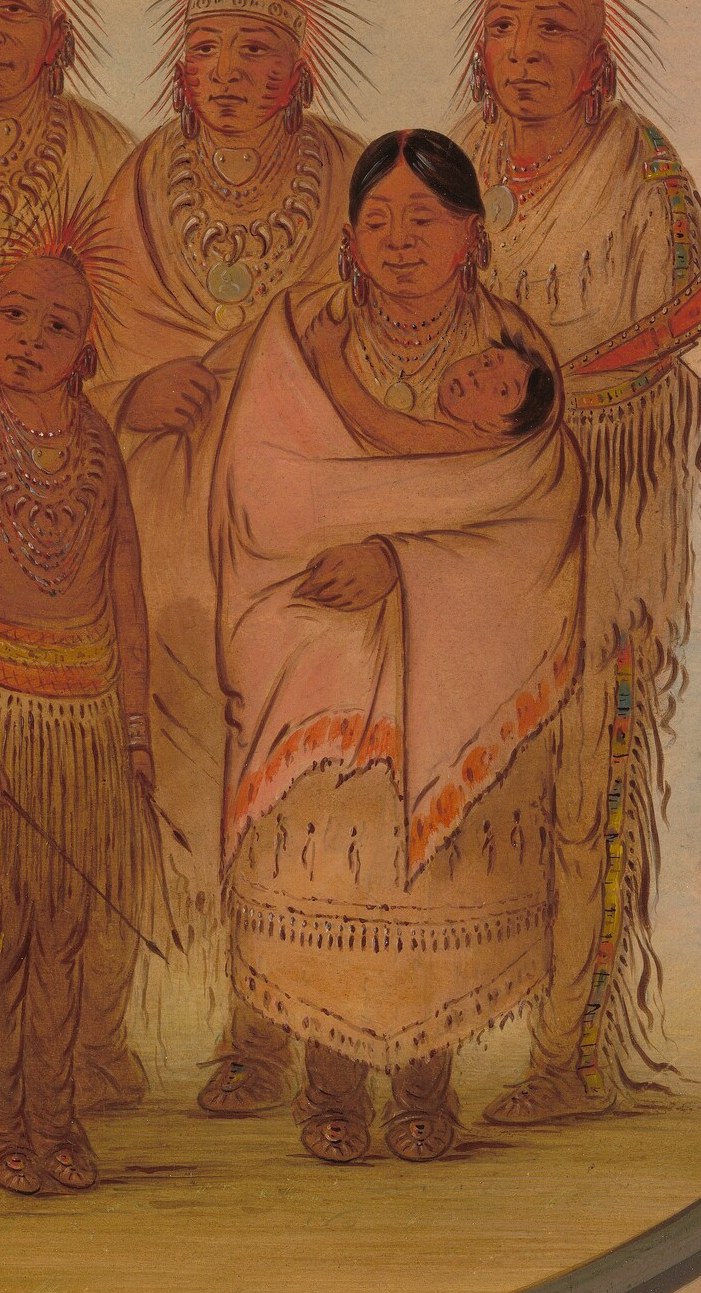
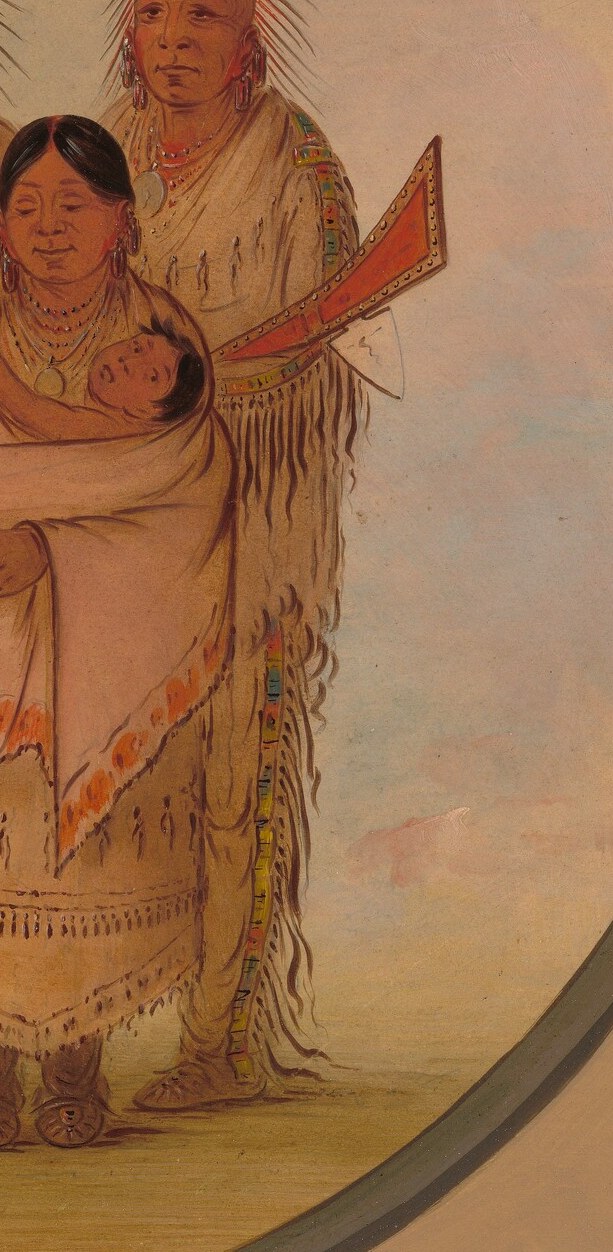
George Catlin painted this portrait of Iowa Indians in 1865, after they had traveled from the American Plains to Europe. The painting is now held in the Smithsonian American Art Museum. It captures a group of people far from home, dressed in a blend of traditional garments and European clothing, standing together inside a dark oval frame that isolates them from a pale, foreign sky.
The man holding the pipe in the center is White Cloud, the chief. The pipe was a sacred diplomatic object. Catlin, a former lawyer who became a painter and ethnographer, was known for his five trips to the American West in the 1830s and his lifelong project to document Native American life.
This group toured London and Paris as living exhibitions, drawing crowds eager to see the "exotic" visitors. White Cloud kept a personal journal during the journey. In it, he described the loneliness of being watched constantly and the pain of being treated as a curiosity. He never made it home; he fell ill and died in England before the group could return to Iowa.
Catlin's portrait preserves their presence with dignity, but White Cloud's words add a harder truth. What looks like a formal group portrait is also a record of a journey that cost him everything.
Details
Transcript
In 1865, George Catlin painted this group of Iowa Indians. They had traveled from the American Plains to London and Paris. Look at the man with the pipe. His name was White Cloud. He was their chief. He holds a ceremonial pipe, a sacred object for diplomacy. White Cloud kept a journal of the trip. He wrote of feeling like a spectacle. He mourned the home he would never see again. He died in England before the group could return.