The Young Virgin by Francisco de Zurbarán
View the artwork: The Young Virgin →
This is *The Young Virgin*, painted by Francisco de Zurbarán around 1633. It hangs in the Metropolitan Museum of Art in New York.
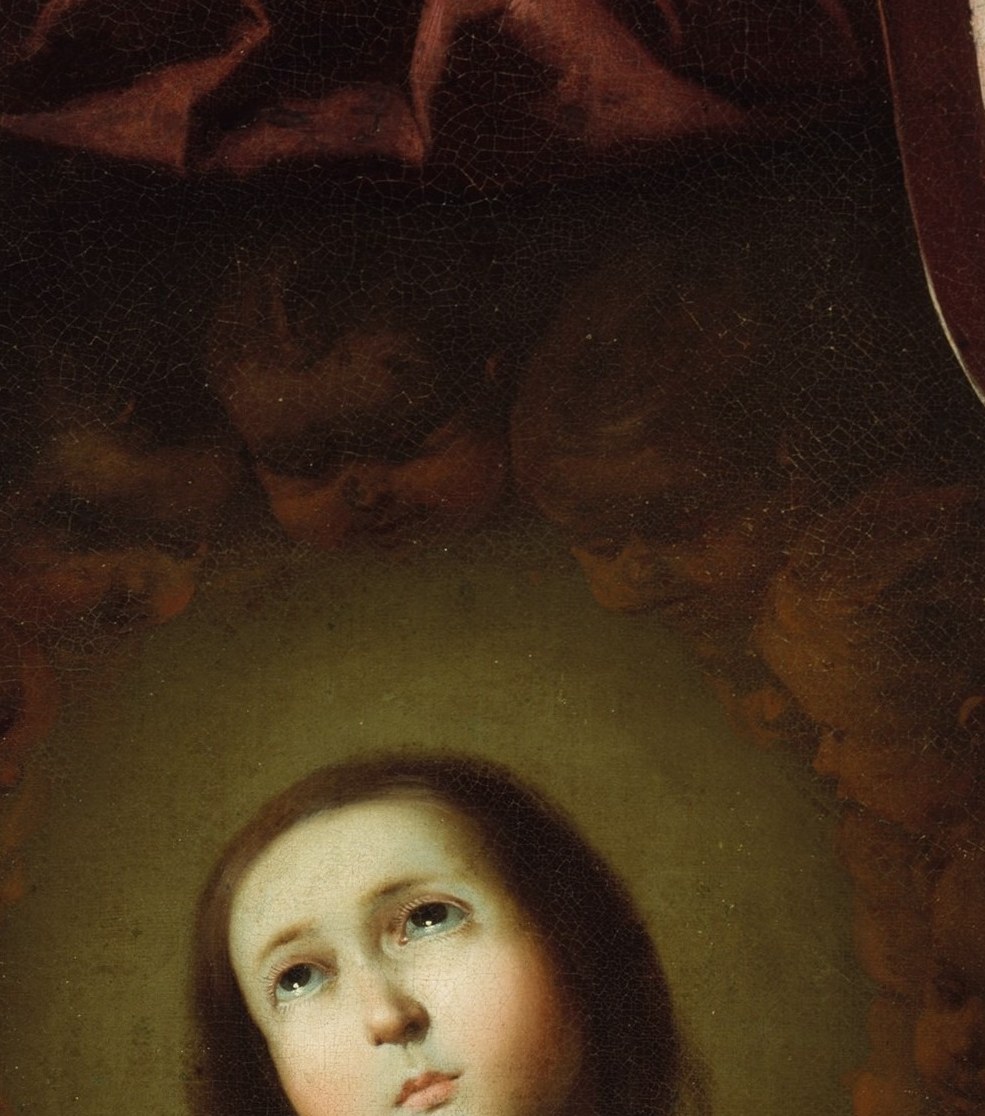
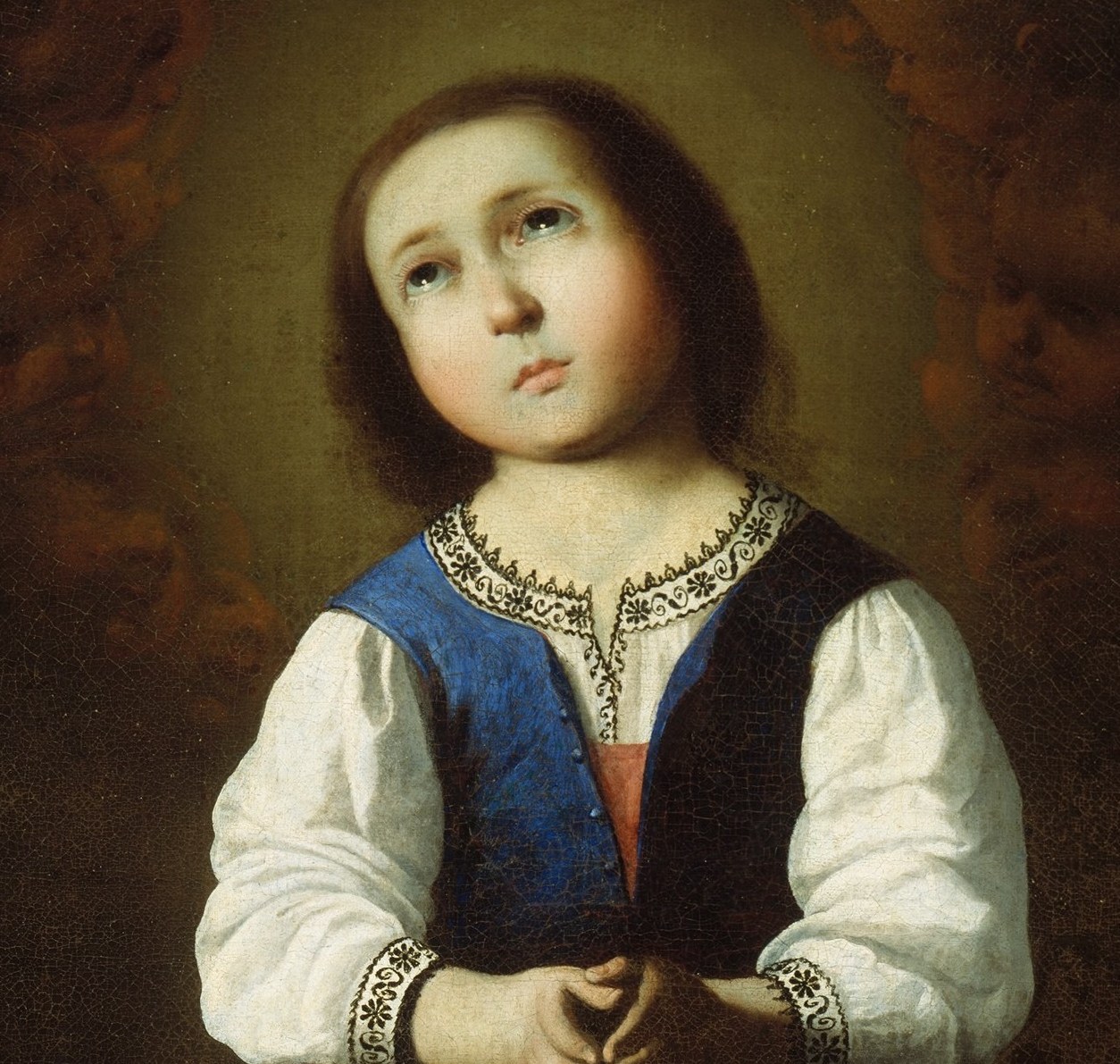
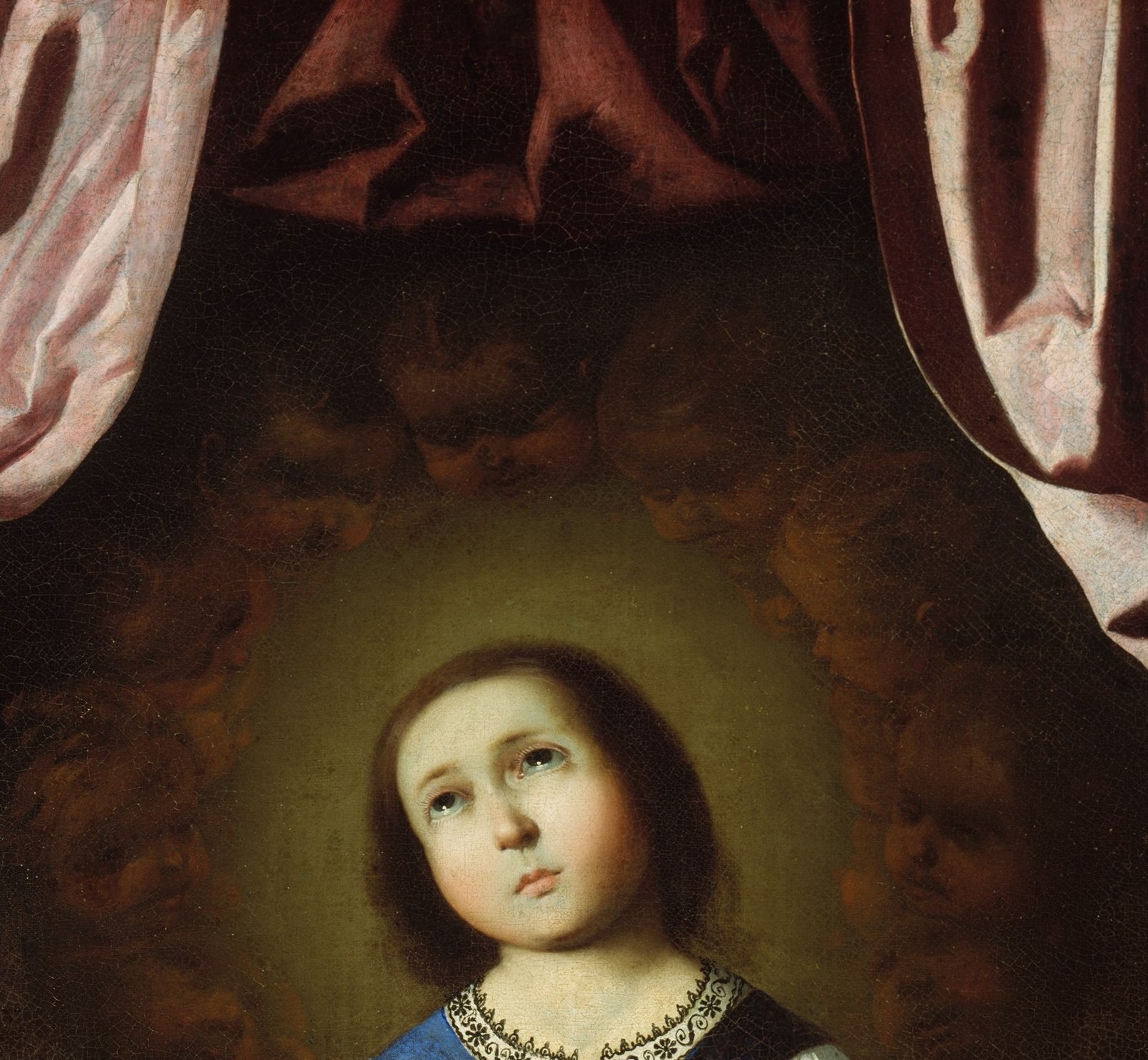
The first thing to look at is her face. She is a child, maybe ten or eleven, but her eyes are not looking at her embroidery or at you. Zurbarán directs her gaze inward, giving her a state of rapt quiet that feels entirely psychological, not theatrical.
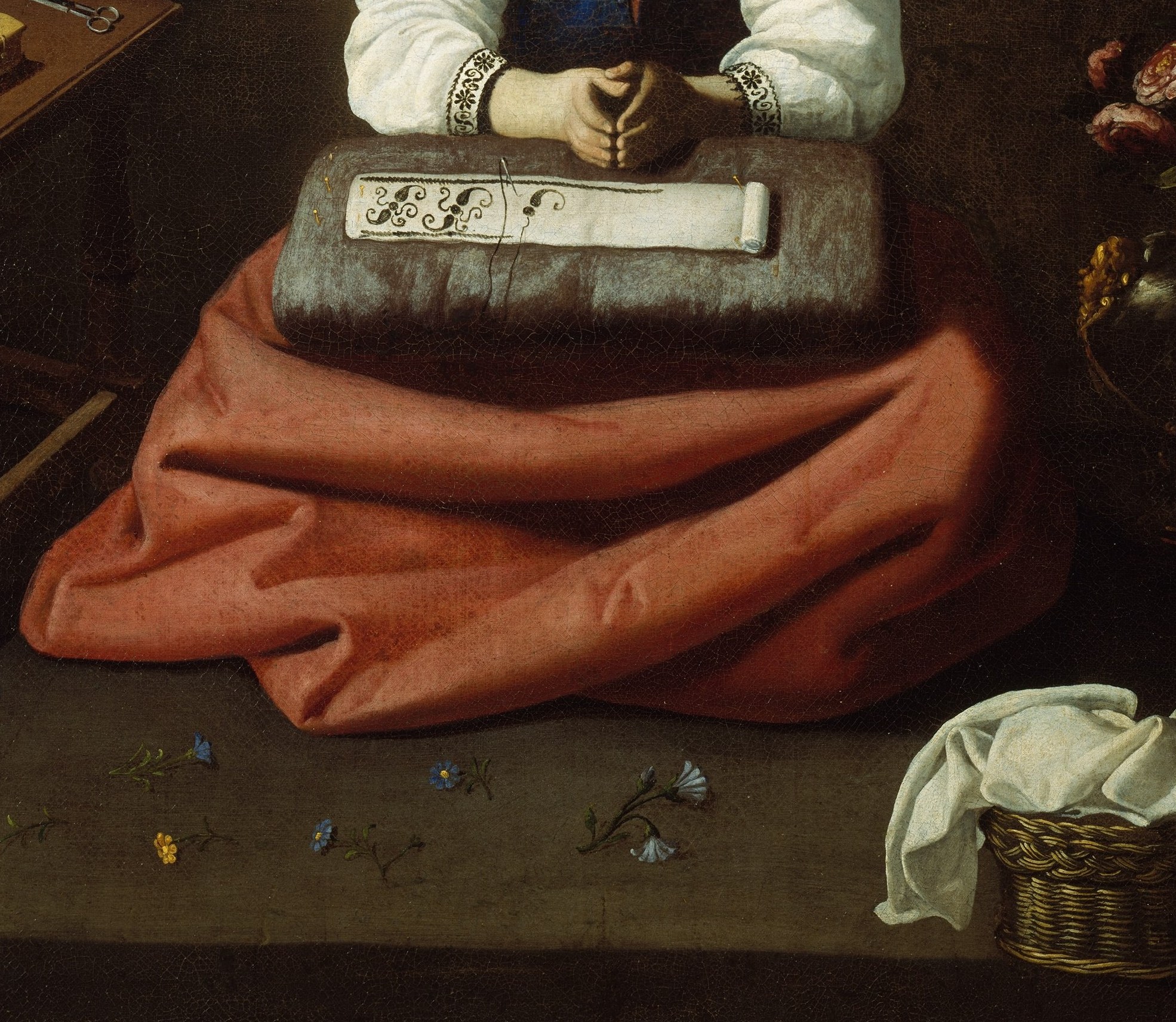
Now look below her face. Her hands rest on white linen, needlework paused. The cloth she was embroidering is traditionally a temple veil, a domestic task tied to a sacred destiny. Zurbarán paints every fold of that linen and every heavy drape of her red skirt with the textural clarity that earned him the nickname "the Spanish Caravaggio."
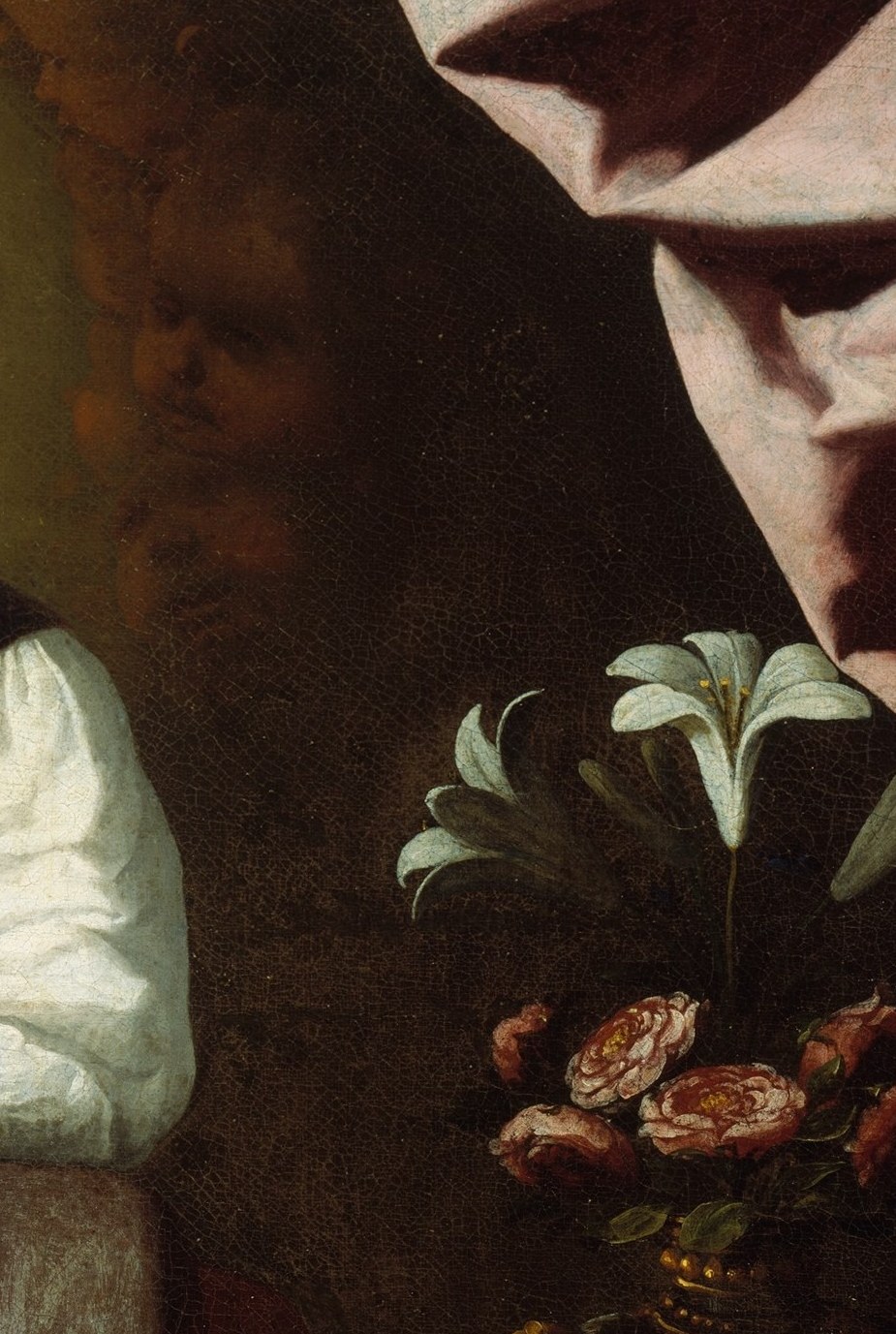
But where Caravaggio turned religious moments into high drama, Zurbarán gives us stillness. The divine appears not as a gold disc but as a warm atmospheric glow around her head. The only accompanying objects are a book, a basket, a small clay vessel. Everyday things. The miracle is in the quiet.
#arthistory #zurbaran #spanishbaroque
Details
Transcript
She's a child. But she's already somewhere else. Zurbarán gives her an inward gaze, not a heavenward one. Her hands have stopped mid-stitch. Prayer overtook the work. The cloth she's embroidering is a temple veil. A sacred task. Zurbarán was called the Spanish Caravaggio. But Caravaggio's drama is absent. This is childlike stillness, held in light.