Magnus Stenbock Surrenders the Fortress of Tønningen to Frederik IV in 1714 by Nicolai Abildgaard
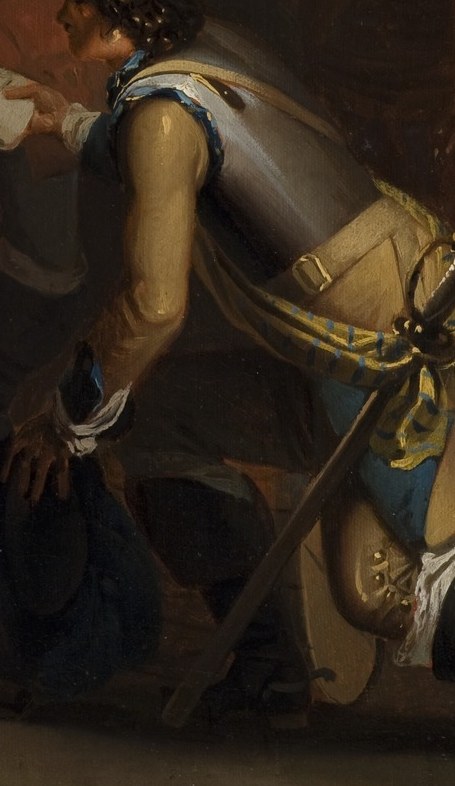
Nicolai Abildgaard's "Magnus Stenbock Surrenders the Fortress of Tønningen to Frederik IV in 1714," painted in 1785, captures a pivotal moment in the Great Northern War. This oil painting, now held in a Danish museum, is a history painting that dramatizes the human cost and political shifts of conflict.
Look closely at the figures: the Swedish commander Magnus Stenbock, kneeling to offer the terms of surrender, and the Danish King Frederik IV, receiving them. The artist uses their expressions and gestures to convey the gravity of the situation, from Stenbock's resignation to Frederik's measured acceptance.
Abildgaard, a Danish neoclassical artist, was also a professor at the New Royal Danish Academy of Art. His work on this painting reflects the era's interest in using historical subjects to reinforce national identity. The surrender of Tønning in 1714 was a significant event that reshaped Northern European power dynamics.
This painting invites us to consider the personal stakes behind grand historical events. What do you see in their faces?
Details
Transcript
This painting shows a surrender in the Great Northern War. Swedish commander Magnus Stenbock kneels, offering terms. His face shows the weight of his defeat. Danish King Frederik IV accepts the surrender with quiet triumph. The artist, Nicolai Abildgaard, painted this in 1793. He created many royal commissions for Danish palaces. The surrender marked a key moment in the conflict. It reshaped the balance of power in Northern Europe.