musical party by http://www.wikidata.org/.well-known/genid/d171c4a527f80c64f4364bbcf19cc7b6
This painting, "Musical Party," from circa 1880, offers a glimpse into a seemingly idyllic domestic scene. Yet, the context of its creation in a period of burgeoning industrial wealth and social stratification subtly imbues the work with a layer of intrigue, hinting at the underpinnings of bourgeois life.
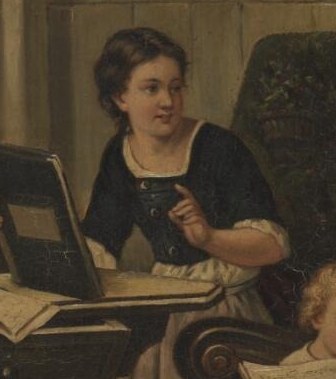
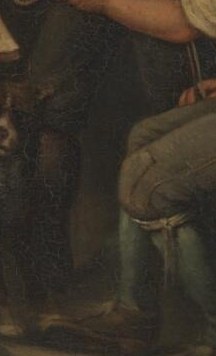
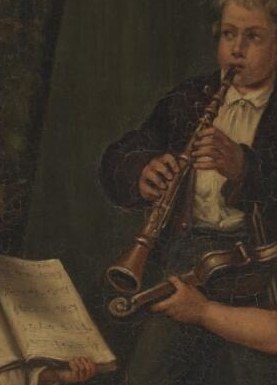
Look closely at the four children engaged in a musical performance. A girl is absorbed in sheet music at a desk, while three boys actively play instruments, one also holding a music book. Notice the quiet presence of the dog in the background and the wine bottle on the shelf, details that speak to the era's comforts and preoccupations. The scene is bathed in warm light, emphasizing the supposed harmony and focus on education and culture within the home.
The dossier notes this period, 1880, was marked by significant social and economic shifts, with a rising bourgeoisie often criticized for ostentatious displays of wealth and a focus on superficial accomplishments. While this painting doesn't depict overt scandal, its very normalcy, its focus on cultivated leisure, can be seen as a quiet commentary on the values and perhaps the emptiness of the era's elite.
Does art always need a loud scandal to be intriguing?
Details
Transcript
Four children gather for a musical party. The girl studies sheet music intently. Two boys play instruments, another holds music. A wine bottle sits on the shelf. This was painted in 1880, a time of excess. The quiet dog watches this domestic scene. The scene implies bourgeois comfort and education.