The Virgin and Child by Bernard Van Orley
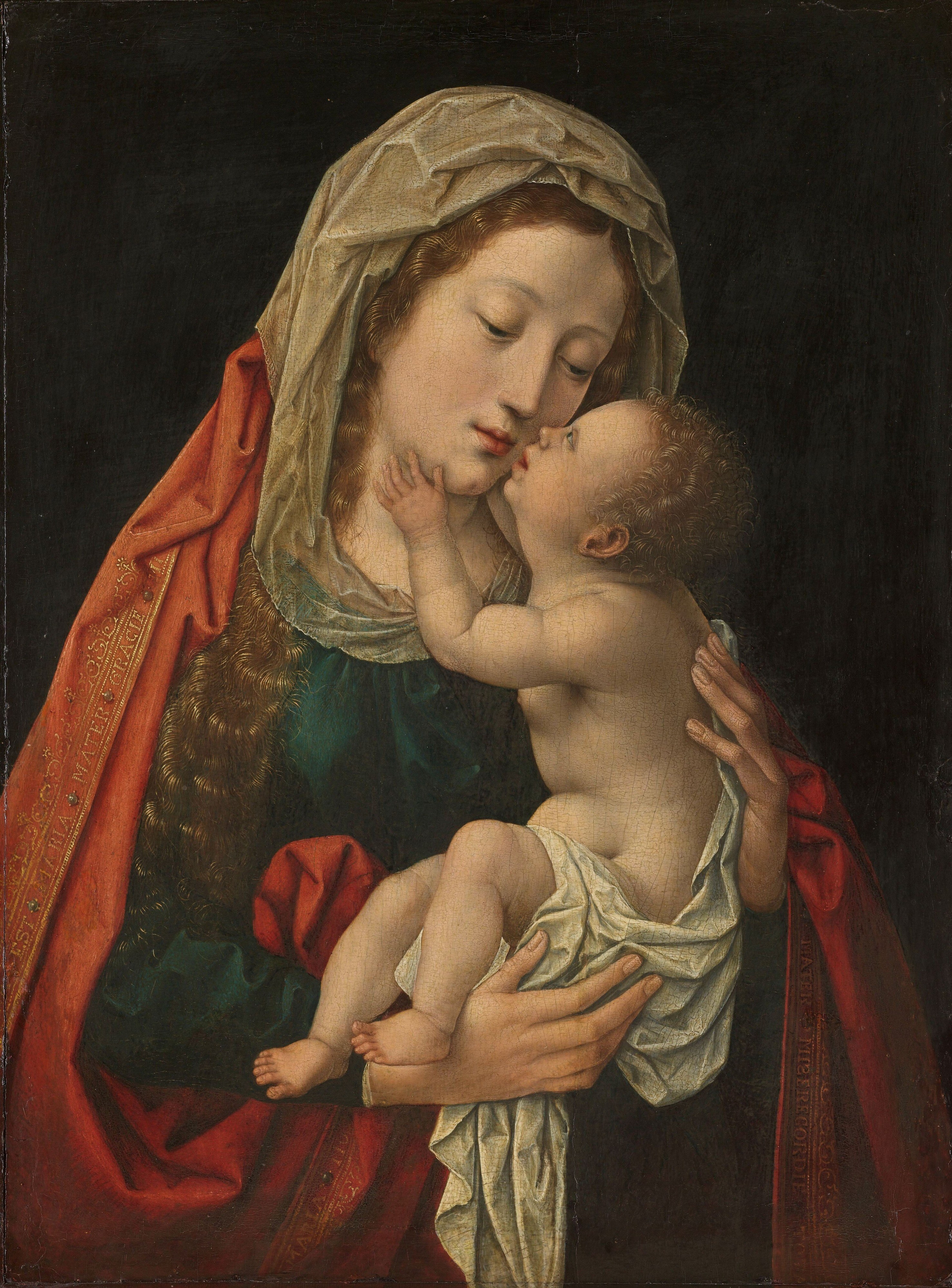
Bernard van Orley's "The Virgin and Child," painted in 1525, is a beautiful example of Northern Renaissance art, currently housed at the Rijksmuseum.
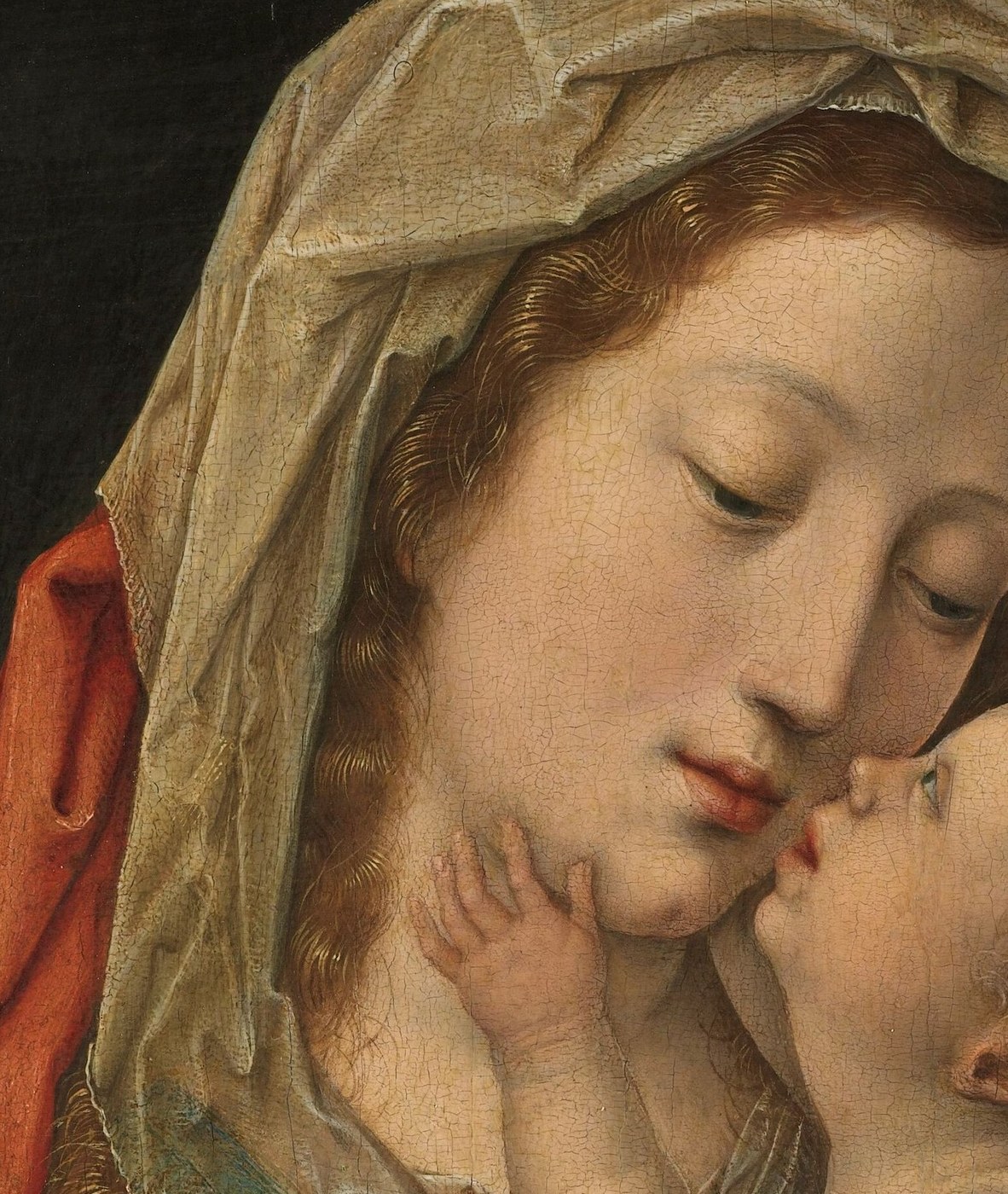
This oil painting captures an intimate moment between Mary and the Christ Child. Notice the delicate way the child's hand rests on Mary's cheek, and the rich detail in her red robe, which suggests wealth and status.
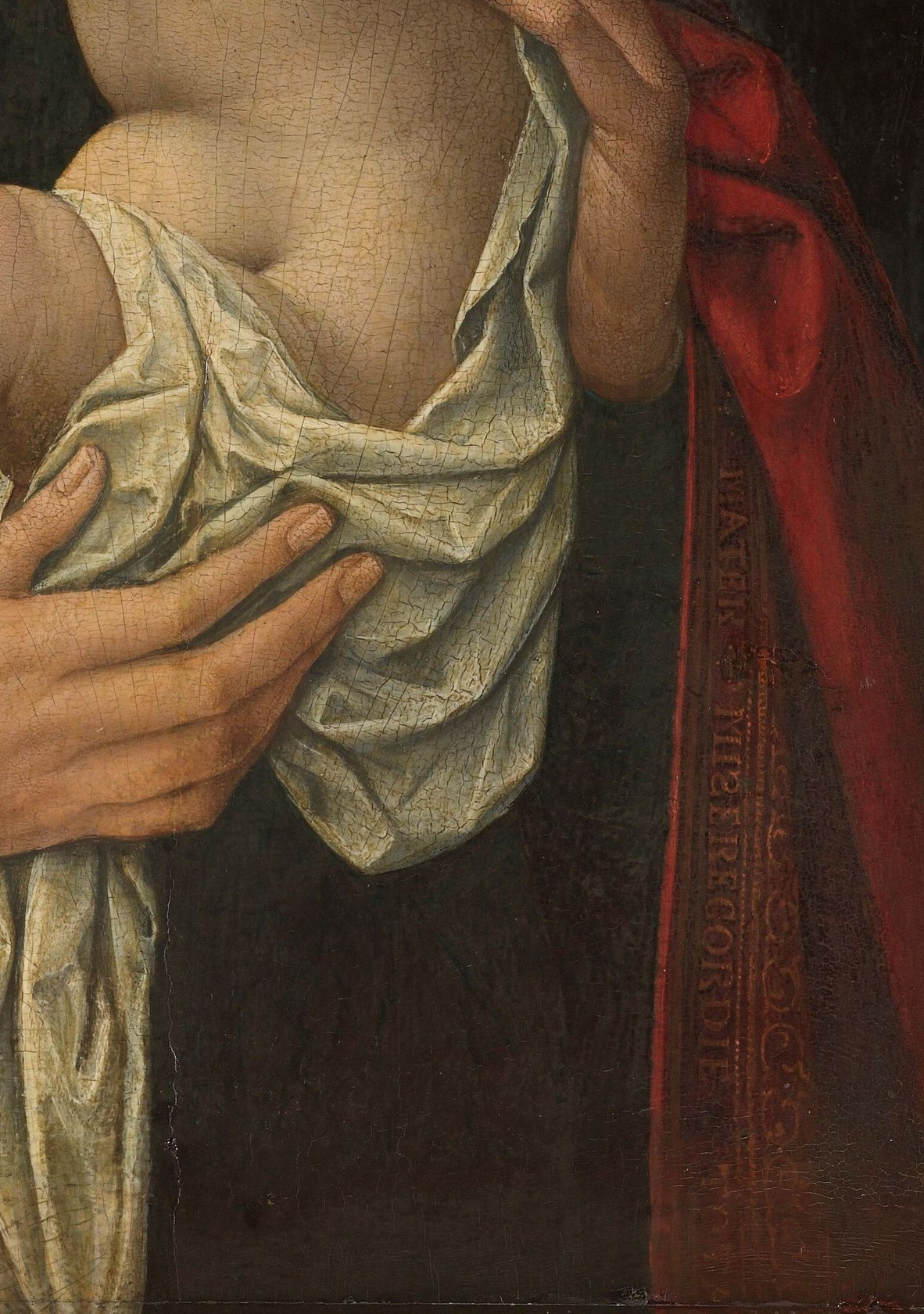
Remarkably, within the folds of Mary's garments, there's a subtle Latin inscription. This detail, easily overlooked, adds a devotional layer to the piece, deepening its religious meaning and showcasing the artist's meticulous attention.
Van Orley was a versatile Flemish artist, known for his work in painting, tapestry, and stained glass, who brought elements of Italian Renaissance aesthetics into his local tradition. What other hidden details might this painting hold?
Details
Transcript
A tender moment, painted in 1525. Mary cradles her child, their faces close. His small hand gently touches her cheek. But look at the rich red fabric of her robe. An inscription, almost hidden in the folds. This Latin text adds a silent layer of devotion.