The Sacrifice of Polyxena by Giovanni Francesco Romanelli
This is The Sacrifice of Polyxena by Giovanni Francesco Romanelli, painted around 1630 and now in the collection of the Metropolitan Museum of Art. The scene comes straight from the aftermath of the Trojan War: after the fall of Troy, the ghost of the Greek hero Achilles demanded the life of the captive princess Polyxena as the price for fair winds home.
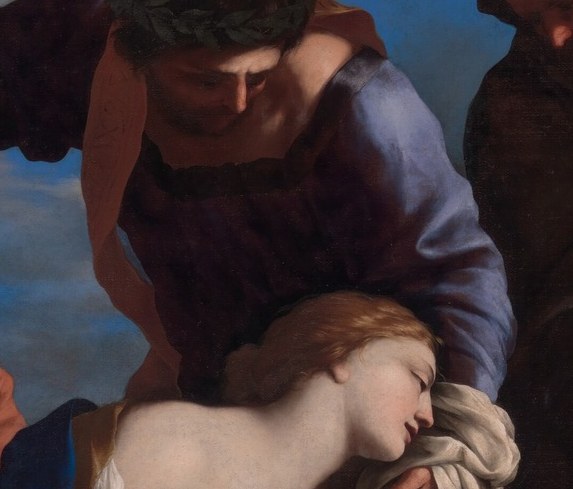
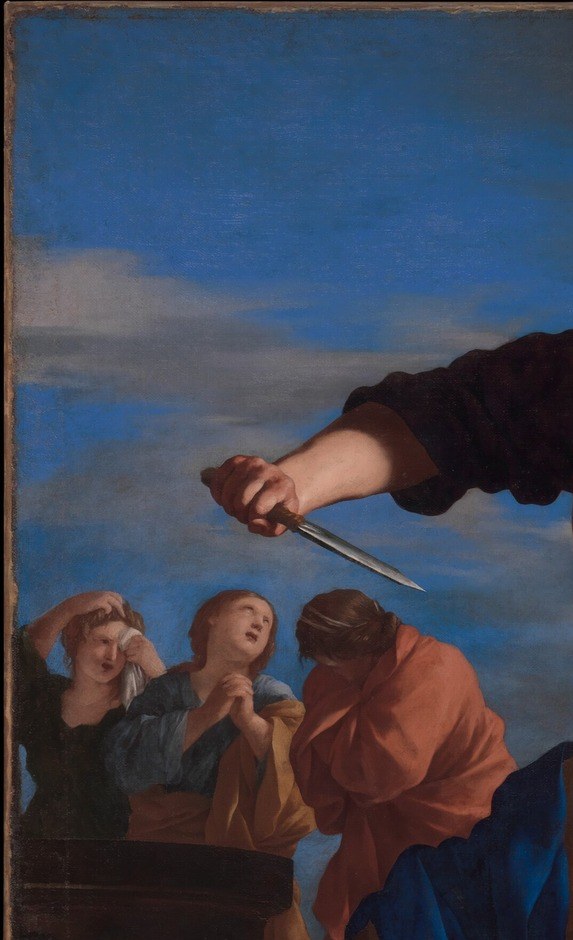
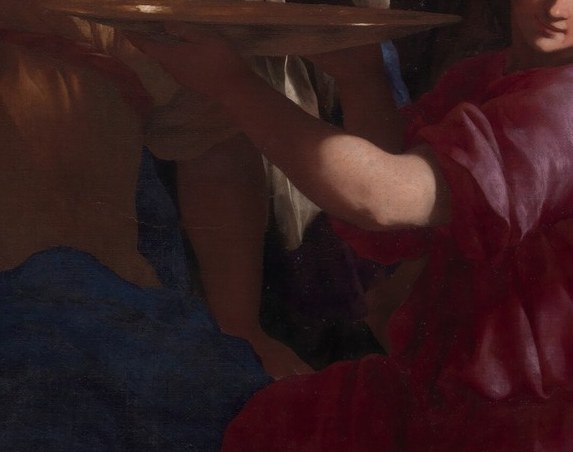
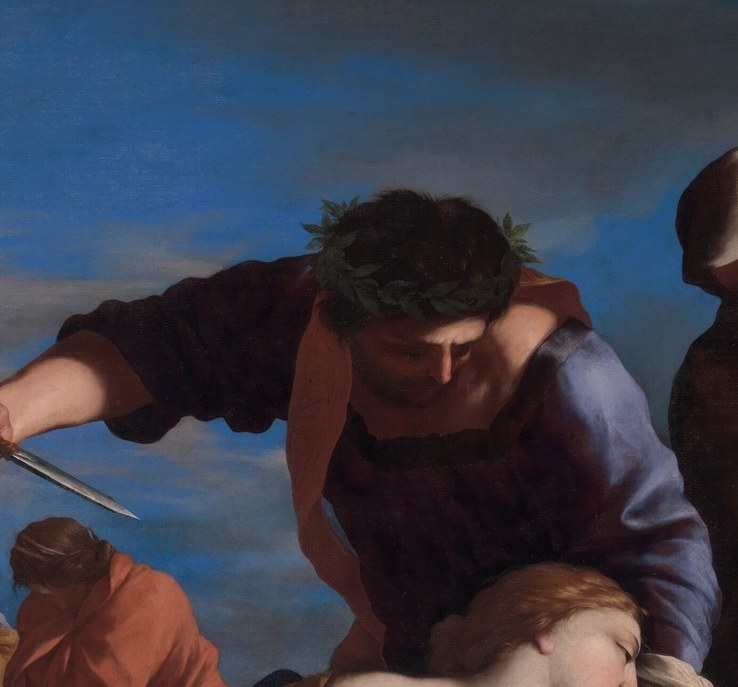
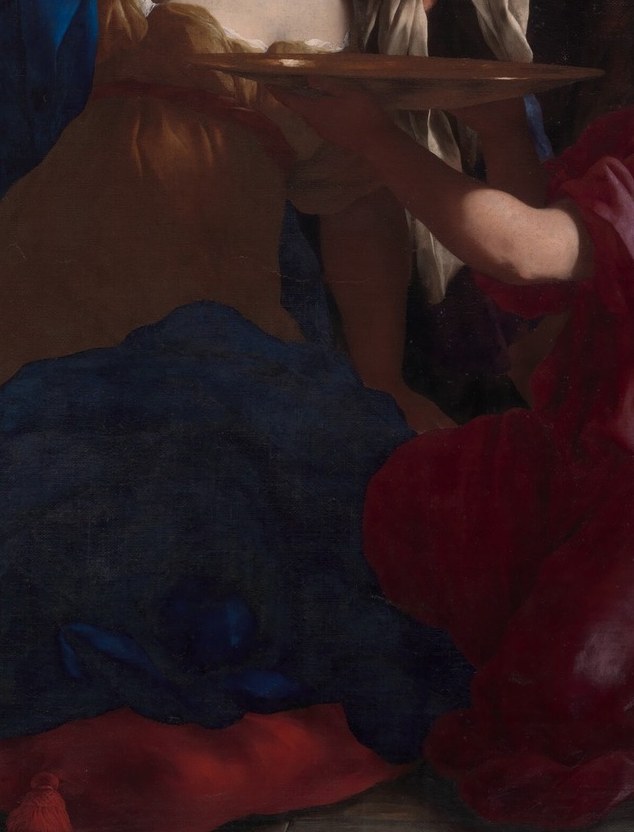
Romanelli gives the brutal moment a Baroque spotlight. A shaft of warm light isolates Polyxena against a dark crowd of soldiers and witnesses. The hooded figures, the plumed helmet, and the ritual vessel at the lower right all mark this as a formal religious ceremony, not a battlefield execution. But the most unsettling detail is her hands. In the myth, Polyxena walked to the altar unbound and unresisting, and Romanelli paints her that way. Yet the soldier gripping her torso betrays the fiction: this is force being applied to a woman who supposedly consented.
The artist, Giovanni Francesco Romanelli, was born in Viterbo in 1610 and trained in Rome under Pietro da Cortona before becoming one of the most sought-after painters of his generation. He later worked for the Barberini family and spent years in Paris decorating the Palais du Louvre for Cardinal Mazarin. His signature was clarity: bright, vivid color and legible detail even in crowded compositions. The Met acquired this canvas in the nineteenth century, where it remains as a quiet, complicated answer to a question the myth itself sidesteps.
Next time you see a Baroque painting of a beautiful woman in distress, check her hands. Romanelli left the moral ambiguity right there.
Details
Transcript
Greek soldiers surround a Trojan princess. Polyxena was a captive. Achilles' ghost demanded her death. A hooded priest drives the diagonal straight toward her neck. Look at her hands. No rope. No restraints. The myth says she walked to the altar willingly. So when the sacrificer forces her down, Romanelli gives us a problem. A woman in crimson already grieves where the blood will pool. Romanelli painted this in 1630. It now hangs at the Met.