Portrait of Yun Dongseom (1710–1795) by http://www.wikidata.org/.well-known/genid/8e8cf27c03d3737fc543f5d33ddcb3ca
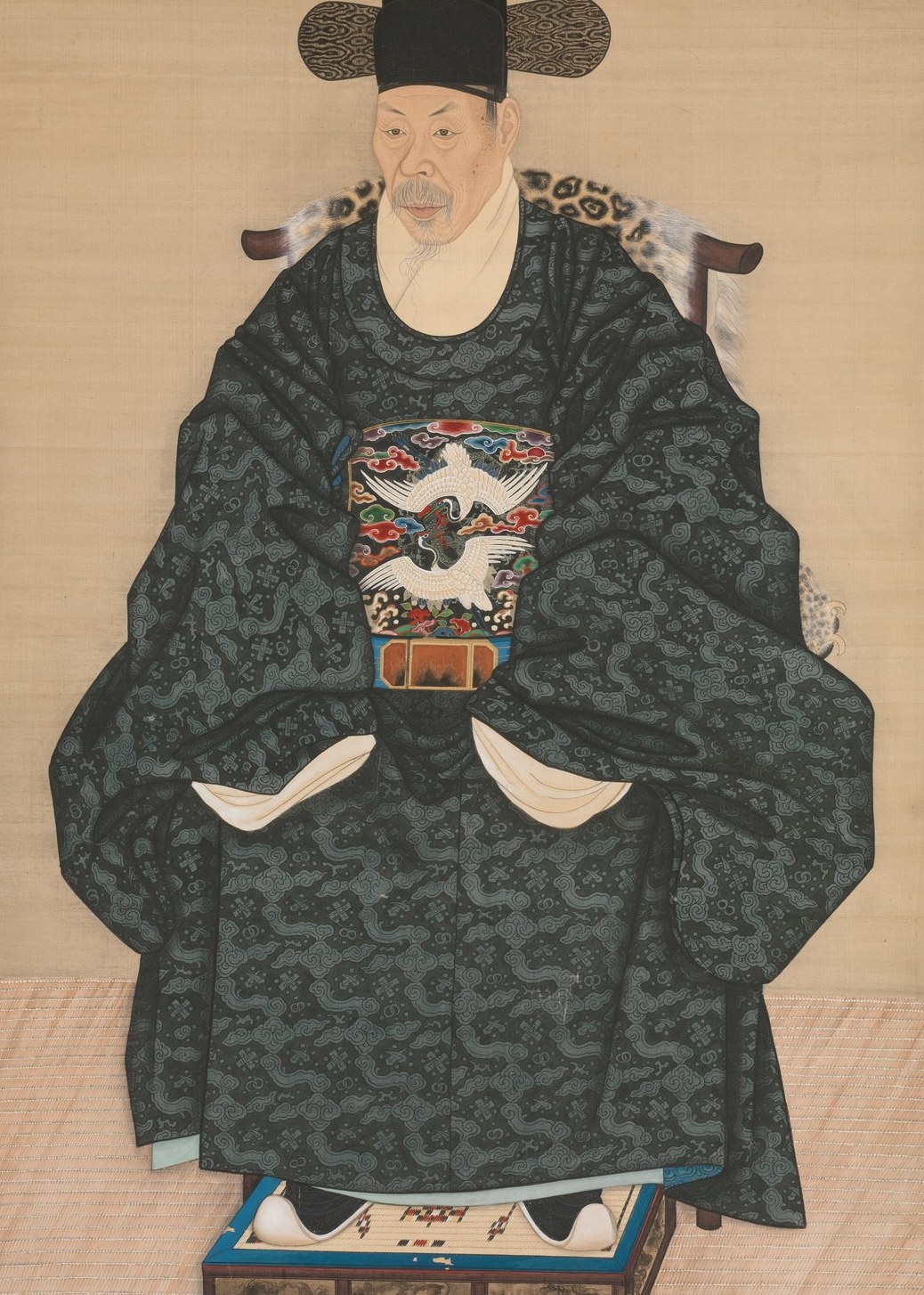
This formal portrait of Yun Dongseom (1710-1795) offers a window into the societal structure and visual traditions of the Joseon Dynasty. The painting captures Yun Dongseom, a notable high-ranking official, with meticulous detail.
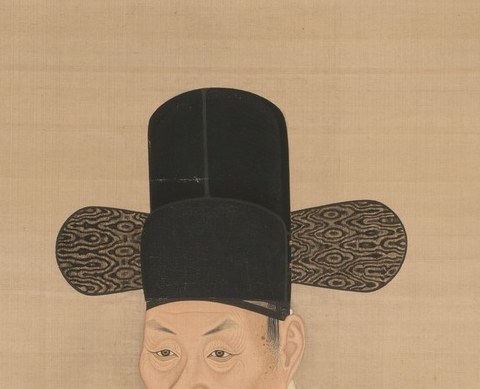
Look closely at his attire. The distinctive black winged hat and the crane emblem on his chest are not merely decorative, but clear indicators of his official rank and status. The cranes themselves symbolize longevity and wisdom, attributes highly valued in a leader.
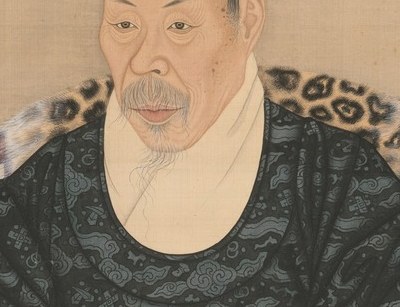
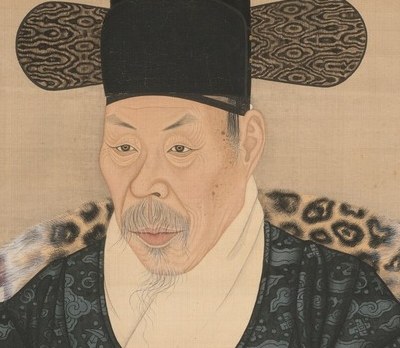
Further emphasizing his prominence, the luxurious leopard fur collar signals wealth and access to exotic materials. His composed and stern expression perfectly embodies the dignity and authority expected of someone in his position during the late 18th century. This artwork provides valuable insight into how individuals of rank were represented in Joseon-era portraiture.
What details in the portrait most draw your eye to his authority?
Details
Transcript
This is Yun Dongseom, a high official in Joseon Dynasty Korea. His official rank is clear from the elaborate winged hat. And the embroidered crane emblem on his chest. Cranes symbolize longevity and wisdom, qualities for a leader. Even the leopard fur collar speaks to his high status. His stern expression conveys the dignity expected of his office.