On the Unadilla, New York by David Johnson (American, 1827–1908)
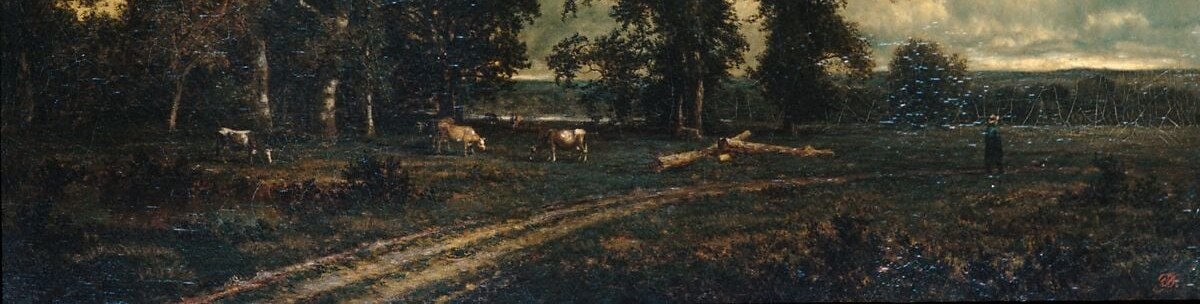
David Johnson titled this painting for the Unadilla River, but he nearly hid his subject in plain sight. The river itself is a single thin sliver of silver, tucked behind the dark central trees and barely distinguishable from the bright meadow. Painted in 1884, it now belongs to the quiet tradition of American landscape that chose local truth over European drama.
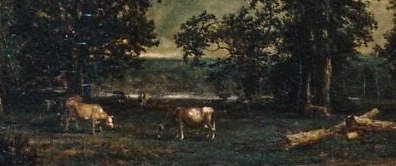
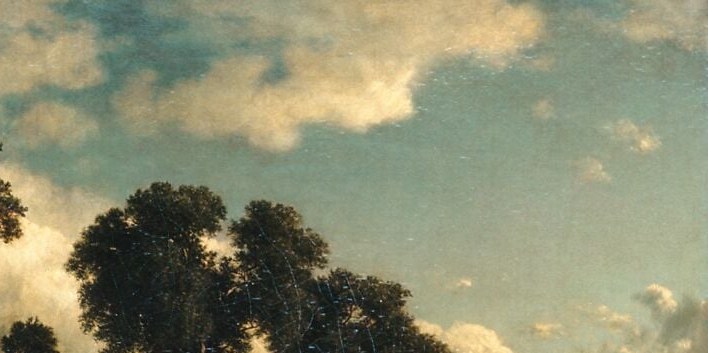
To find it, let your eye travel from the cattle in the middle distance straight back toward the treeline. You are looking for a horizontal break in the shadows, a thread of reflected sky. Once you see it, the whole picture reorients. The dark band of cast shadow, the leaning trees, and the open sky on the right all pull toward that hidden water.
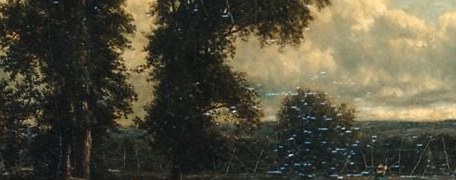
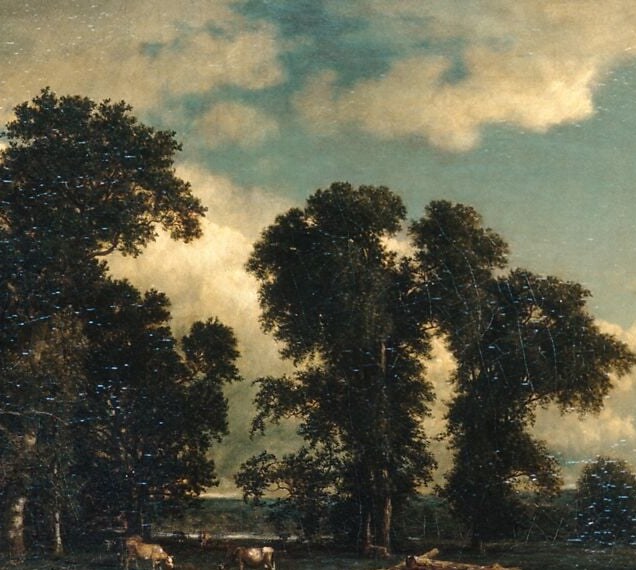
Johnson was a second-generation Hudson River School painter, but by 1884 he had moved toward a more direct, almost impressionistic way of seeing. He rendered back-lit leaf edges with loose brushwork, and a passing cloud shadow crosses the meadow in real time. This was not a timeless wilderness. It was a specific afternoon on a working river in upstate New York.
A painting that names what it nearly conceals is an act of generosity. It trusts you to look longer. What else have you found hidden in a landscape that first seemed empty?
Details
Transcript
This landscape was named for a river. But at first glance, you see only trees and a bright meadow. Scan the middle distance. Past the cattle, beneath the dark treeline. There. A faint silver glint. That is the river. David Johnson painted this in 1884, ignoring European grandeur for a quiet New York stream. He named the work for what is almost invisible, asking you to slow down.