The Epiphany by Hieronymus Bosch
Hieronymus Bosch's "The Epiphany" (c. 1485-1500) at the Museo del Prado is a masterclass in oil painting. Bosch's unparalleled ability to render textures and light creates a palpable sense of divine radiance within the scene.
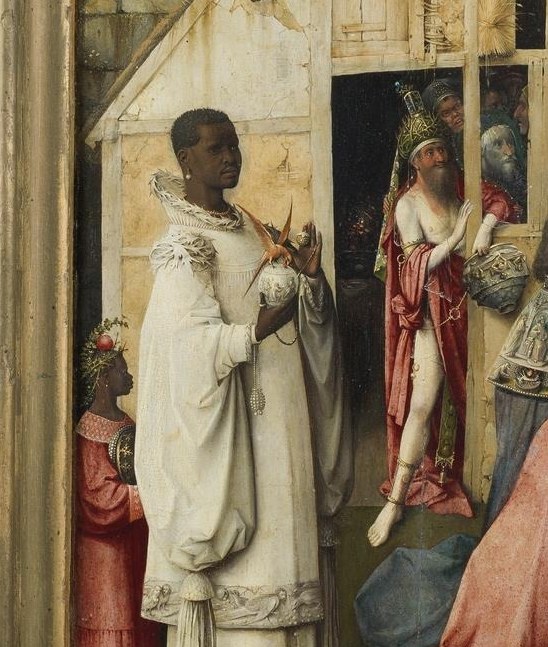
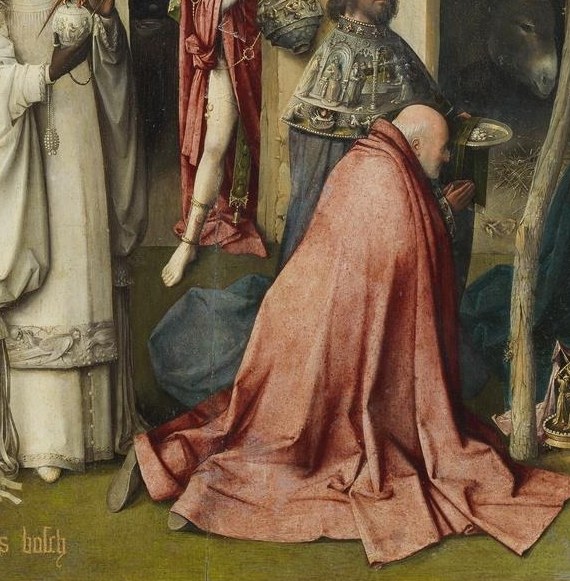
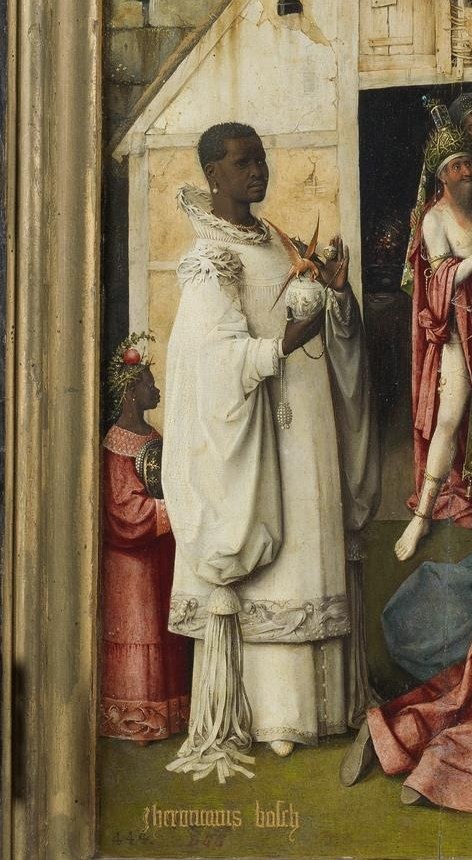
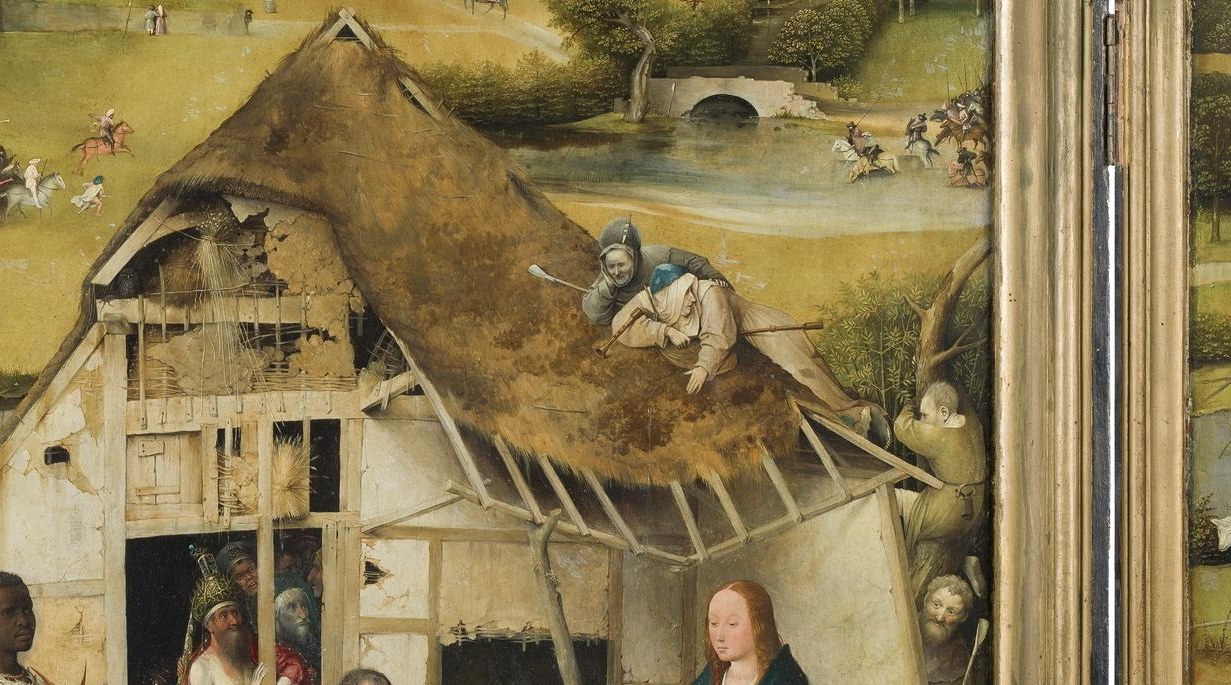
Notice the luminosity of the star of Bethlehem and how its light seems to emanate, illuminating the figures and the crumbling stable structure. Observe the opulent robes of the Magi; the way Bosch captures the sheen of gold threads and the fluidity of the fabric is astonishing.
Technical analysis reveals the depth Bosch achieved through layering thin glazes of paint, especially for the iridescent pigments in the star. This painstaking process allows the celestial light to interact convincingly with the earthly elements, a true trick of the brush.
Bosch invites us to marvel at how paint can simulate such ethereal light and rich material.
Details
Transcript
Look at the light on these robes. He paints fabric that seems to flow. The gold threads gleam, impossibly real. X-rays show he built these robes from many thin layers. He painted the star with iridescent pigments. See how the celestial light hits the stable. This humble stable glows with divine light.