Satire on Celibacy by http://www.wikidata.org/.well-known/genid/11801937d2f27b31e2ceec84bb9ed482
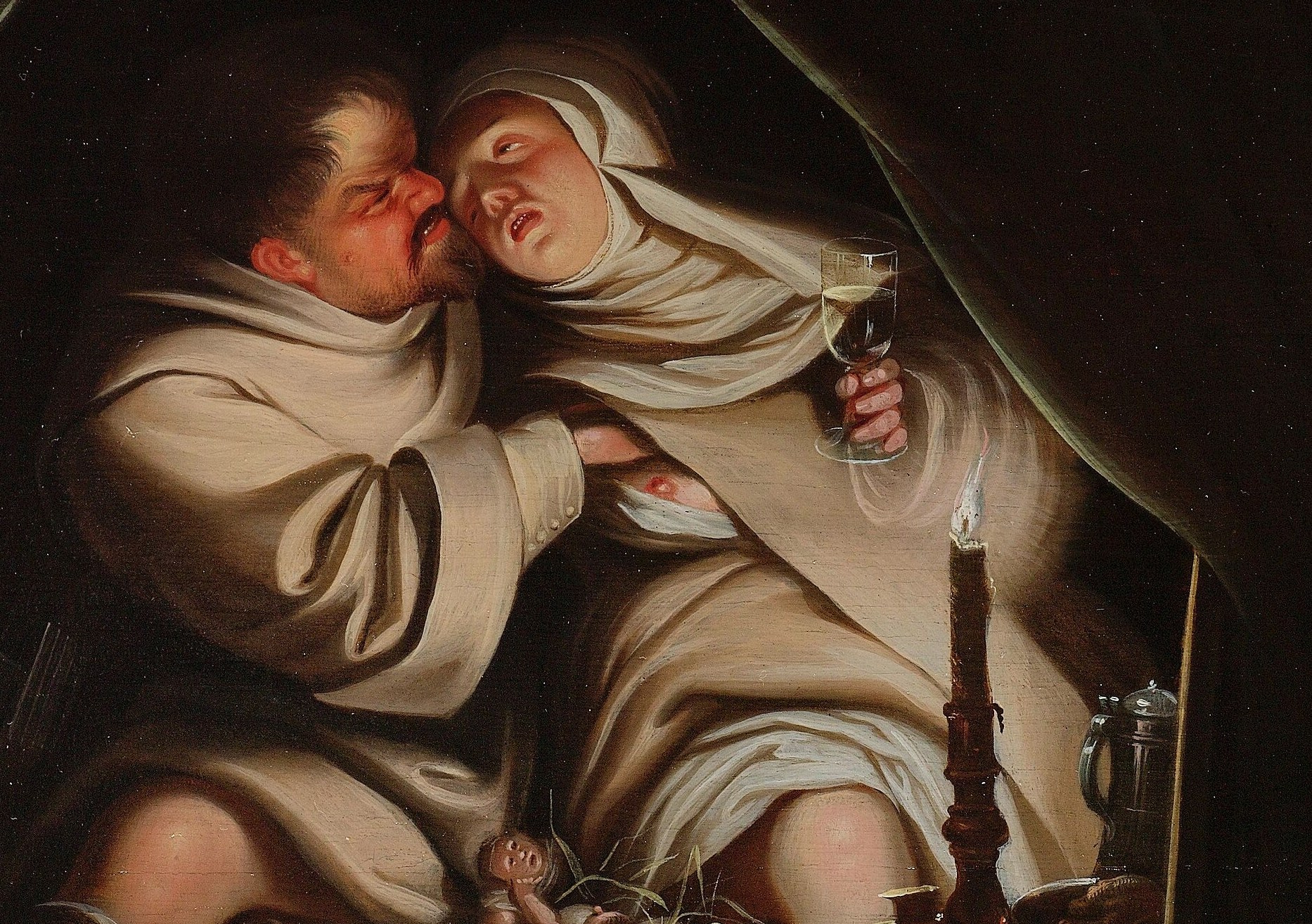
Painted around 1624, "Satire on Celibacy" is a striking oil painting by an unknown artist that critiques religious hypocrisy through a clandestine scene. It depicts a priest and nun in a passionate, forbidden embrace, their vows clearly broken.
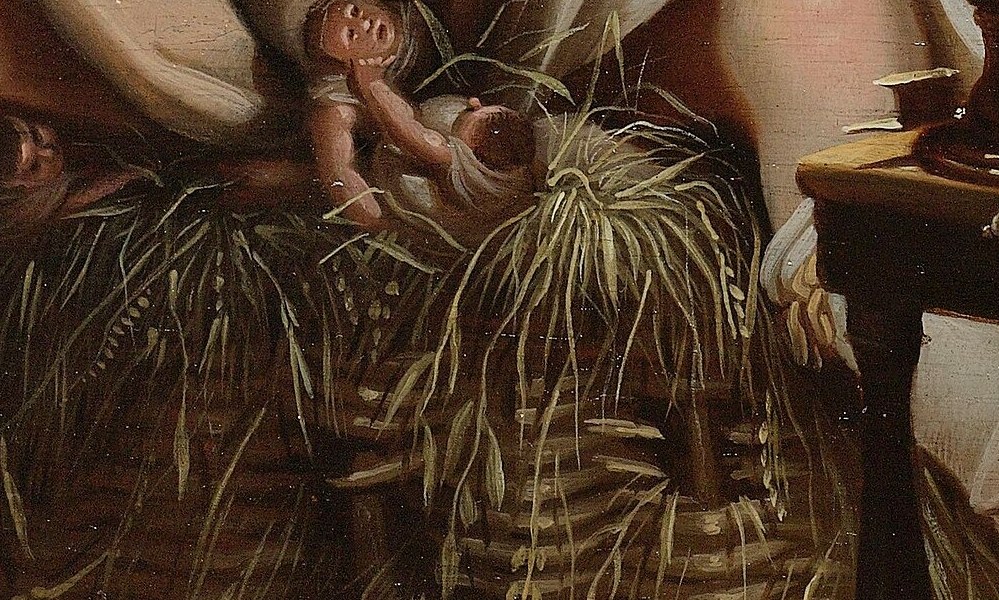
Look closely at the details: the nun holds a glass of wine, a symbol of indulgence, while a neglected infant lies in a basket on the floor, a stark consequence of their illicit union. The dramatic use of light and shadow, a technique known as chiaroscuro, heightens the emotional intensity of the scene, drawing the viewer's eye to the central transgression.
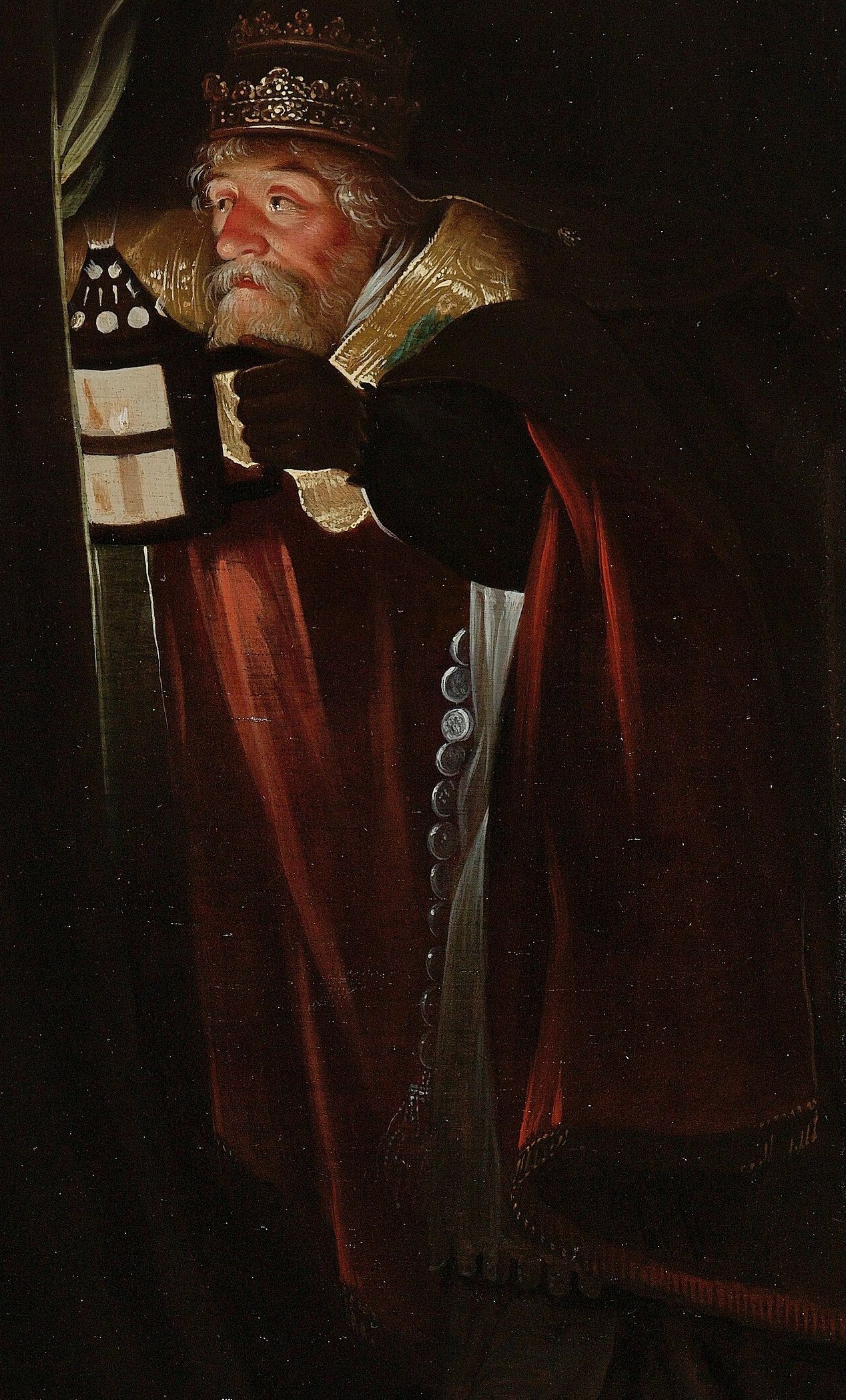
The painting's title itself, "Satire on Celibacy," explicitly states the artist's critical commentary on religious doctrines. A third figure observes the scene with a lantern, his stern expression adding a layer of moral judgment to the unfolding drama. This painting serves as a powerful and timeless commentary on human fallibility and institutional critique.
What do you notice about the expressions of the figures?
Details
Transcript
A priest and nun, in a forbidden embrace. This painting, from 1624, is a 'Satire on Celibacy'. She holds a glass, symbolizing indulgence, a broken vow. A neglected infant in a basket underscores the consequences. A third figure watches, lantern light on his face. The artist uses shadows and light to heighten the drama. The observing figure's stern look casts judgment on their secret.