Repairing the Bridge by Robert Spencer
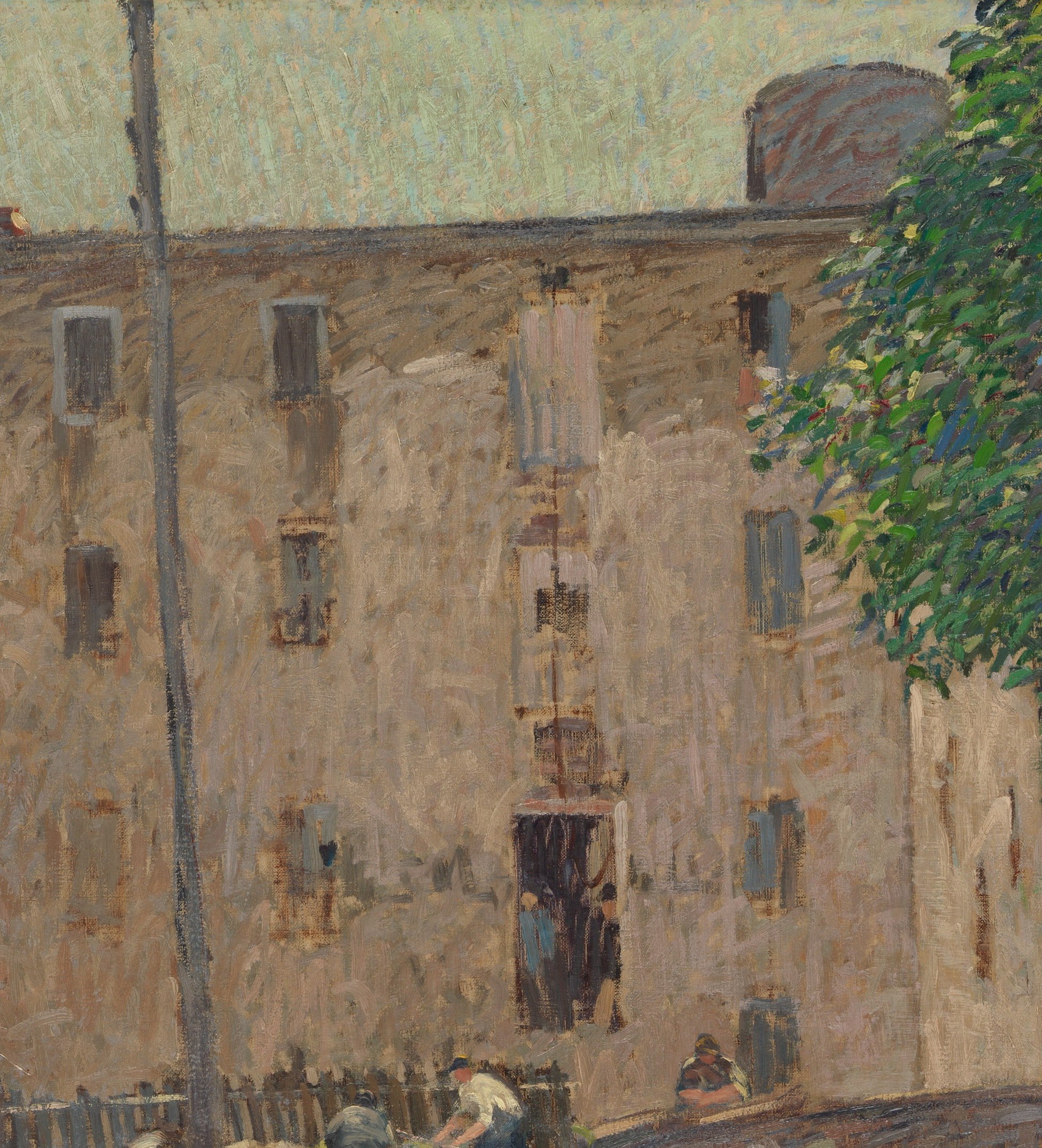
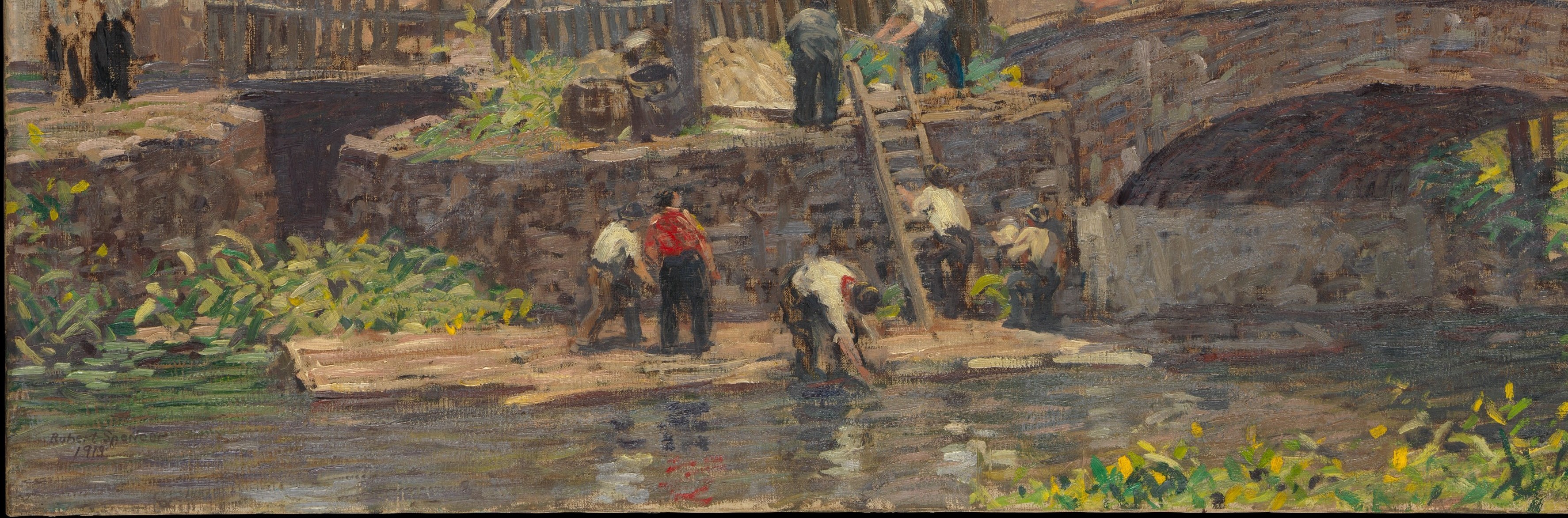
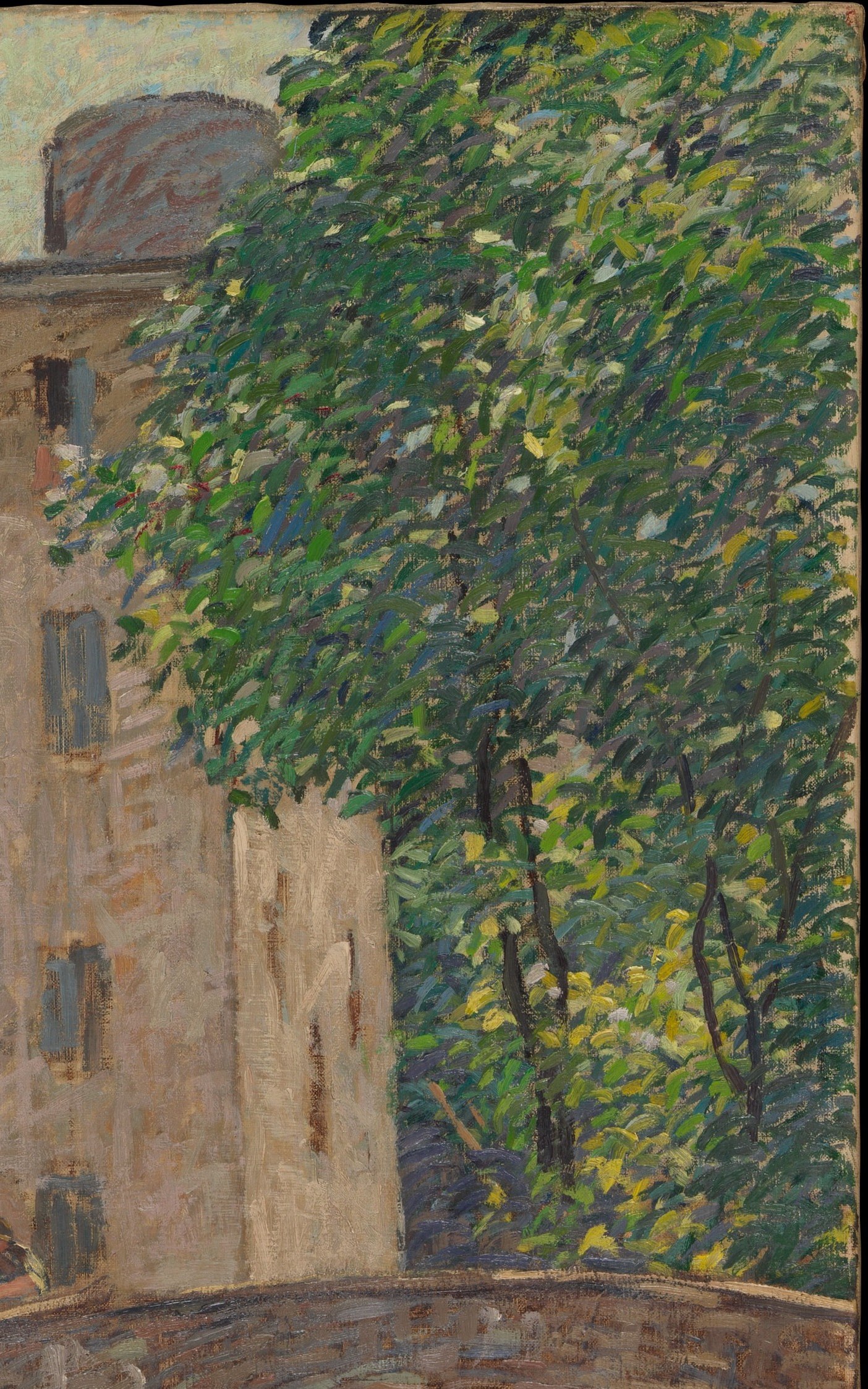
This is Robert Spencer's "Repairing the Bridge," painted in 1913 and now in the collection of The Metropolitan Museum of Art. At first glance it reads as a straightforward scene of labor: men working on a damaged stone bridge, a ladder leaning against the arch, a sturdy brick mill behind them.
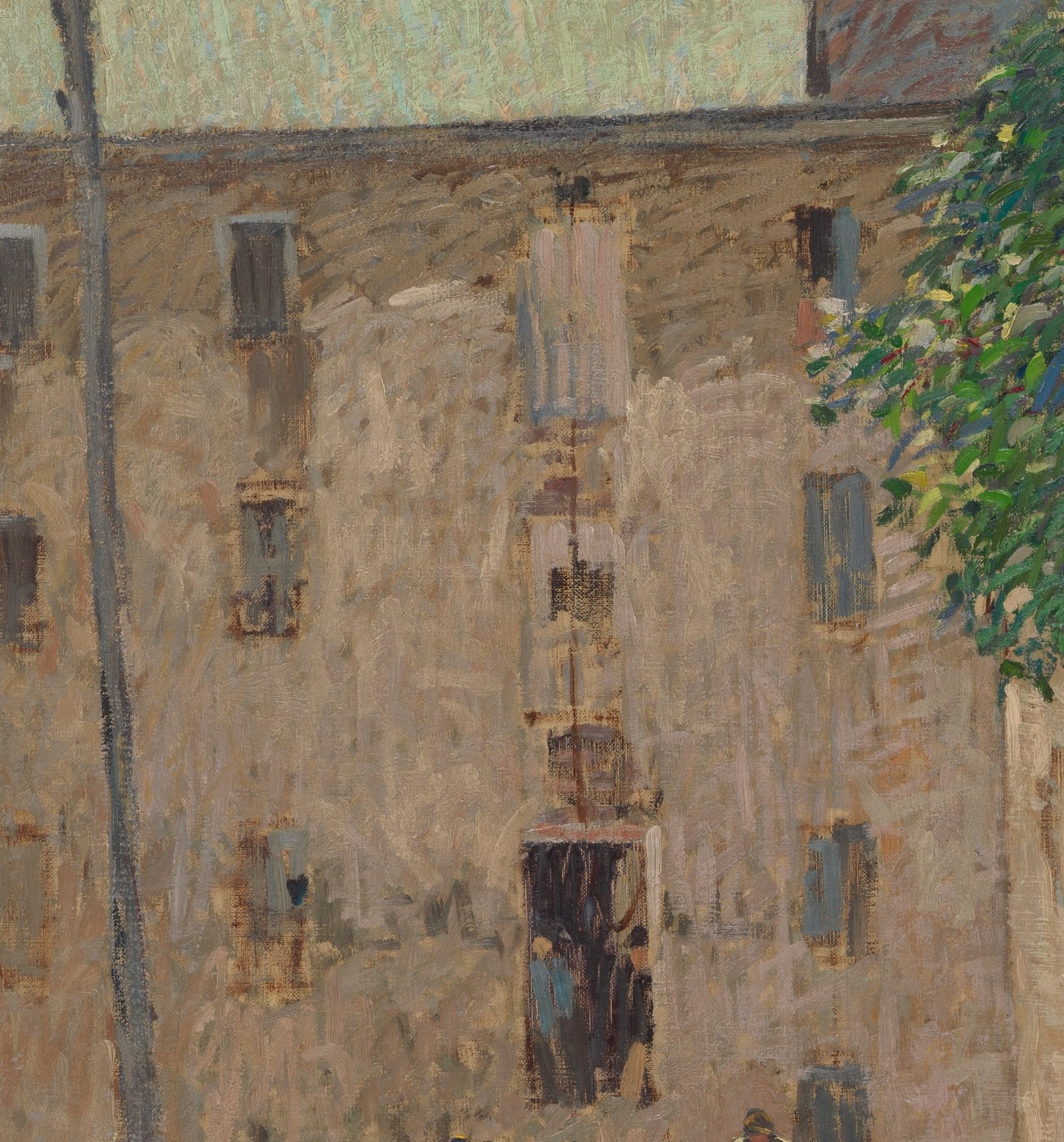
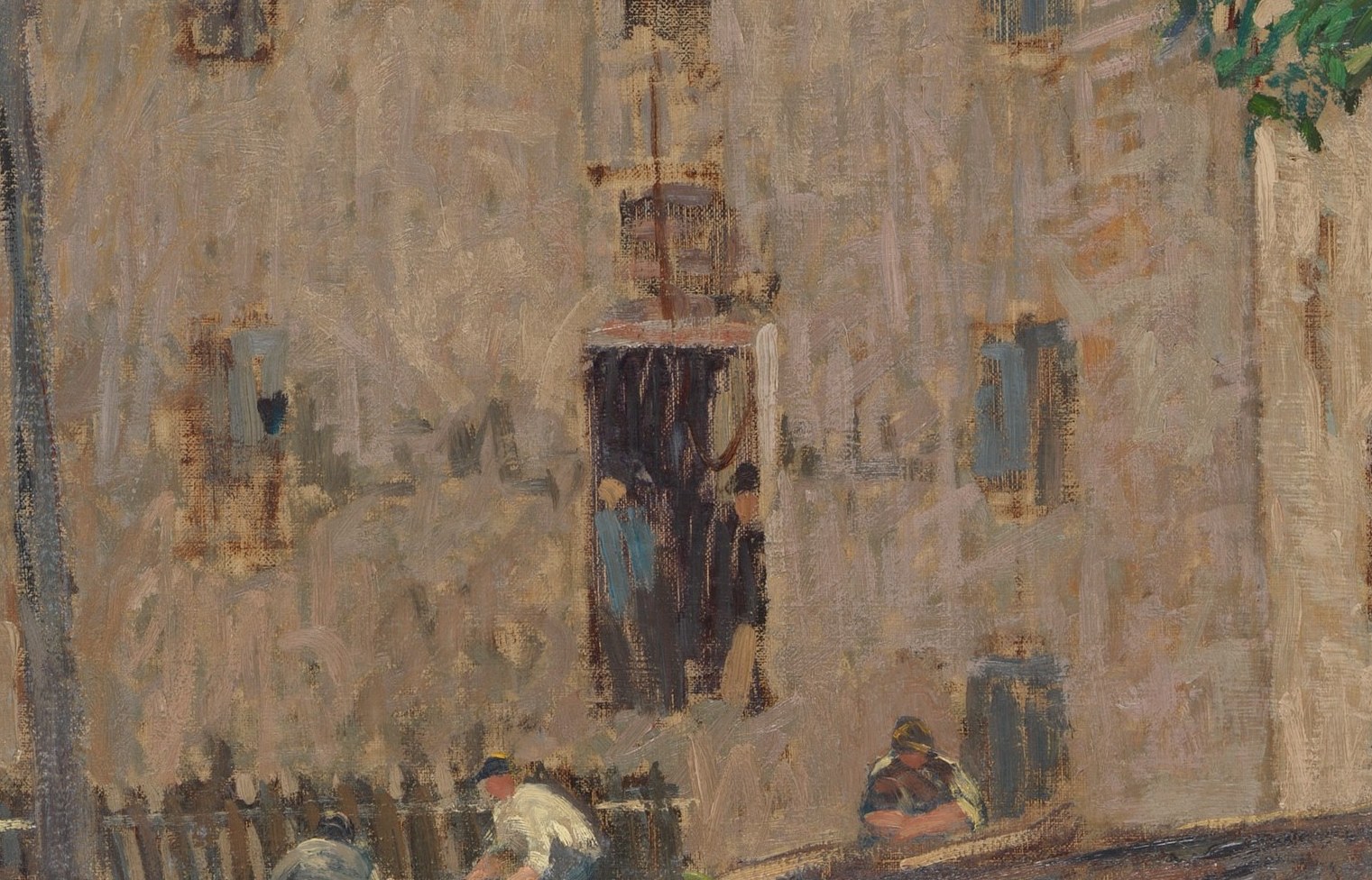
But look at the mill's windows. Every one of them is sealed shut with brick from the inside. The building is not resting for the day. It is closed, emptied out, finished. Spencer gives us workers performing urgent maintenance for a structure that no longer has an economic reason to exist. The scene shifts from labor to something more like memorial.
Spencer was part of a generation of American painters drawn to industrial subjects, but his eye was different. Where others celebrated the power of factories and machines, Spencer dwelled on their textures of wear: crumbling mortar, improvised wooden platforms, light that never quite breaks through. This painting, from the eve of the First World War, catches a moment when the industrial promise was already aging into something harder to name.
The men keep working. The bridge needs mending whether the mill runs or not. That might be the quiet point: maintenance outlasts industry, and people show up long after the windows are bricked shut.
Details
Transcript
A bridge under repair, a mill, and men at work. The year is 1913. American industry is at its peak. Look up, at the mill windows behind them. Every single one is bricked shut from inside. The mill is already closed. The work is for a ghost. Robert Spencer painted not industry, but its quiet aftermath.