The Old Italian Woman by Edgar Degas
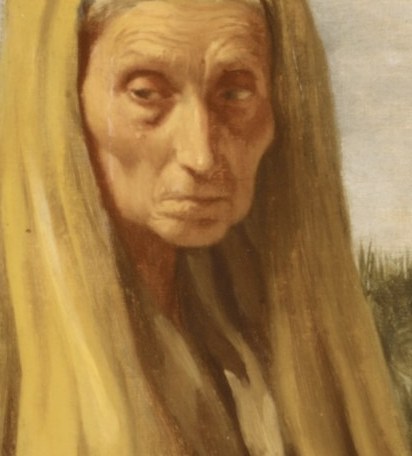
Edgar Degas's 'The Old Italian Woman', painted in 1857 and housed at The Metropolitan Museum of Art, is a captivating portrait that goes beyond a mere depiction of an elderly figure. It offers a glimpse into Degas's early interest in character and domestic life.
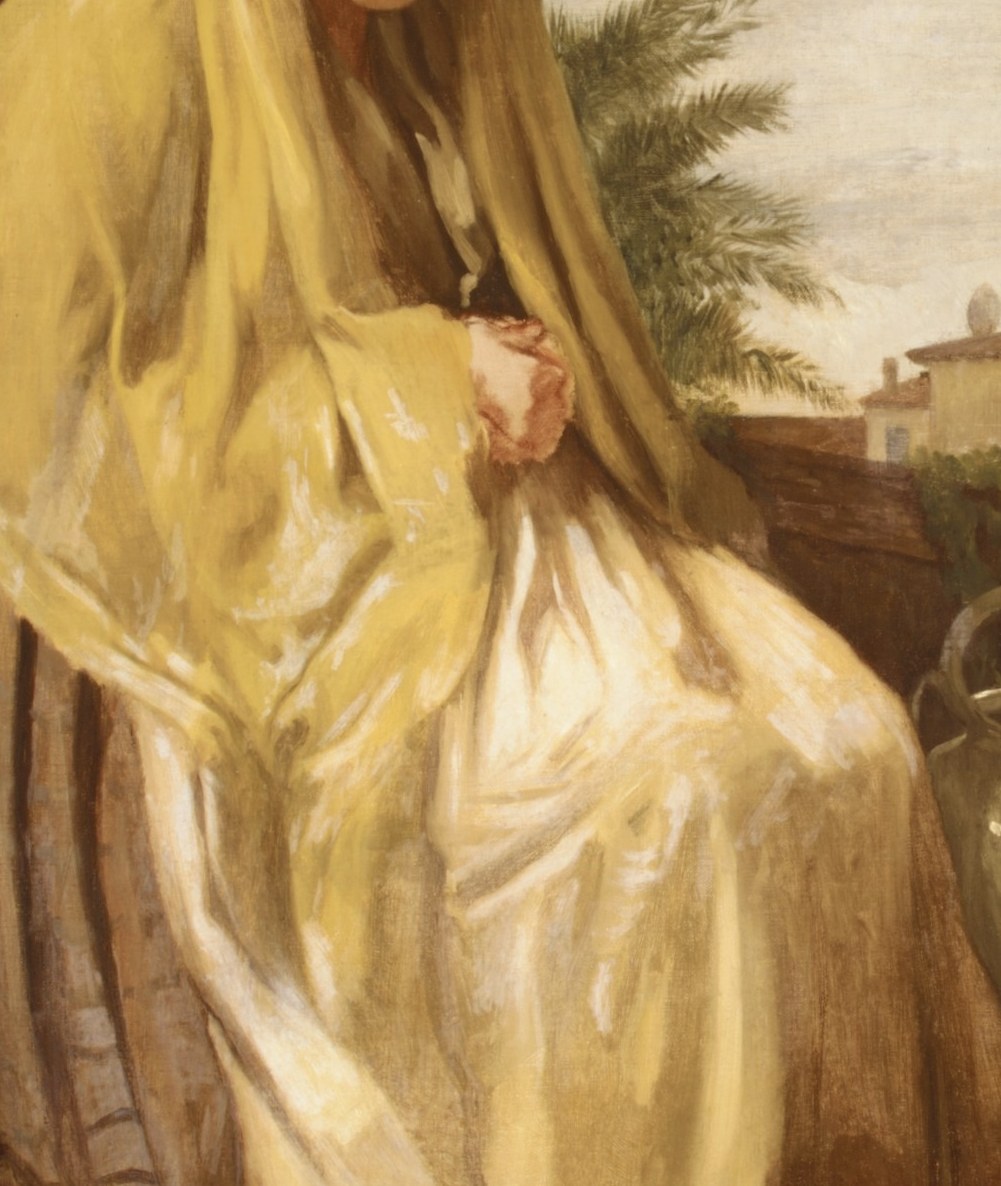
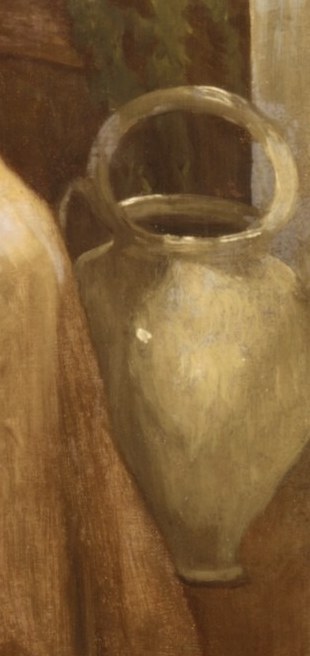
Observe the subtle details: the woman's enveloping yellow shawl, her hands gently holding a red cloth, and the sturdy jug beside her. These elements aren't just incidental; they quietly communicate themes of quiet contemplation, domestic labor, and the enduring nature of everyday life.
Before his renowned works of ballet dancers, Degas, born in 1834, traveled to Italy extensively, studying Renaissance masters and painting portraits of family. This early work showcases his developing style and his fascination with individual presence, using strong contrasts of light and shadow to bring her face to life.
What stories do these quiet symbols tell you about her life?
Details
Transcript
This early portrait by Degas is more than a simple study. She wears a voluminous yellow shawl, enveloping her in quiet contemplation. Her folded hands gently hold a vibrant red cloth. Red cloth often symbolizes sacrifice, or a domestic task completed. Beside her, a sturdy jug grounds the scene in utility. The jug, a humble object, also represents everyday life and quiet perseverance. These domestic symbols suggest a life of quiet dignity and experience.