Crested Coat of Arms [reverse] by Antwerp 16th Century
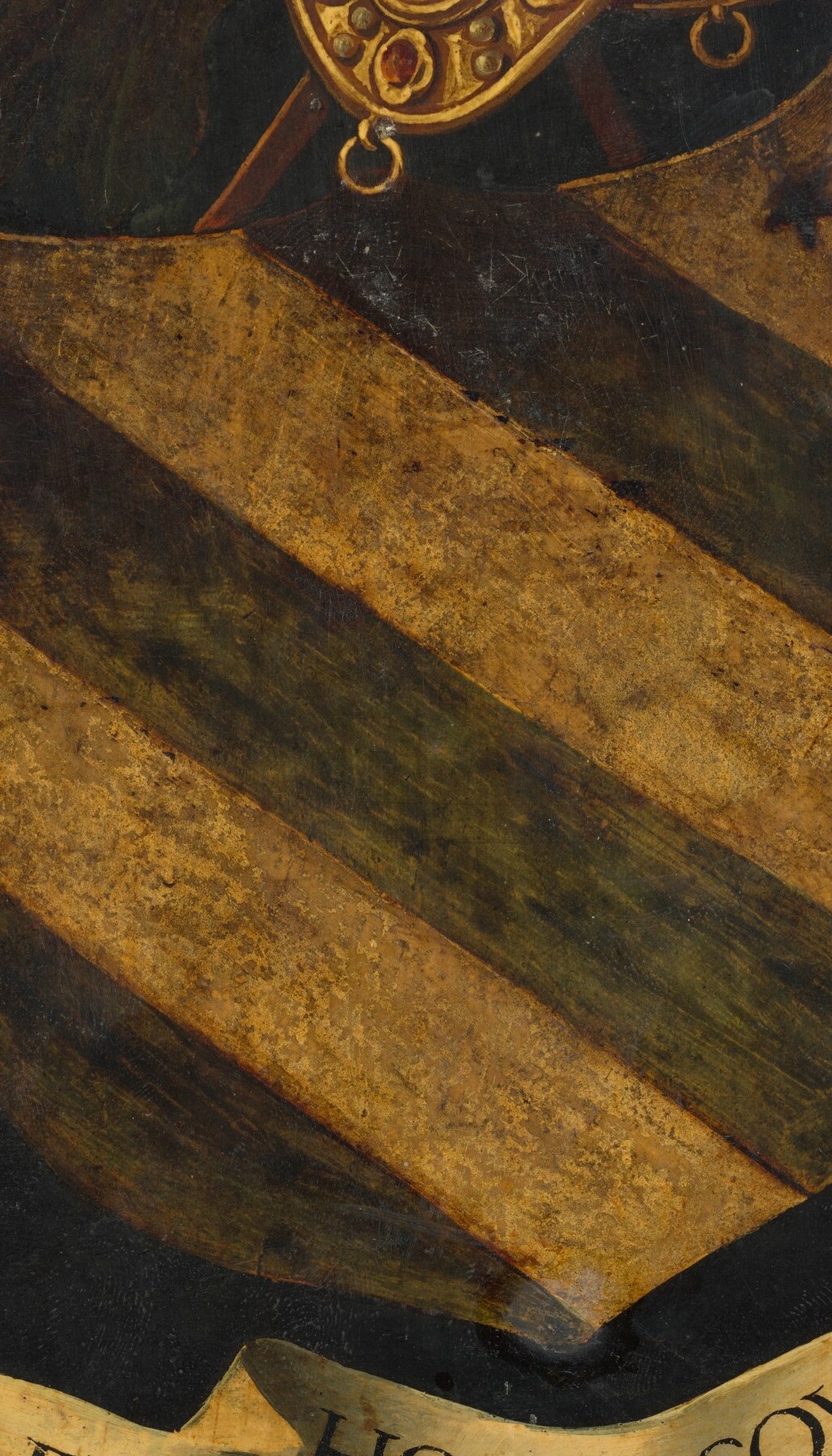
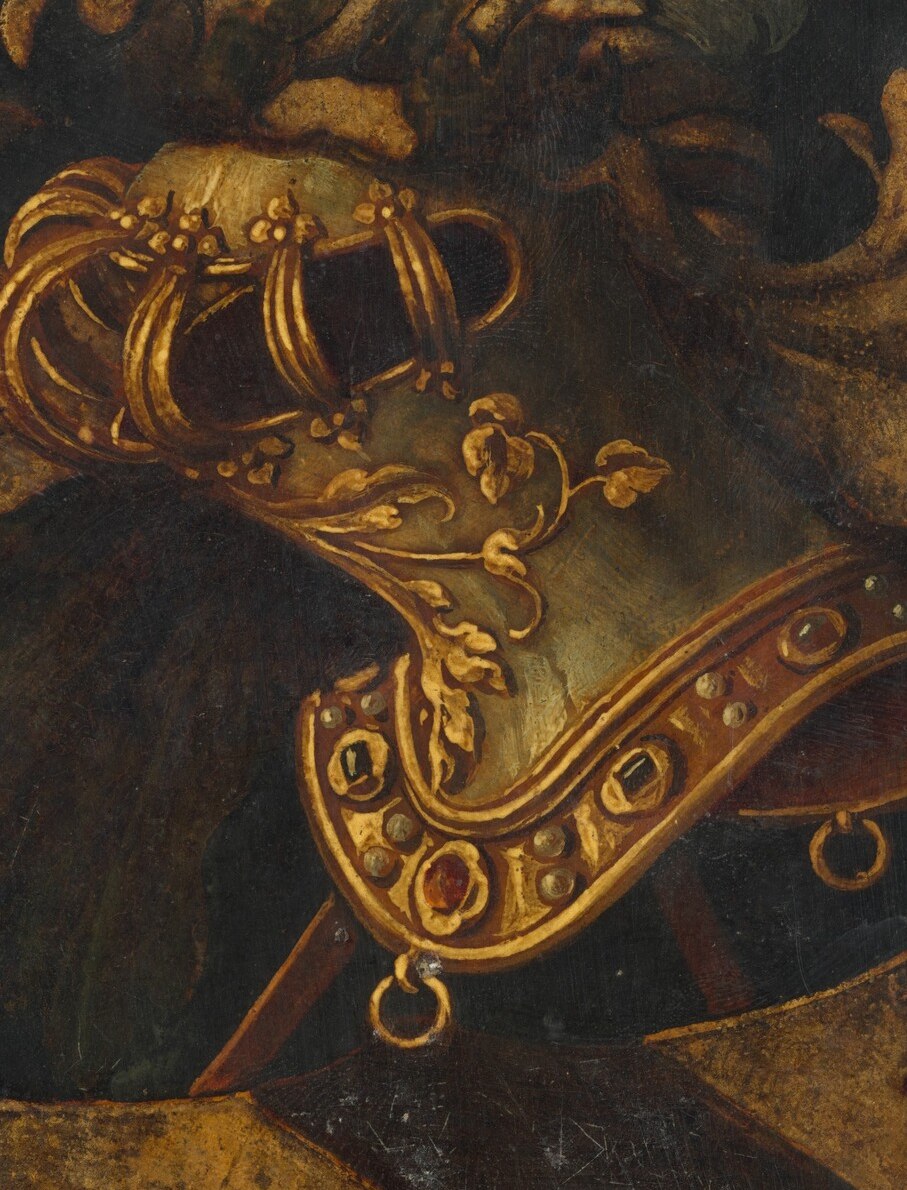
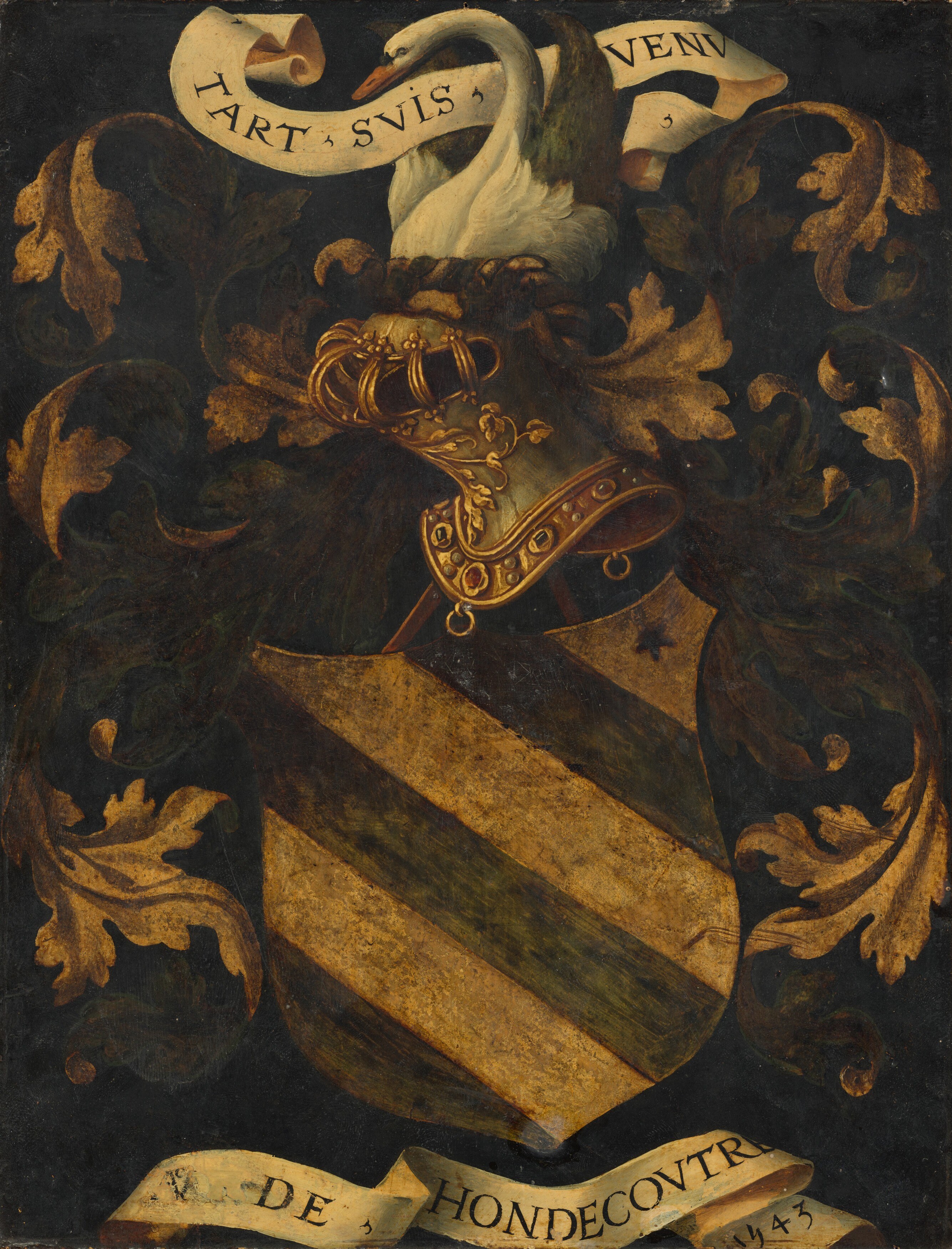
This is "Crested Coat of Arms [reverse]," painted in oil on a wood panel by an unknown artist in 16th-century Antwerp, dated 1543. What looks at first like a straightforward family crest is actually a document of survival. This panel was most likely hidden away during the violent upheavals of the Eighty Years' War, a period when soldiers and looters specifically targeted signs of wealth and lineage.
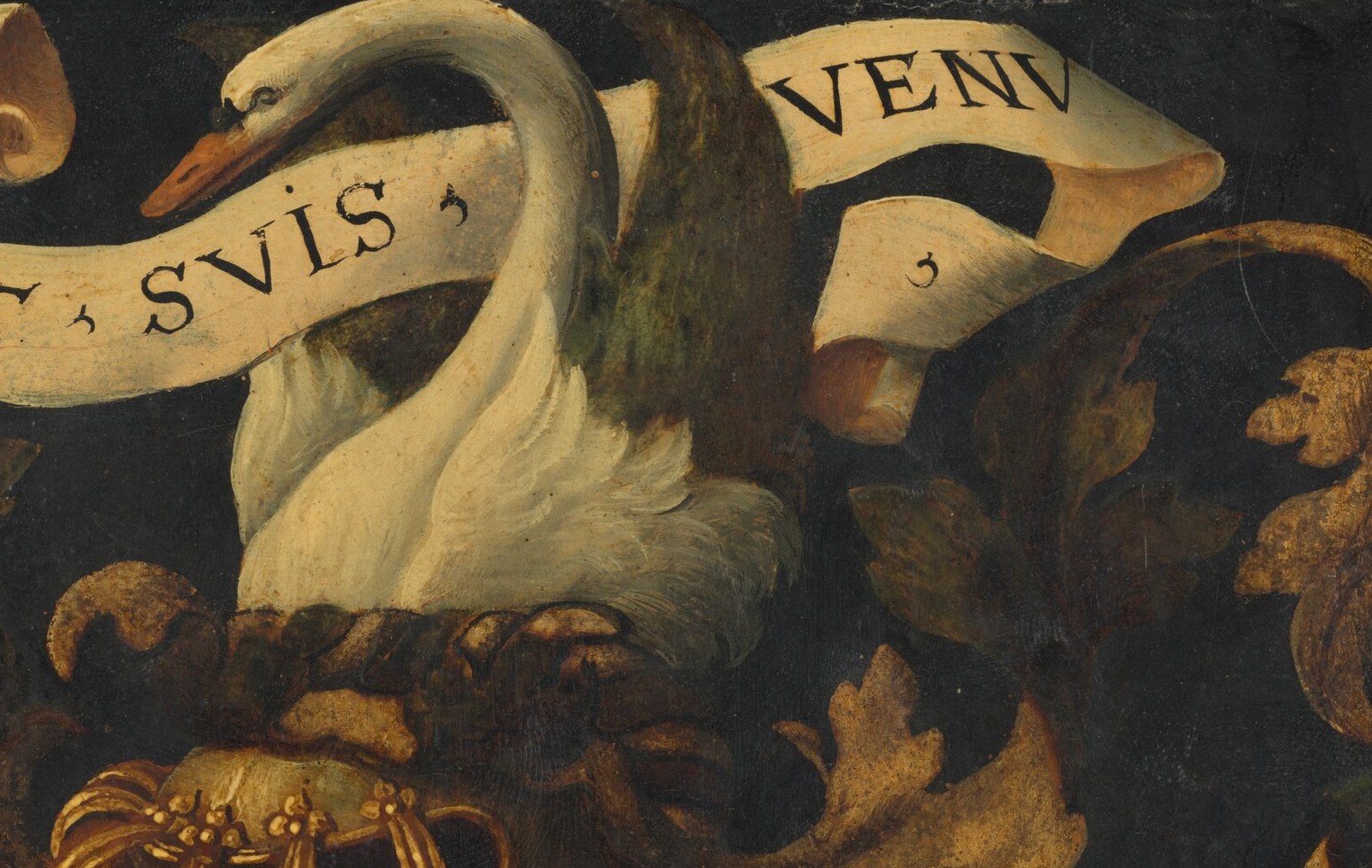
Look closely at the dramatic contrast. The deep, almost black background isn't just a stylistic choice, it functioned as a kind of camouflage, making the gilded helmet and bright shield appear to float in a void. The Latin text fragments, such as "HART SVİS," would have been a proud, readable declaration of identity to those who knew the family, but meaningless and invisible to an invading soldier in a dark hiding space.
The date 1543 places this work right before Antwerp's most turbulent century. During the Spanish Fury of 1576 and the wars that followed, countless homes were ransacked. Portable panel paintings like this one could be easily pried from walls, wrapped, and buried. This wasn't a work meant for a grand hall; it was a legal document and a deed, painted to be both a symbol of status and an object that could be hidden.
This panel has no documented provenance from that time, not because it was insignificant, but because it was never meant to be found by the wrong people. It's a piece of history that stayed quiet for centuries.
Details
Transcript
It's a heraldic crest painted on wood. A gilded helmet of nobility. A striped shield. The date: 1543. In 1543, Antwerp was the richest port in Europe. And a target for the Spanish Fury. This panel was hidden to shield a family's identity from looters. It survived underground for decades. A secret pressed into the dark.