Facsimile of a Cheyenne Robe by Catlin, George
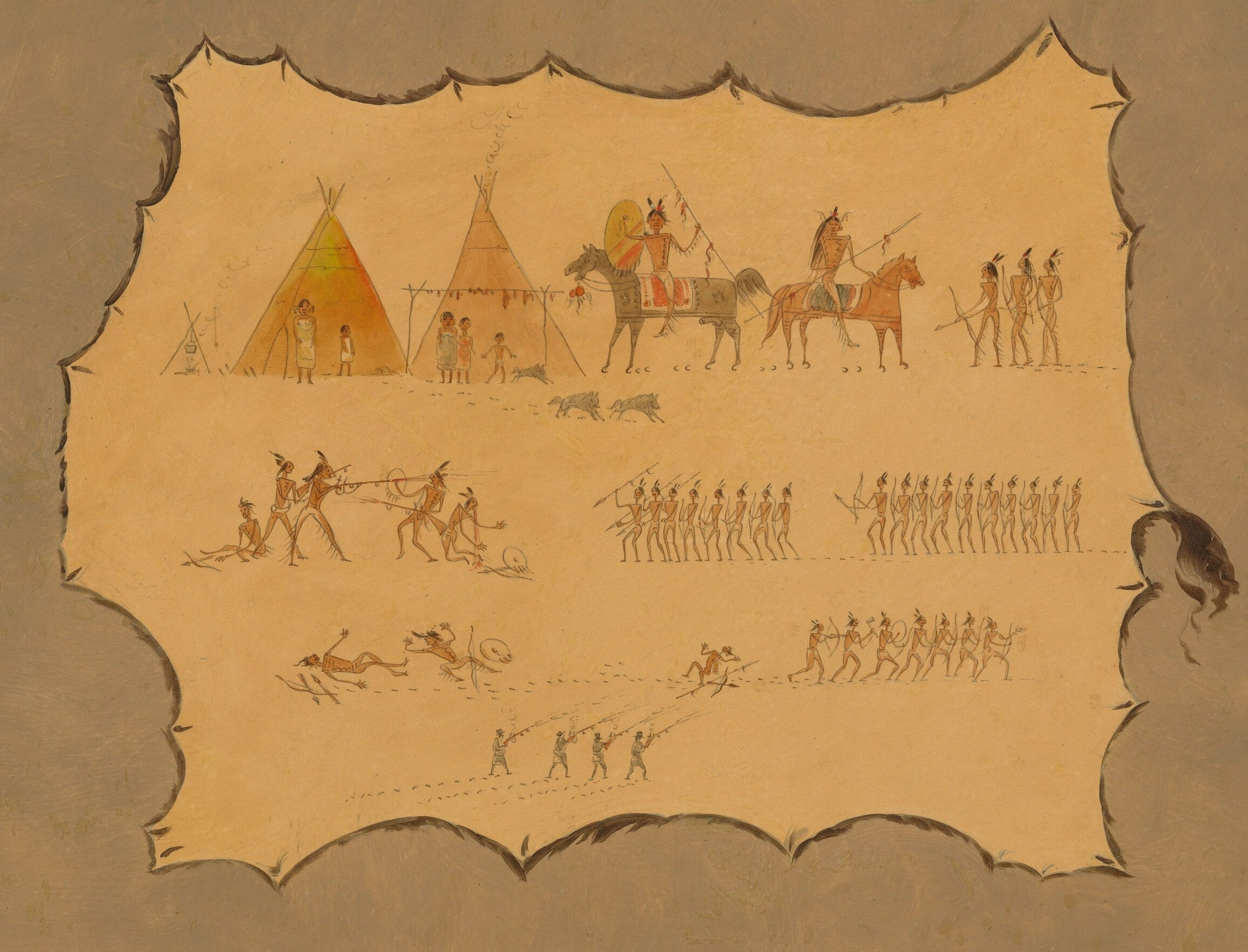
George Catlin painted this careful record of a Cheyenne buffalo robe in 1865, long after his famous journeys up the Missouri River. The work, held today in the Smithsonian American Art Museum, is not a textile but an oil painting on card. It replicates the very form of the robe, complete with its scalloped edge, translating the narrative art of the Plains into a format Eastern audiences could understand.
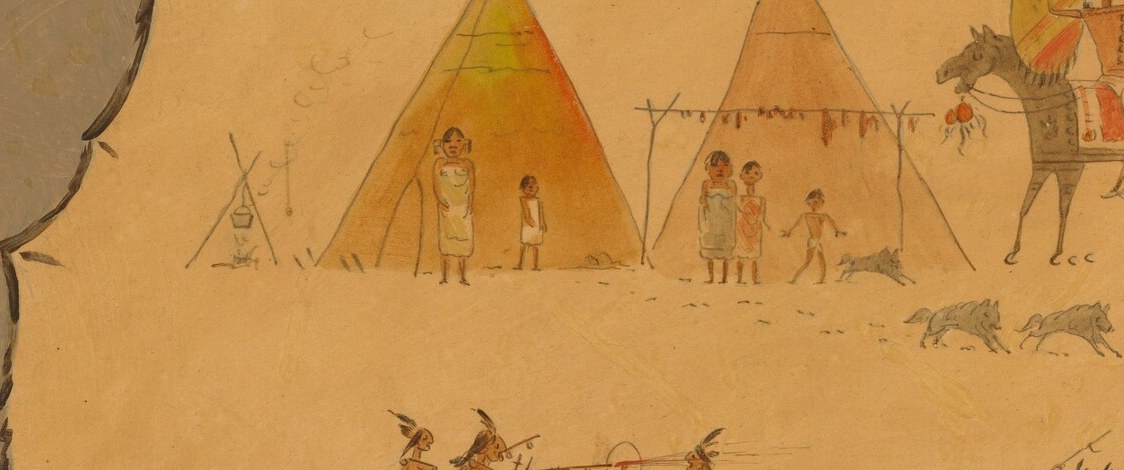
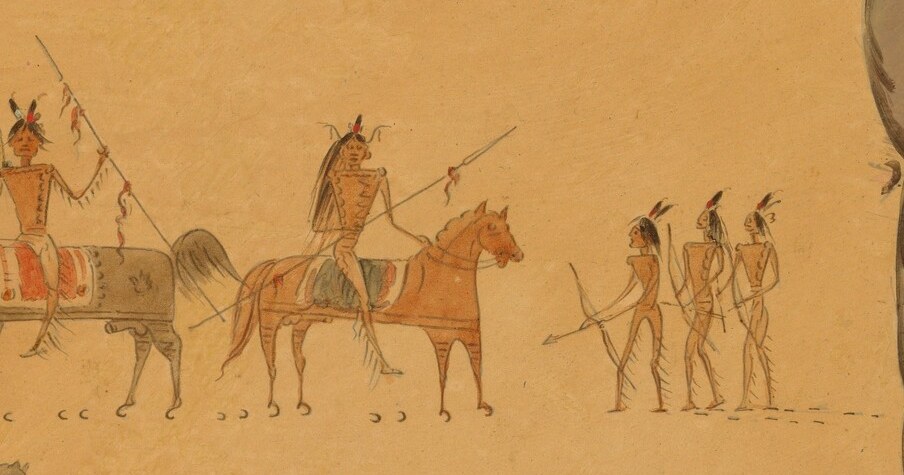
Look past the central warrior. Catlin preserved the entire visual hierarchy of the original garment: domestic life in the tipi village, the organized power of the standing warriors, and the chaos of the hunt and battle scenes below. He even recorded the catalog number, '210', on the face of the work, reminding us this was one piece in a vast, systematic effort.
Catlin believed he was watching a world disappear. He spent the 1830s traveling among Plains tribes, convinced that westward expansion would destroy their ways of life. While his legacy is complicated, his impulse was one of preservation. This painted robe is part of a lifelong project to document material culture before it was lost.
A painting of an object that was itself a record. A copy made to survive the original's destruction.
Details
Transcript
It looks like a painted story on an animal hide. A village sleeps under the watch of a warrior on horseback. George Catlin traveled the frontier in the 1830s to document Native life. He feared entire cultures would be erased by American expansion. So he painted not just people, but the objects that held their history. This is not an actual robe. It is oil on card, 1865.