Portrait of a Woman by Corneille de Lyon
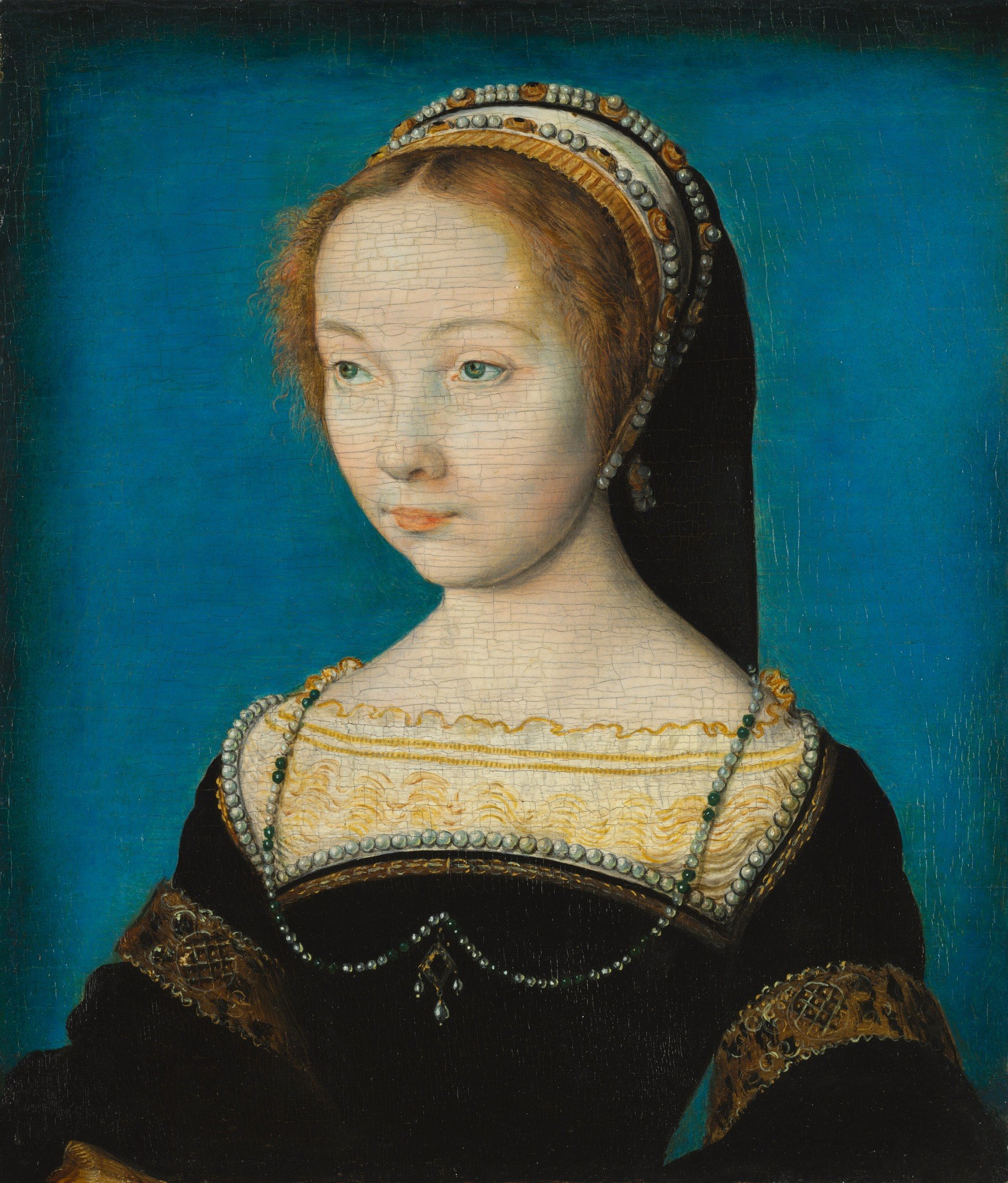
This "Portrait of a Woman" by Corneille de Lyon, painted around 1540, has endured for centuries, holding the gaze of viewers at The Cleveland Museum of Art.
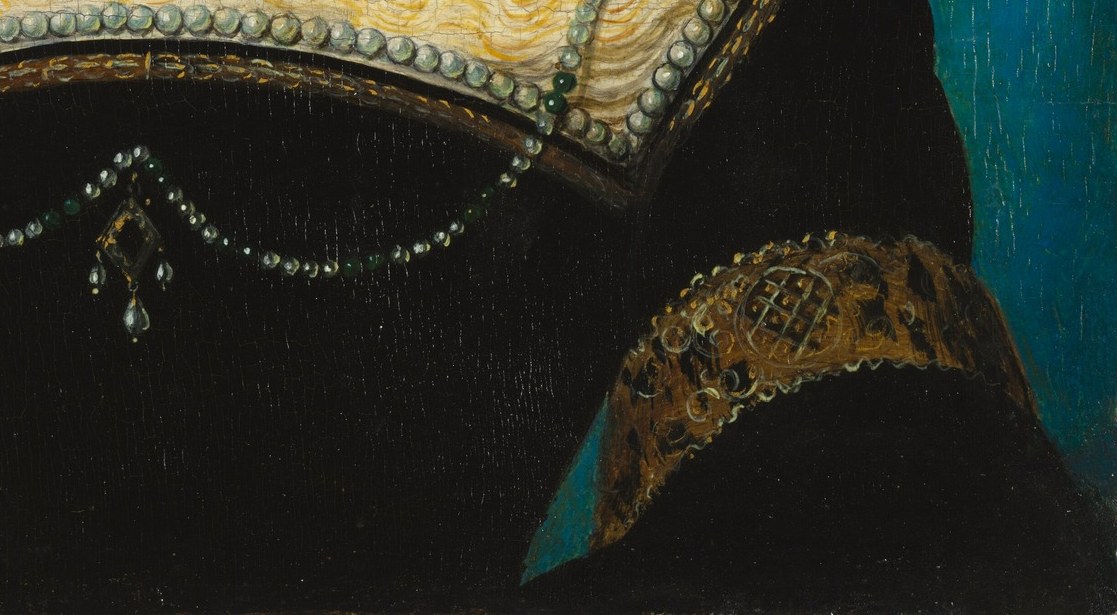
The sitter, unidentified, is depicted in the lavish fashions of the French court, her black gown adorned with intricate gold embroidery and her hair styled with a pearl-encrusted headband. Her direct yet subtly averted gaze creates an enigmatic expression, characteristic of 16th-century portraiture.
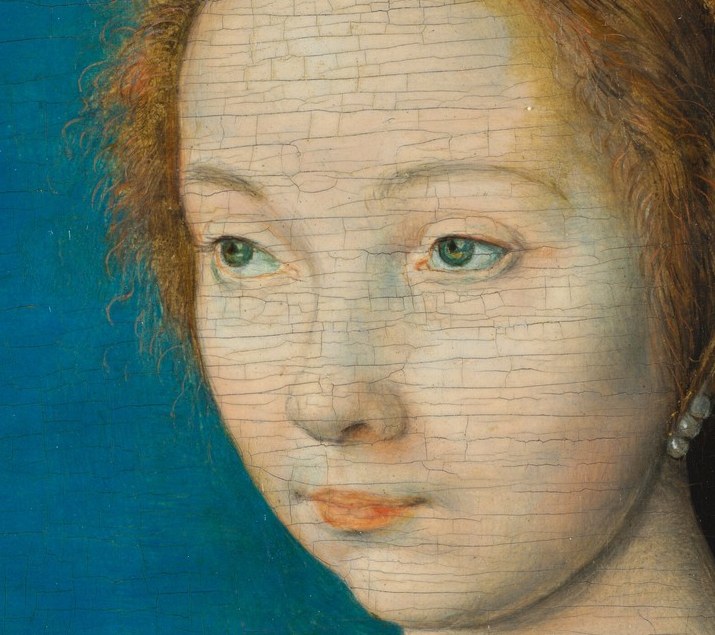
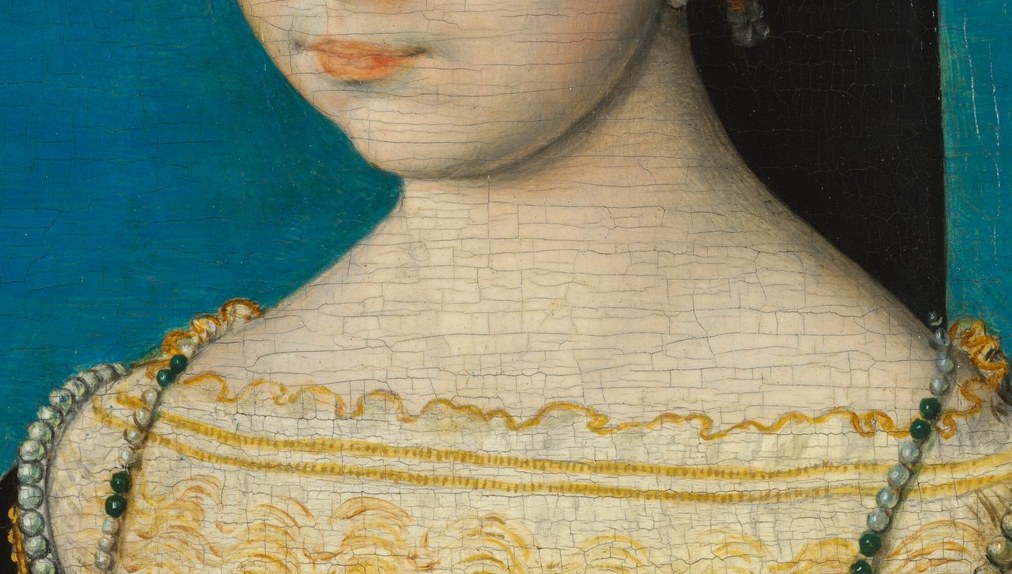
While the woman's elegance is striking, the painting's age is revealed in a hidden detail: the fine network of cracks across its surface, known as craquelure. These cracks are a natural sign of the paint drying and contracting over time, a subtle testament to the artwork's long history since Corneille de Lyon, a Dutch painter active in Lyon, France, captured this moment.
What other subtle details do you notice that speak to its age or artistry?
Details
Transcript
This woman has looked out from this painting for centuries. She wears the finest clothes of her time, around 1540. The painter, Corneille de Lyon, specialized in portraits like this. But look closely at the surface of the painting itself. Fine cracks, called craquelure, show the paint's true age.