The Lighthouse at Honfleur by Seurat, Georges
Georges Seurat’s 1886 masterpiece, The Lighthouse at Honfleur, at the National Gallery of Art, Washington D.C., isn't just a serene coastal landscape; it's a pivotal work in art history for its groundbreaking technique.
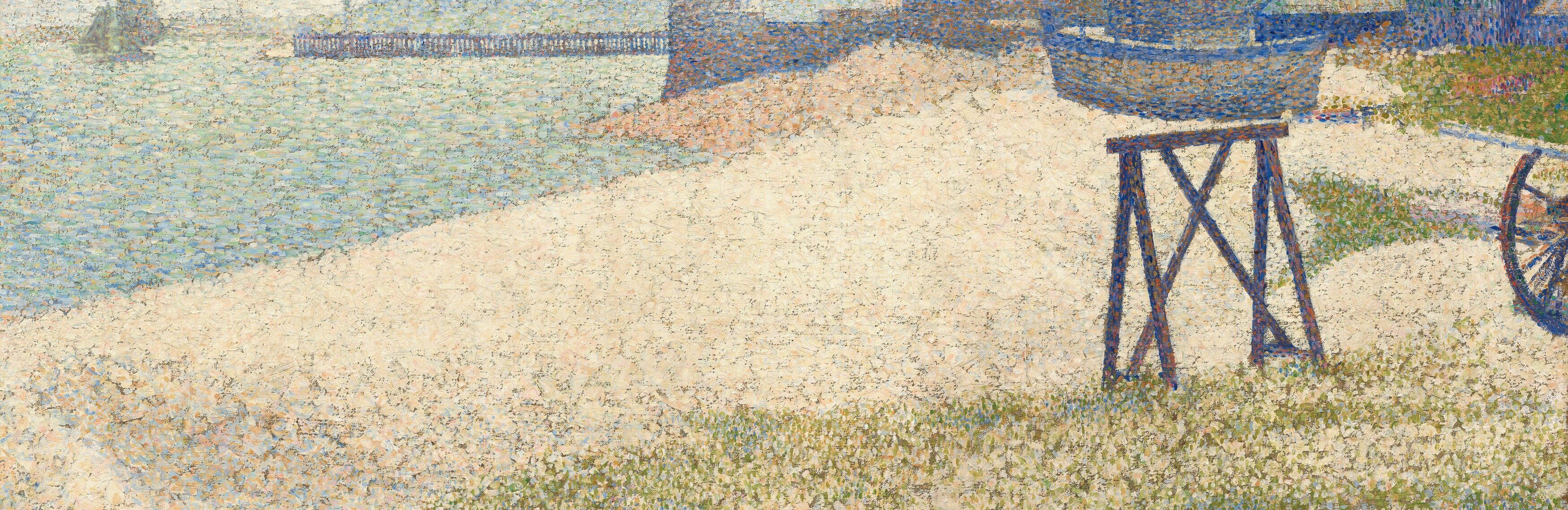
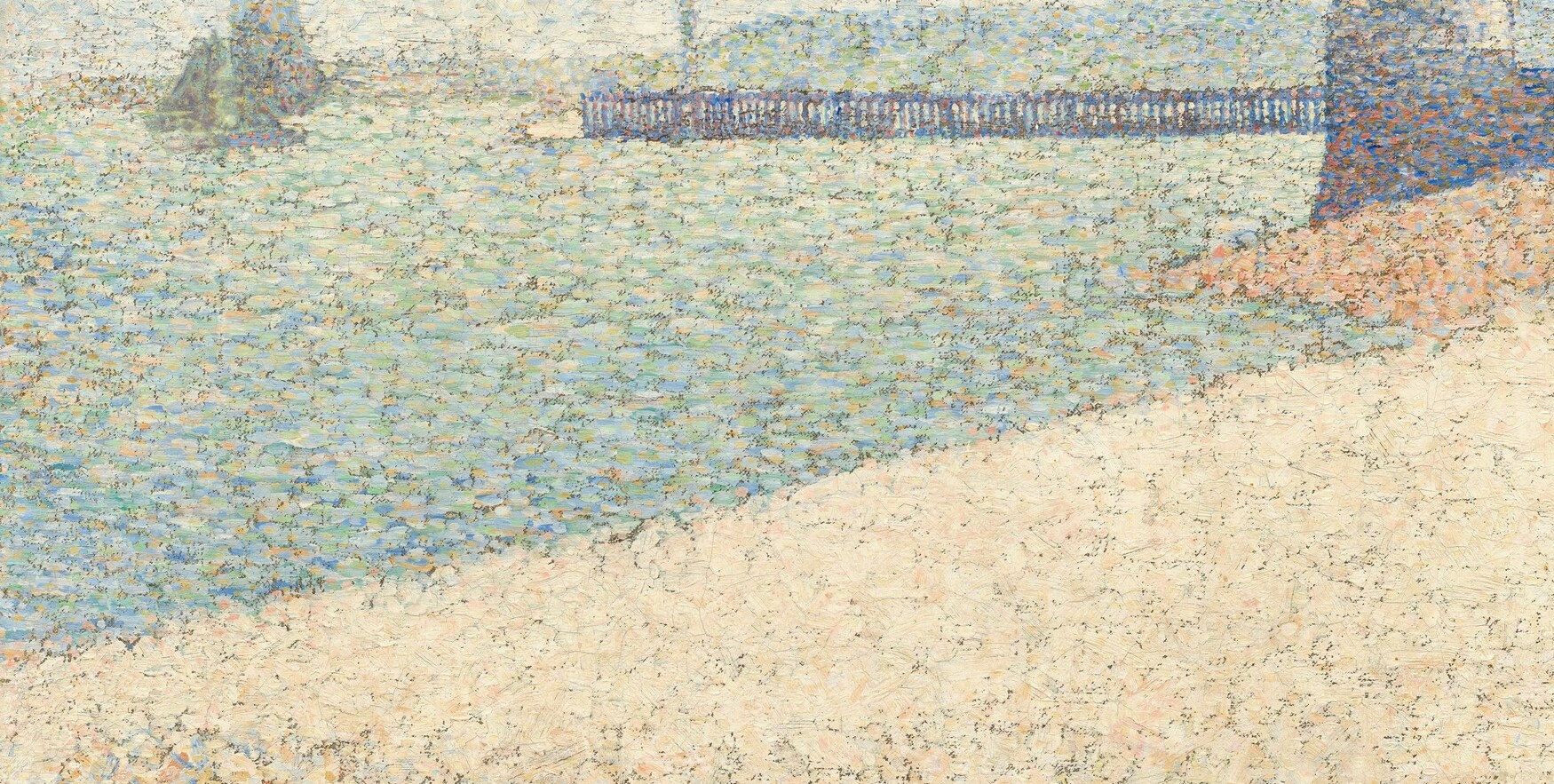
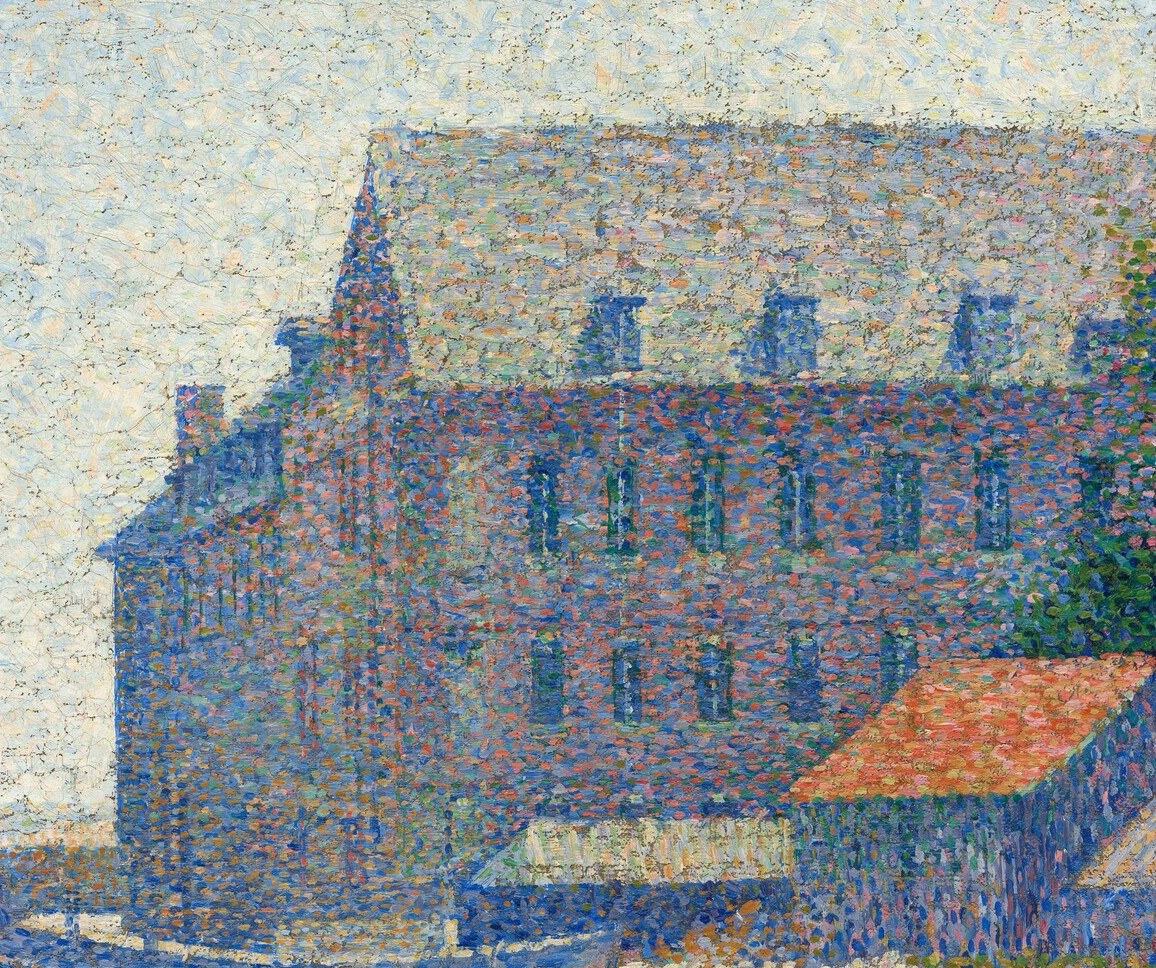
Look closely at how the entire scene is composed of tiny, distinct dots of pure color. This revolutionary method, known as Pointillism, was developed by Seurat to explore how the human eye optically blends colors to create a luminous and integrated visual experience.
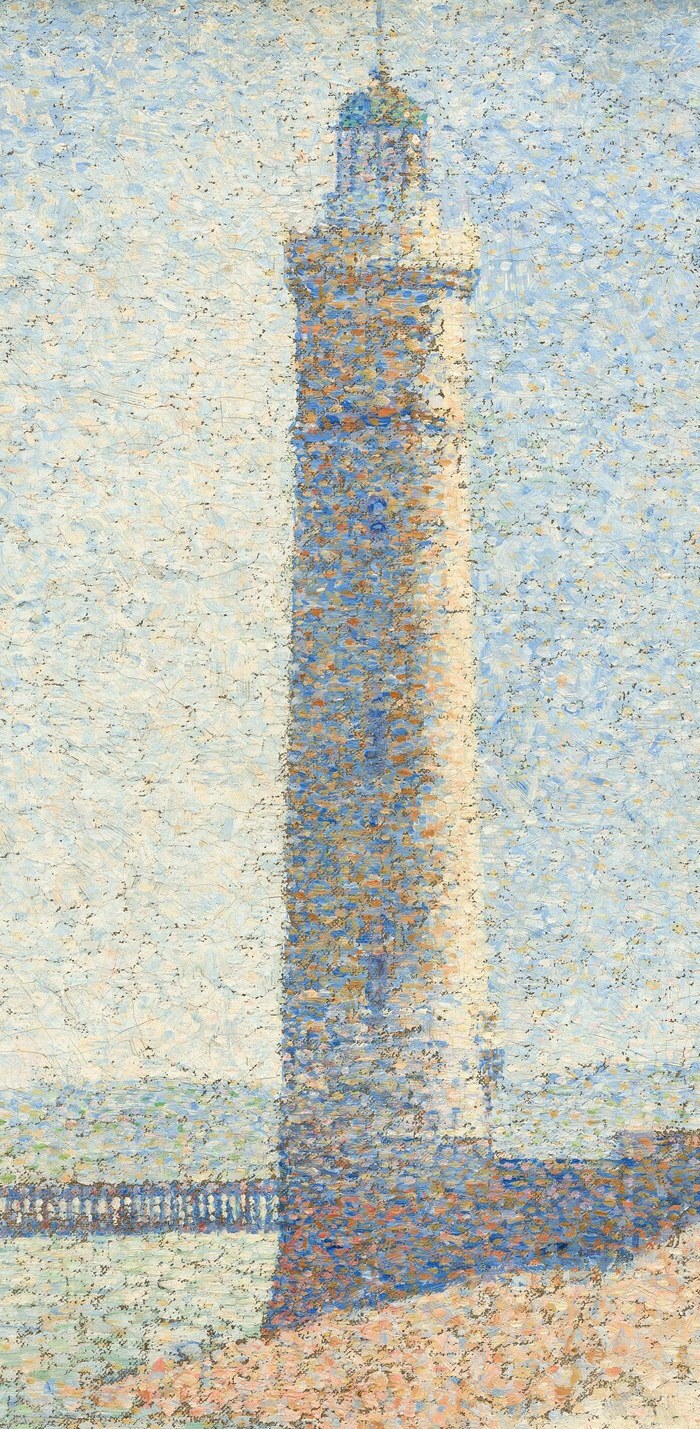
This painting captures the harbor of Honfleur in Normandy, with its prominent lighthouse and jetty. Seurat's meticulous application of color emphasizes the lighthouse while allowing other elements to recede into a soft, diffused light. It’s a testament to his scientific approach to art.
What do you notice first when you see the dots up close?
Details
Transcript
This tranquil scene shows a lighthouse in Honfleur, France. Look closely at the surface, especially the sand. It’s made of countless tiny dots of pure color. Seurat developed this technique, called Pointillism, in 1886. This was his radical approach to light and color. Your eye optically blends the dots into a shimmering whole.