Study after the Model (Geesje Kwak?) by George Hendrik Breitner
George Hendrik Breitner's 1901 oil painting, *Study after the Model (Geesje Kwak?)*, housed at the Rijksmuseum, sparked significant controversy upon its debut. The painting presents a solitary female figure, identified as Geesje Kwak, enveloped in dramatic shadow, leading to public outcry over its perceived sensuality and ambiguous identity.
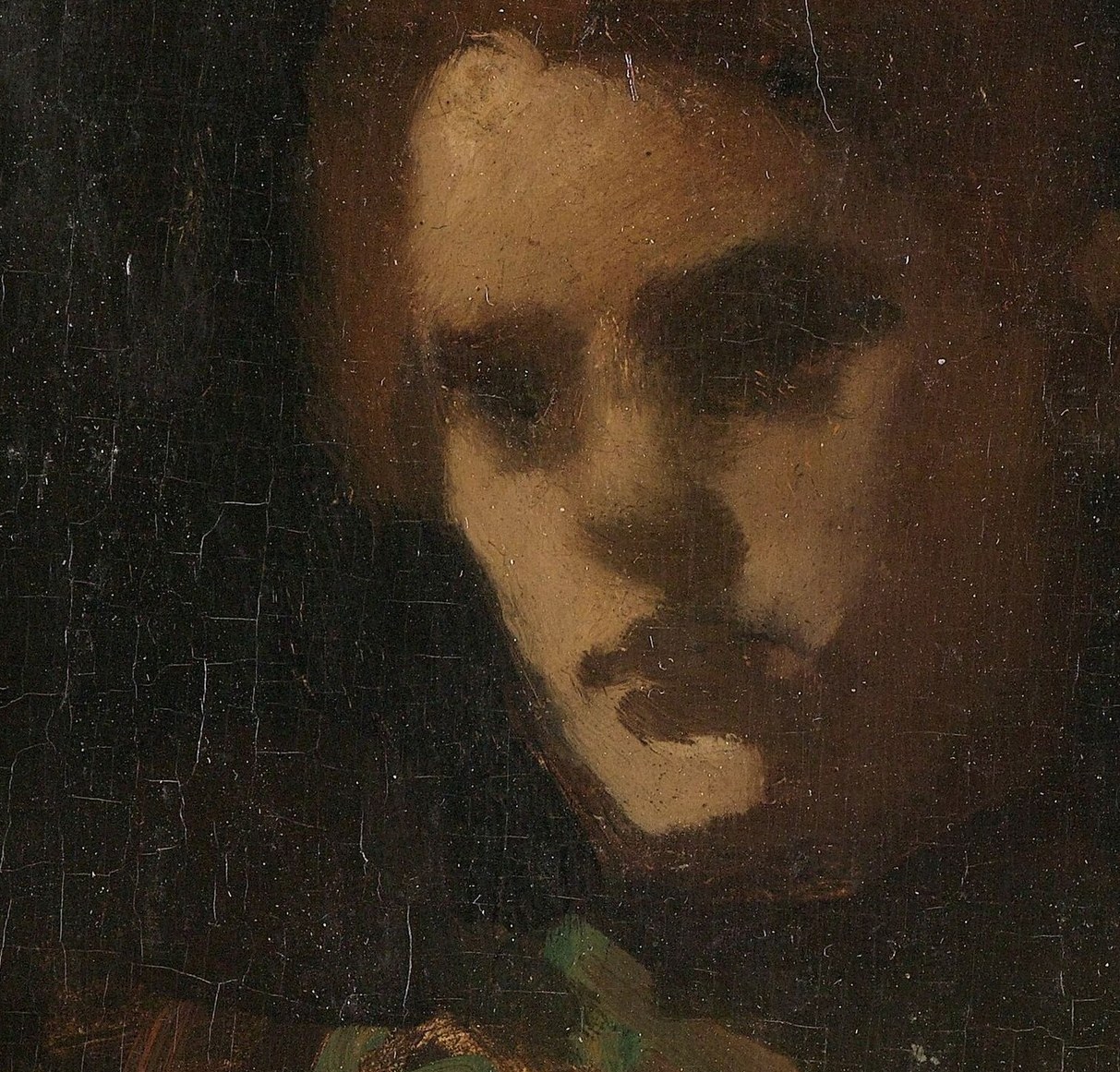
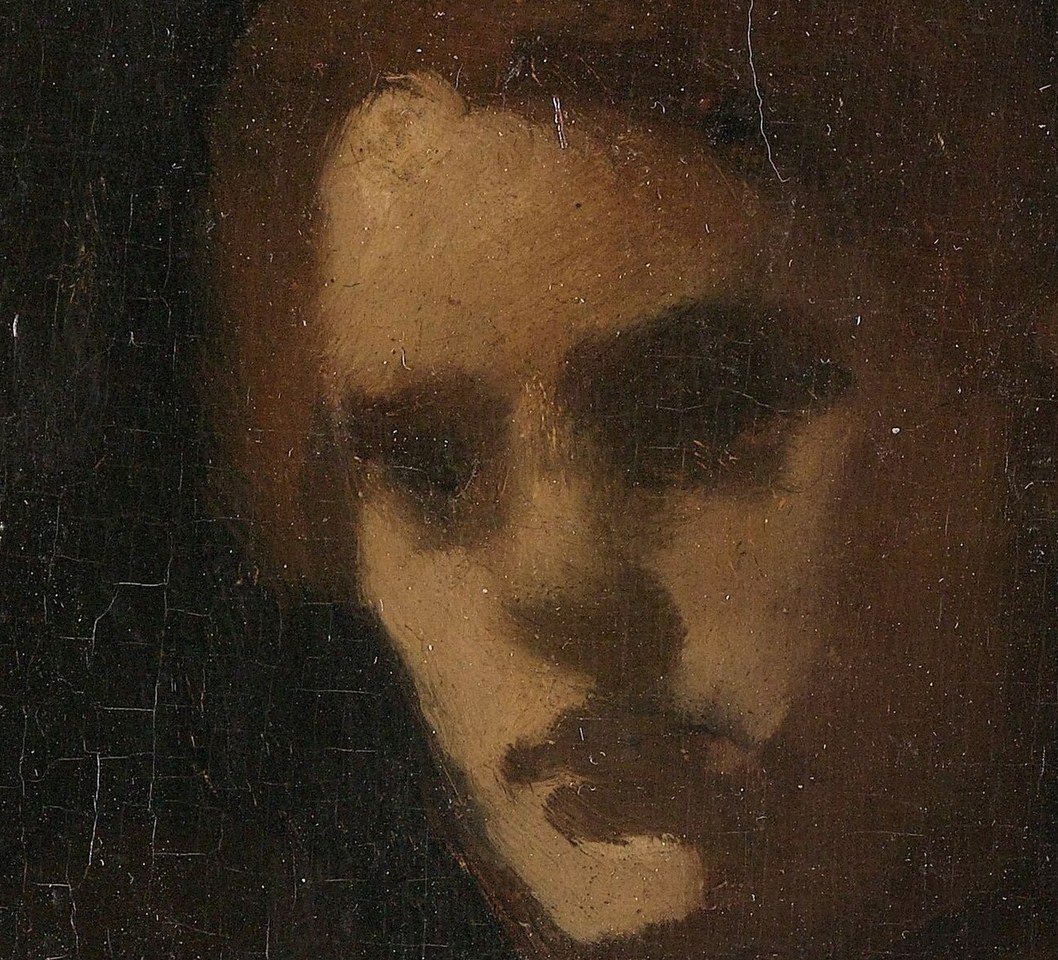
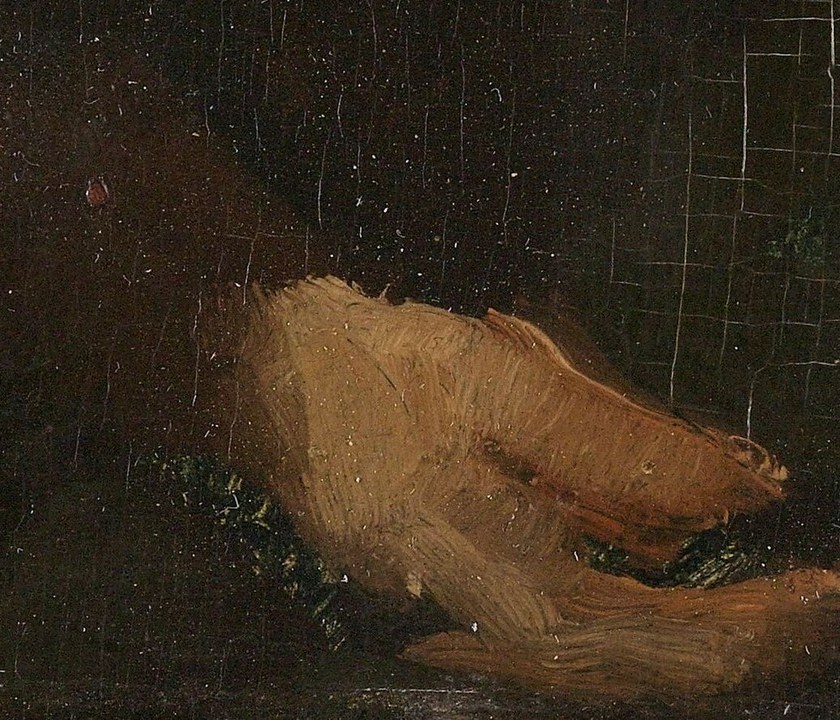
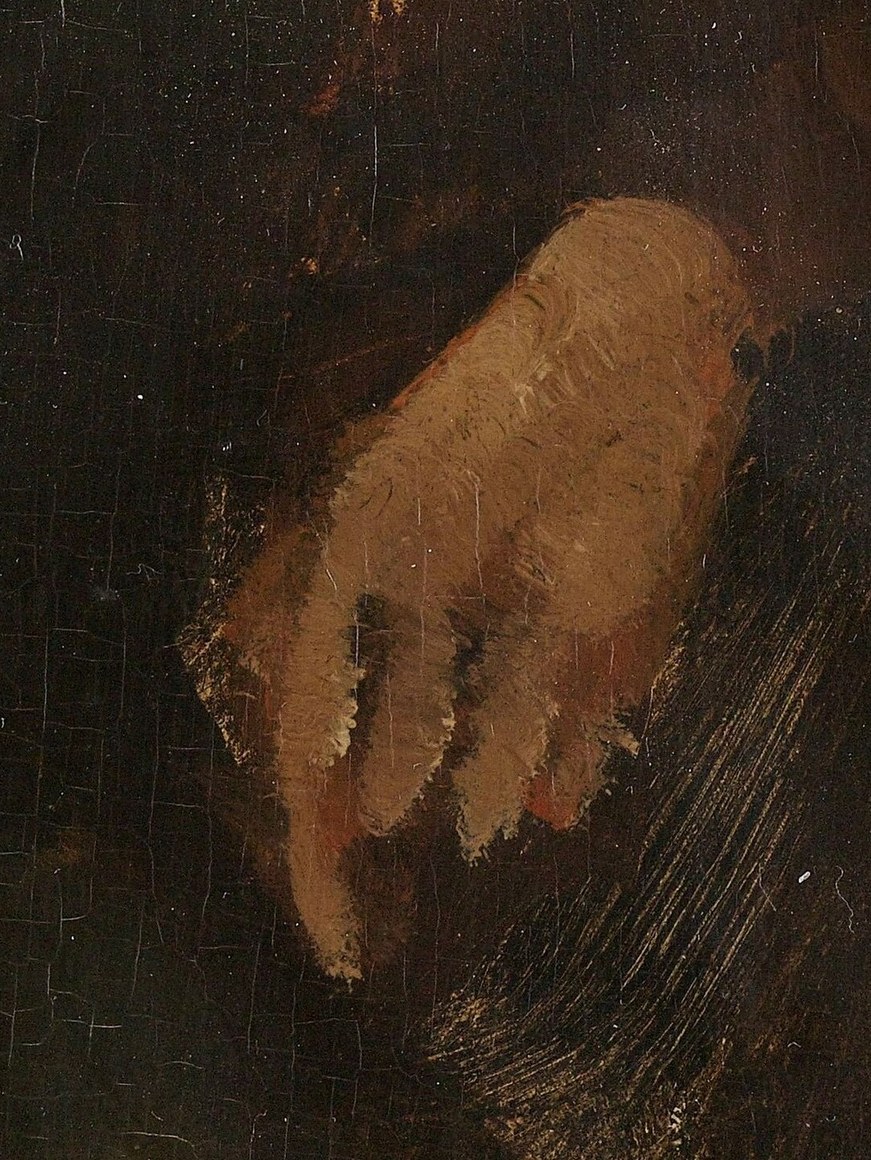
Look at the deep shadow obscuring her face, making her expression mysterious and introspective. A single light source dramatically highlights her cheekbone, contrasting with the heavily cracked texture of the dark background and the painterly rendering of her loose hair and the dark fabric of her dress. She holds a small, indistinct object in her left hand, adding to the narrative intrigue.
Breitner, a Dutch painter and photographer, was known for his realistic urban scenes and his use of photography as reference material. This portrait, created during his mature period, reflects his interest in capturing fleeting impressions and exploring mood over conventional representation. The painting's debut in 1901 generated public outrage, with critics debating its artistic merit and the propriety of its subject matter, contributing to its notoriety.
Despite the scandal, the work remains a compelling study of light, shadow, and enigmatic presence.
Details
Transcript
Her face is lost in deep shadow. A single light highlights her cheekbone. This obscure background is heavily cracked. The sitter was likely Geesje Kwak. Her loose hair adds painterly movement. She holds a small object. Breitner was known for his photography studies. This work caused public outrage in 1901.