Long Island Farmhouses by William Sidney Mount
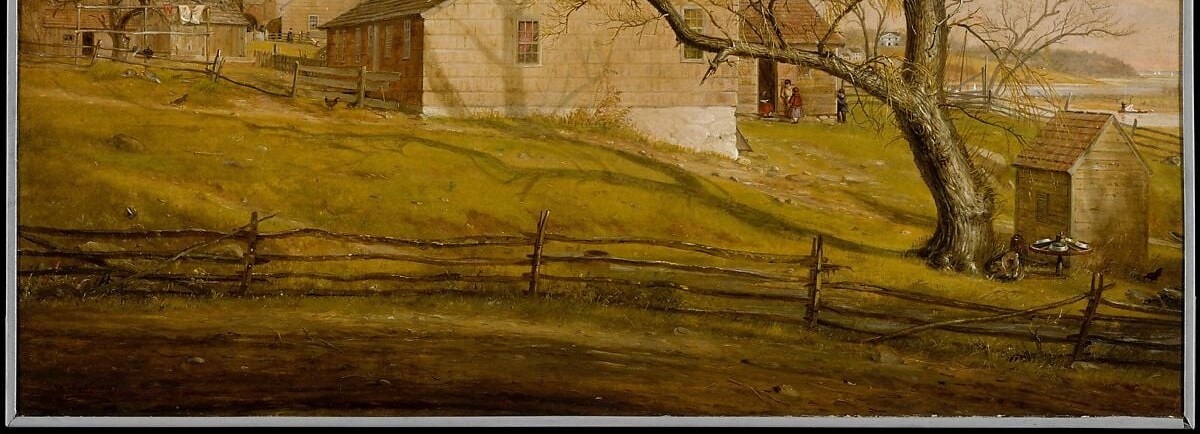
This is William Sidney Mount's 'Long Island Farmhouses,' painted around 1862-63 and now in The Metropolitan Museum of Art's American Wing. Mount was the first native-born American artist to specialize in genre painting, and his views of rural Long Island are some of the most quietly observed American landscapes of the 19th century.
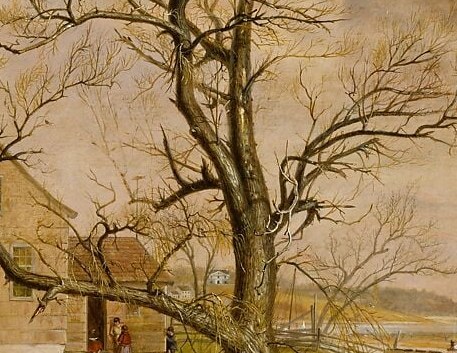
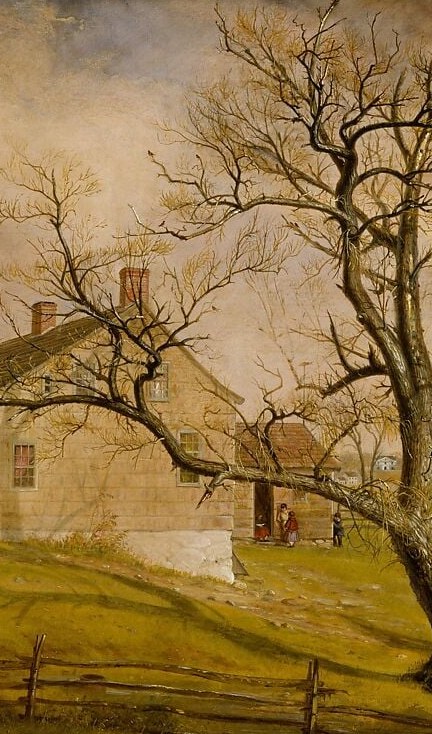
Look at the bare tree against the sky, Mount's branchwork is so precise it becomes a signature. The warm ochre hillside and the pale, modulated winter light create a specific atmosphere that forgers have found nearly impossible to replicate. The white farmhouse gleams as the brightest note in a subdued palette, anchoring the domestic life of the scene.
Mount spent much of his life in Setauket and Stony Brook, Long Island, and knew these farms intimately. He was also a musician, a fiddle player who designed his own violin. His paintings of rural life achieved fame in both America and Europe during his lifetime. In the decades after his death, his market value rose high enough that skilled forgers began producing convincing copies, some of which entered museum collections before later forensic examination exposed them.
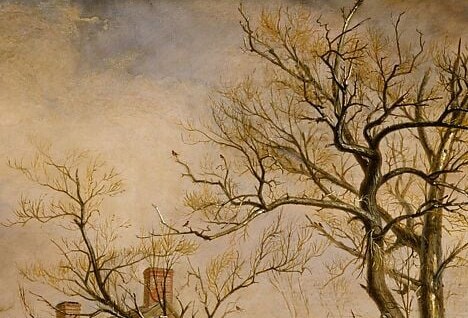
Today, authenticating a Mount means studying the paint handling in passages exactly like this sky: the way warm and cool grays blend at the horizon, the restraint in the brushwork. This painting is both a view of a vanished Long Island and a masterclass in what forgers could never quite catch.
Details

Transcript
Winter, 1862. The Civil War is raging. But here on Long Island, a painter records a quiet farm. Every bare branch is a draughtsman's feat. A century later, forgers took aim at Mount's work. His paintings were copied so well they entered museum collections. Connoisseurs now study skies like this one to separate real from fake. Mount's hand is in the atmosphere itself.