Laban Searching for His Stolen Gods by Augustin de Saint-Aubin
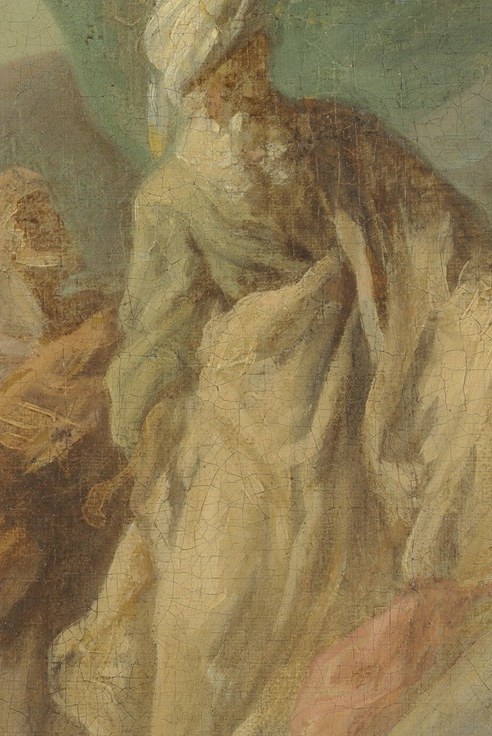
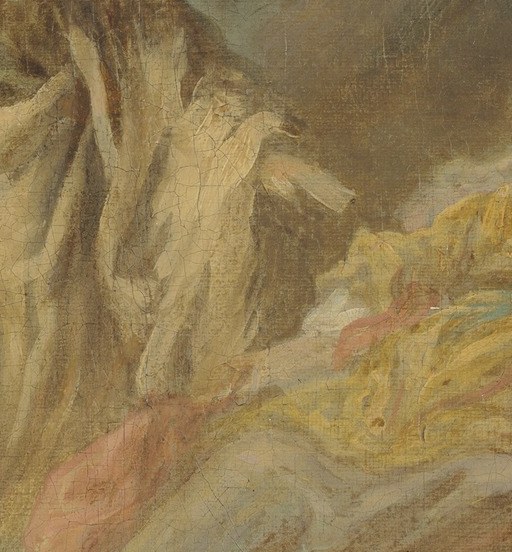
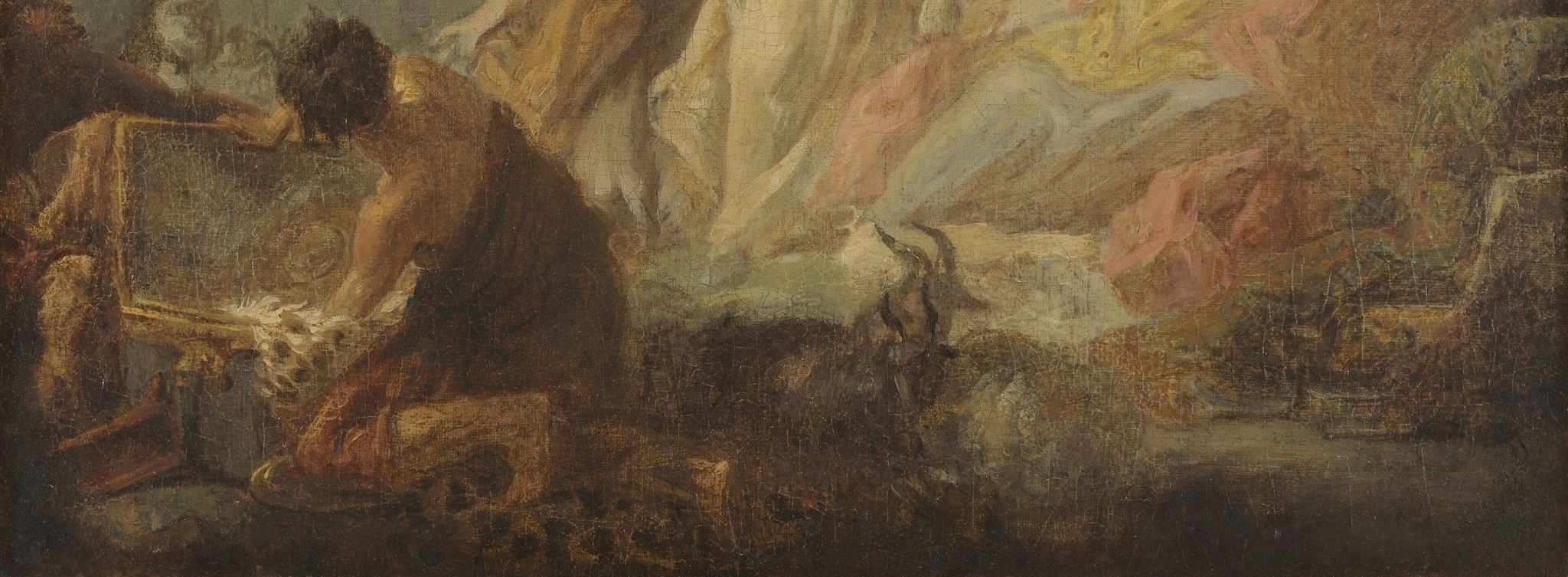
Augustin de Saint-Aubin's 1753 oil painting, Laban Searching for His Stolen Gods, held at The Cleveland Museum of Art, depicts a biblical deception. The painting shows the patriarch Laban frantically searching for household idols stolen by his daughter Rachel.
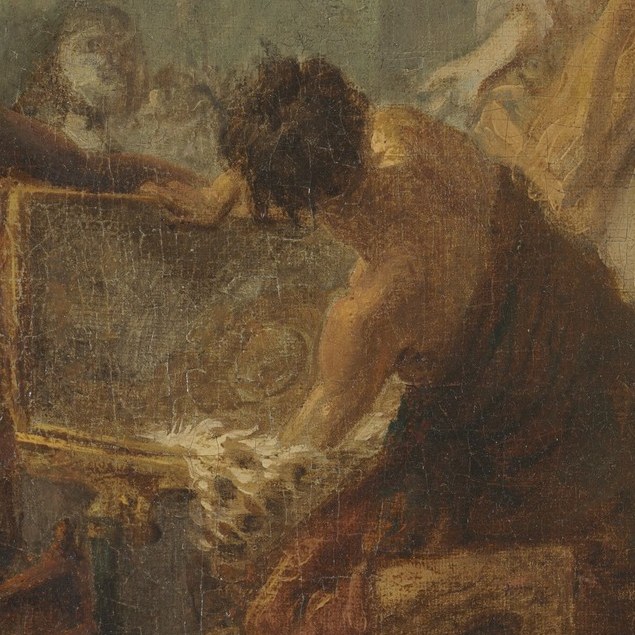
Look at the central figure, Laban, his posture suggesting distress. Beside him, the woman with a child, representing Rachel, holds the stolen idols. But the true genius of the scene lies in a seemingly insignificant detail.
The story, from Genesis, tells of Rachel cleverly hiding the idols within a camel's saddle, disguised amongst other belongings. Here, that is represented by a bundle of sticks on a table. The artist makes these sticks the hiding place for the concealed gods, a clever visual pun.
This hidden detail turns a scene of pursuit into a quiet victory of wit and faith.
Details
Transcript
Laban searches for his stolen gods. He looks like a distressed man. His daughter, Rachel, holds the idols. A bundle of sticks sits on the table. The sticks are a visual trick. She hid the gods within them.