Untitled by Bhadrabahu
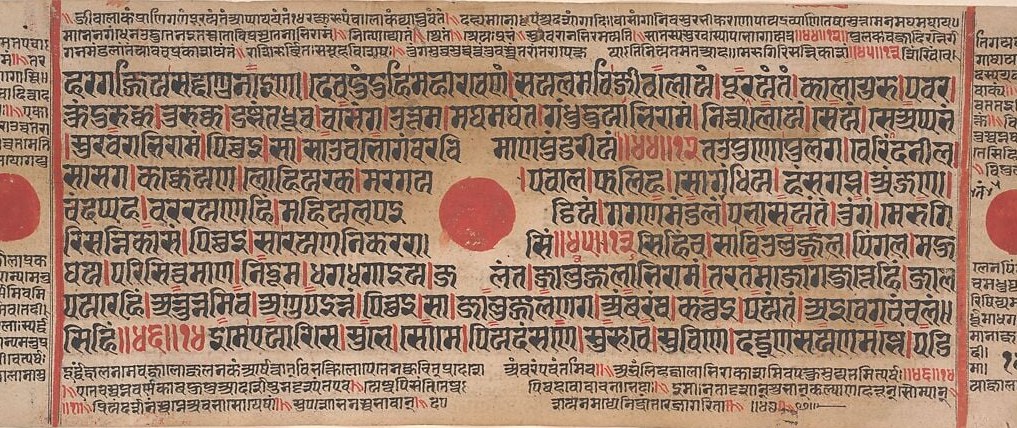
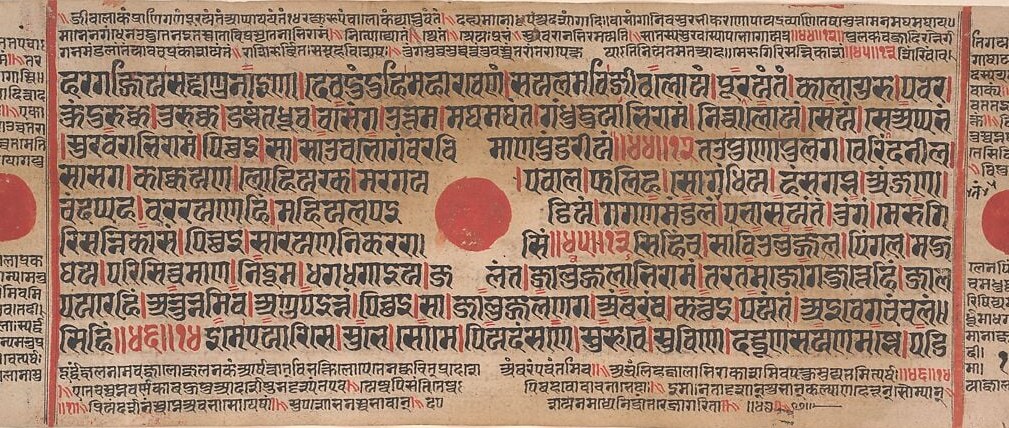
This untitled 15th-century painting by Bhadrabahu, created in 1449, is more than just a depiction of a Jain monk; it's a testament to the meticulous artistry of its time. Executed in ink, opaque watercolor, and gold on paper, it originally served as a page within a larger Jain manuscript, commissioned for a temple in Gujarat, India.
Observe the monk seated on his vibrant red mat, holding a palm-leaf book, a symbol of deep spiritual learning. While the main inscription provides the primary content, the real surprise lies in the delicate gold leaf accents surrounding the figure. These tiny dots, meticulously pressed onto the paper rather than painted, have retained their luster for centuries, hinting at the sacredness and value attributed to the manuscript.
Such artworks prioritized their devotional purpose over individual recognition, and detailed biographical information about artists like Bhadrabahu is scarce. This piece offers a quiet glimpse into the rich tradition of Jain manuscript illumination and the enduring power of subtle detail.
What other hidden details do you think might exist in ancient artworks?
Details
Transcript
This 15th-century painting depicts a Jain monk. He holds a palm-leaf book of sacred texts. The text would have aided in spiritual study. But look closely at the blank blue space around him. Tiny gold leaf dots were meticulously pressed onto the paper. They are barely visible, but the gold still shines.