The Lock at Pontoise by Camille Pissarro
Camille Pissarro's The Lock at Pontoise (1872) is a painting that nearly didn't exist. The year before he painted this tranquil scene, Pissarro had fled the Franco-Prussian War for London. When he returned home to Louveciennes, he found his house had been occupied by Prussian soldiers. His studio was ransacked, and around 1,500 of his paintings, the work of twenty years, had been used as floor mats for the mud.
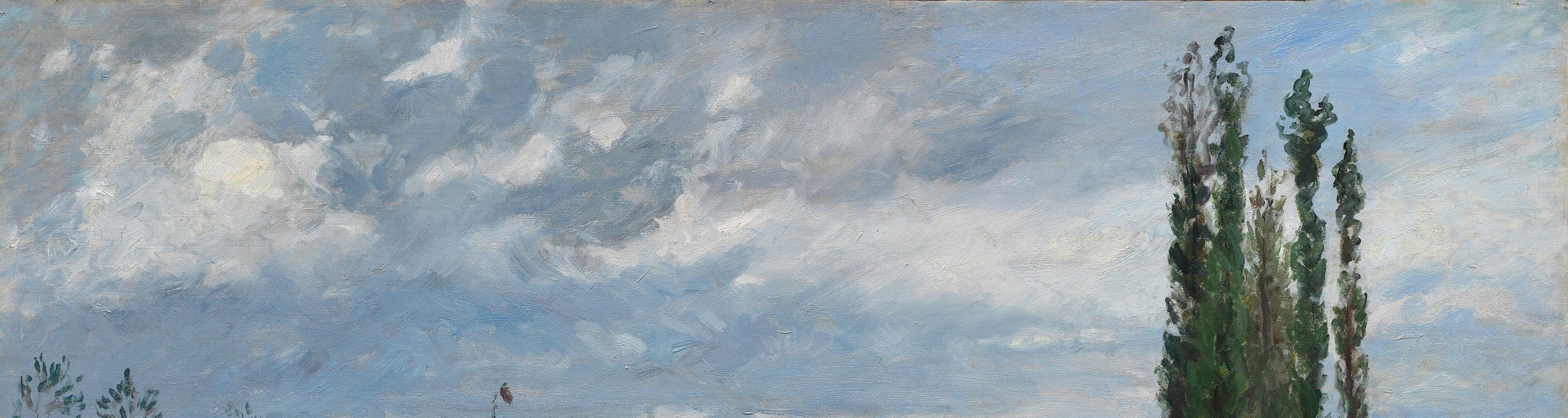
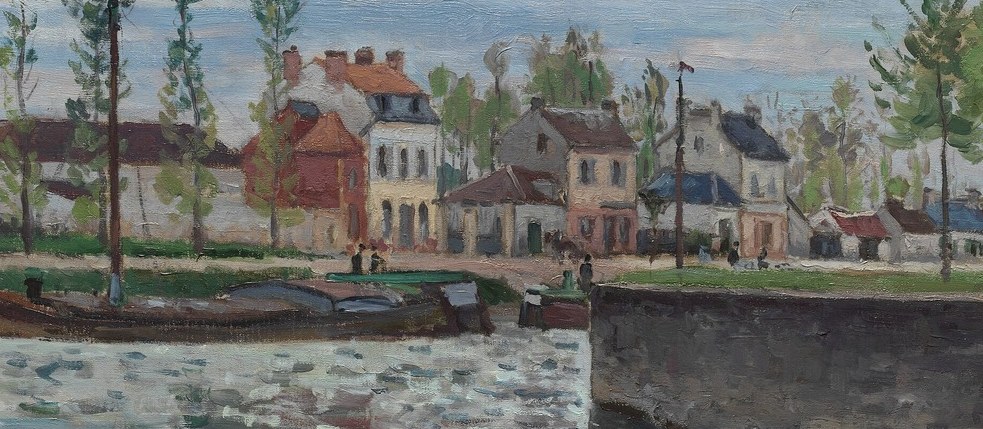
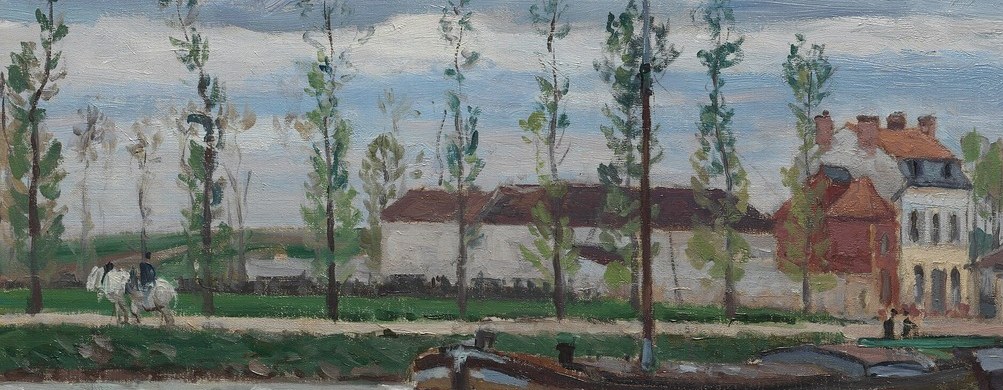
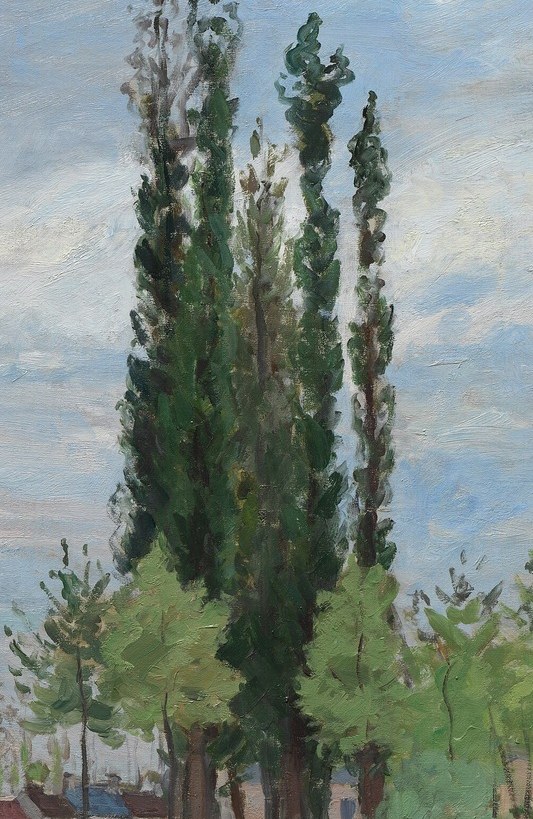
The painting in Cleveland is what came after. It finds Pissarro in Pontoise, having started over with almost nothing. What is remarkable is what it refuses to show: no ruin, no bitterness, no melodrama. Instead, a lock gate holds still water under a grey sky. The barges are working; the town roof-lines are intact. His brushwork is thick and unhesitating, the palette quiet but alive.
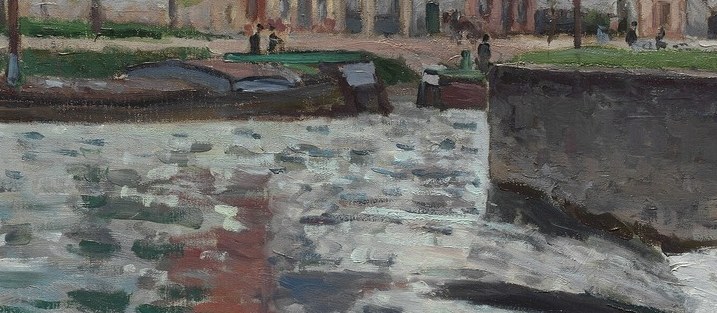
That luminous patch of water just beneath the lock gate is the key. It is the brightest passage in the whole composition, a reflection of diffused sky-light through the opening. Pissarro, who preferred overcast skies to dramatic sunlight, makes an ordinary engineering structure into the emotional center, a point where light enters and the water stays calm. A lock is not a symbol of drama. It is a mechanism for control, for keeping things steady.
Pissarro would go on to become the anchor of the Impressionists, the only artist to show in all eight of their exhibitions. Paul Cézanne called him 'a father to me.' This painting is a quiet beginning to that second act. What do you notice first, the stillness of the water, or the sky it reflects?
Details
Transcript
This is the town of Pontoise, in 1872. The painter had arrived home the year before to find it destroyed. Prussian soldiers had looted his studio. 1,500 paintings burned. He painted this from the ground that was still his. A locked gate, holding the water steady. Look how a single bright patch of light holds the whole picture together. He rebuilt his life here, and painted ordinary people rebuilding theirs.