Mr. Day by Phillips, Ammi
Mr. Day, painted around 1835 by the itinerant folk portraitist Ammi Phillips, is a portrait of a man and a newspaper. Phillips worked across Connecticut and New York, painting middle-class families who wanted an affordable record of themselves. This sitter chose to be remembered with the day's news in his hands.
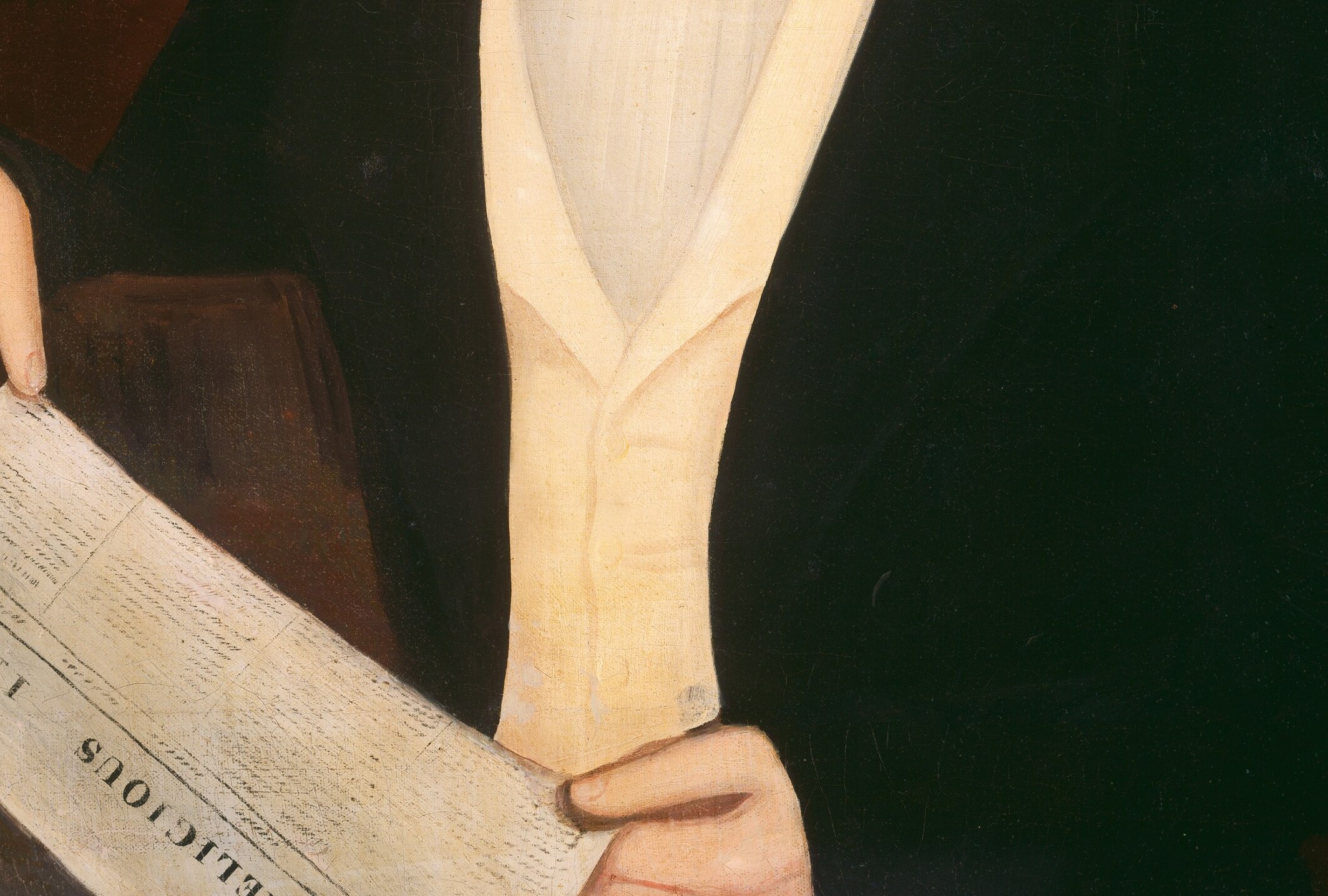
Look at how the newspaper is held. Both hands grip its edges and push it slightly forward, toward you. This is not a man caught reading. He is displaying the paper, and with it, a deliberate identity claim: I am literate, I am engaged, I belong to the world of print.
Now look at the text itself. In the masthead area, letter forms are partially legible. Phillips painted them with enough care that a word survives under close examination. For a folk painter working quickly on modest budgets, this is a telling choice. He could have blurred it into suggestion. He didn't.
The painting lives in that tension between formula and observation that defines the best folk portraiture. The coat is rendered with minimal modeling, the background is undifferentiated ochre, and yet the eyes meet yours with unsettling directness, and the newspaper carries real ink. Which word do you see?
Details




Transcript
In 1835, sitting for a portrait was a formal affair. Stiff coats. Direct stares. A plain dark background. But Mr. Day decided to be remembered with one thing in his hands. A newspaper. It announced literacy, civic engagement, and aspiration. He grips it toward the viewer, not just holding it but displaying it. Look closely at the paper's masthead. The letter forms are visible. Ammi Phillips let the word survive the paint.