Landscape Album in Various Styles: Landscape after Mi Fei by Zha Shibiao
This is 'Landscape after Mi Fei' by Zha Shibiao, painted in 1692 and held at The Cleveland Museum of Art. It is part of an album in which the artist tried on the styles of past masters like a musician covering old songs.
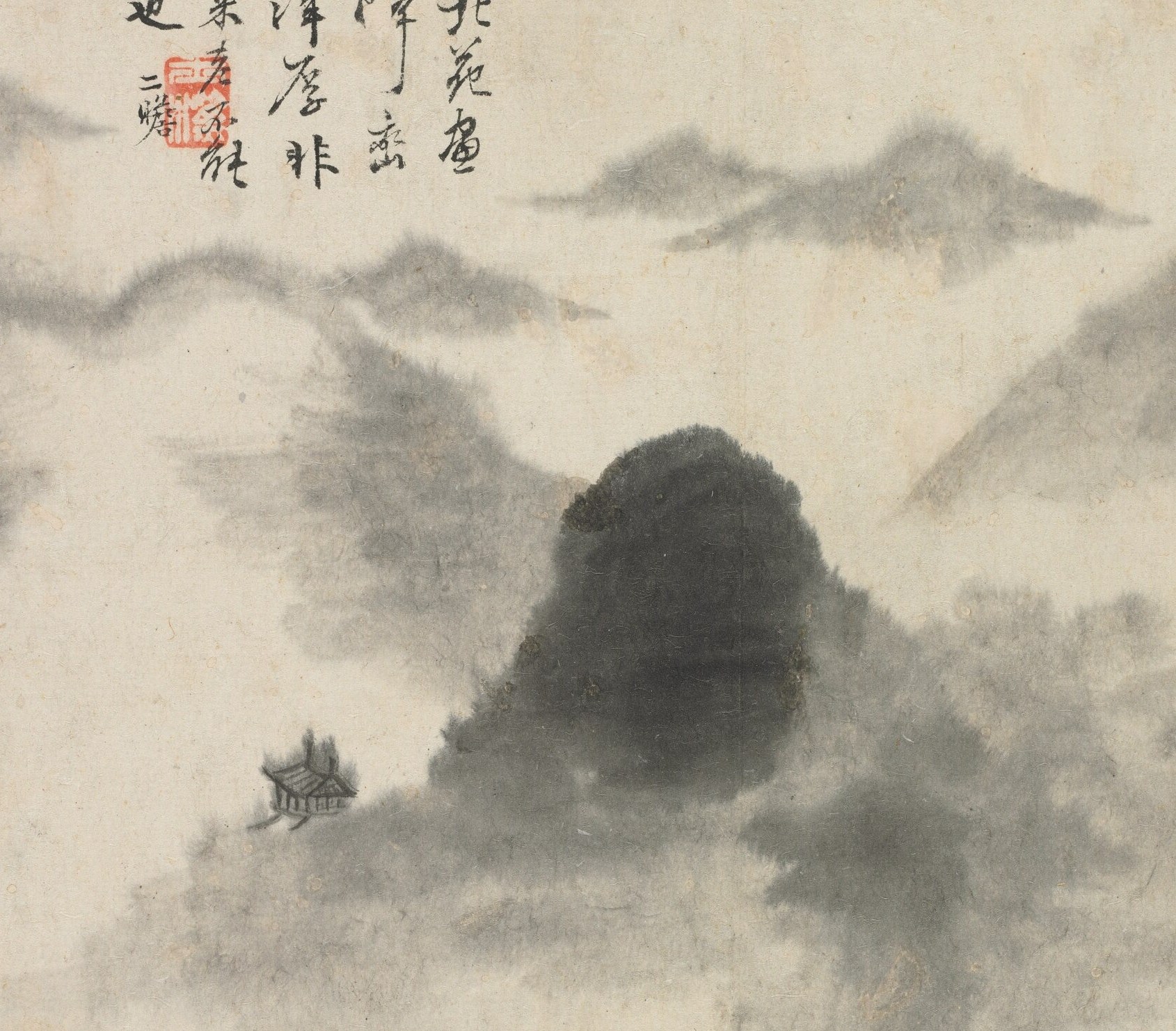
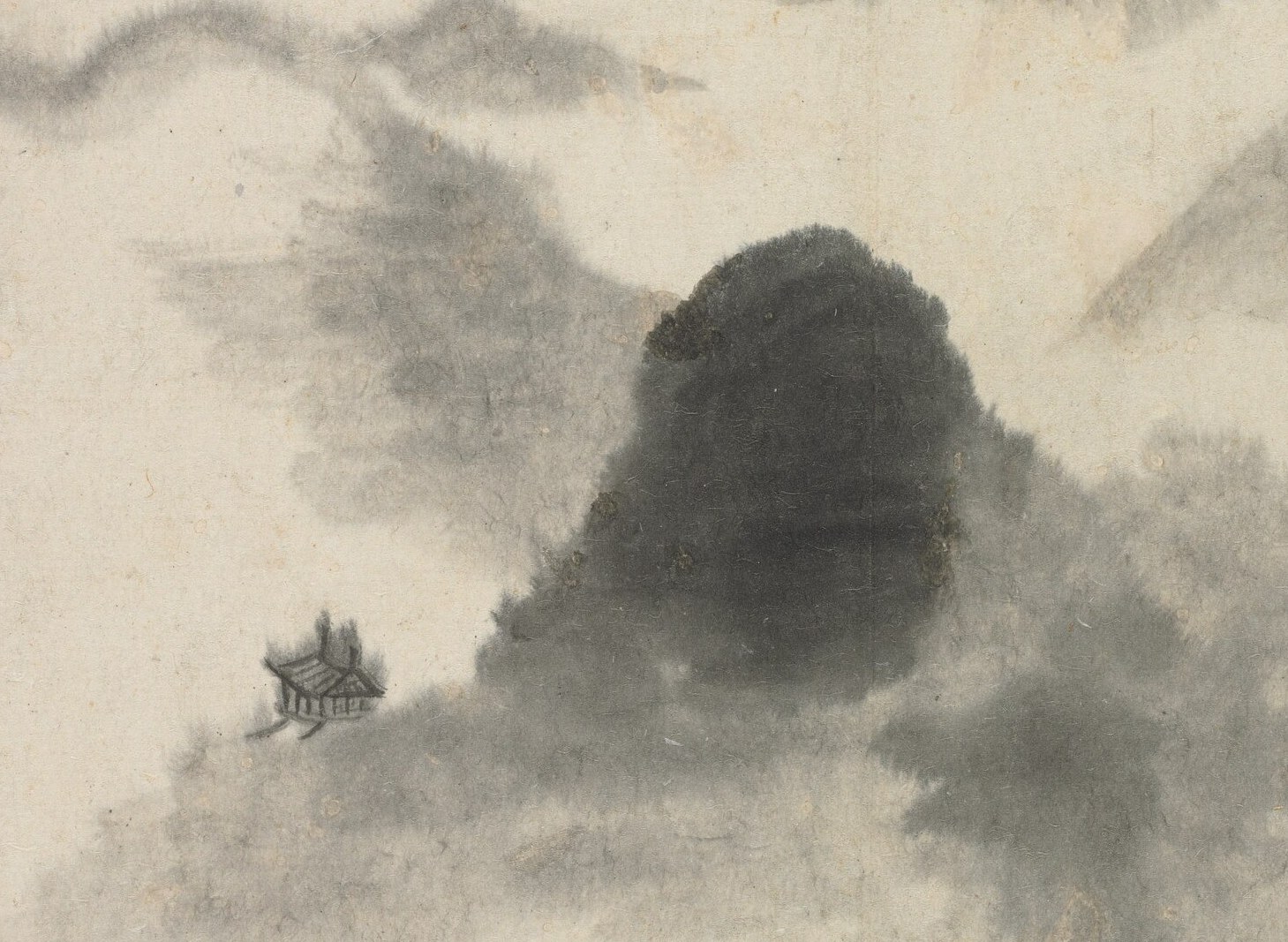
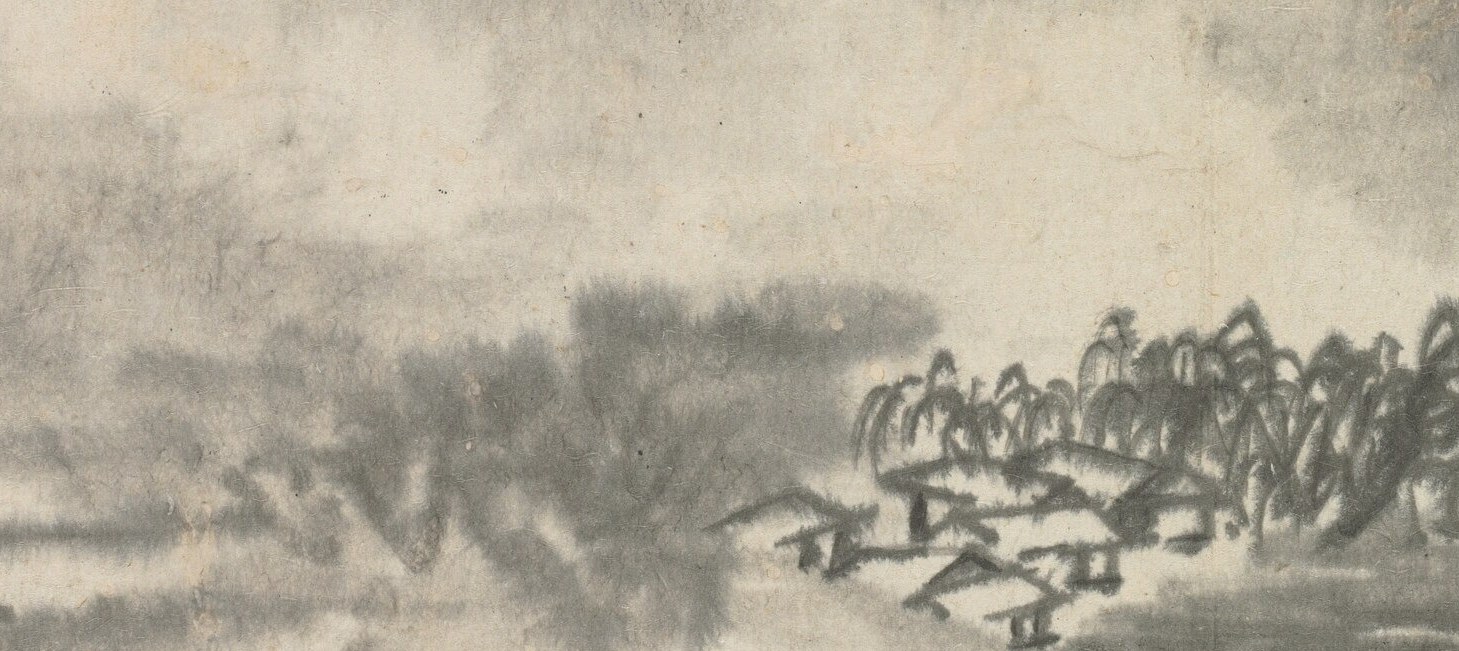
Look first for the mist. The white band across the middle is raw, unpainted silk. It separates the heavy ink of the mountain from the luminous paper of the lake. Then scan the shoreline until you find the tiny cluster of roofs. That village is the only sign of human life in the painting, and it is small enough to miss on a phone screen.
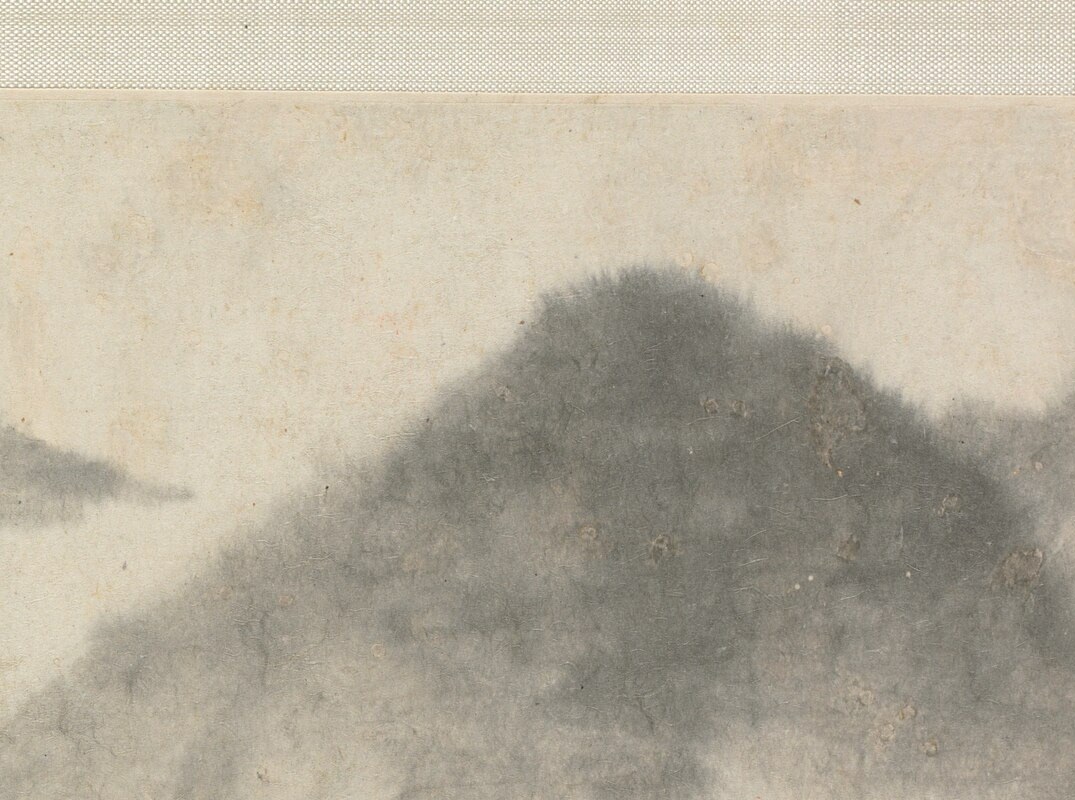
Zha Shibiao lived through the fall of the Ming dynasty and spent his later years in the fallen capital of Yangzhou, painting the old ways. The "Mi dots" on the mountain slopes are his direct homage to Mi Fei, a Song dynasty painter who had been dead for six centuries. To paint in an ancestor's style was not copying; it was a conversation across time.
Some paintings overwhelm you with detail. This one almost erases itself. What is the single detail you noticed first?
Details

Transcript
A mountain of ink. No roads, no sky. The painter is imitating Mi Fei, a master from 600 years before him. That texture is called a Mi dot: a wet horizontal brush pressed into silk. A great drift of mist cuts the world in half. Below it, the water is blank paper. Perfect stillness. There. Tucked into the shore. Tiny rooftops. That cluster of buildings is the only human trace in the entire landscape. Everything else is mountain, mist, and the silence between them.